How much can you trust China’s economic data? Analysts and economists often rely on pet figures that they claim better reflect China’s economic activity than the official GDP growth figure: domestic travel, international trade, and levels of air pollution, to name a few.
It turns out Beijing is also concerned about the reliability of its data. Last week, Xinhua, the Chinese state news agency, reported that an amendment to the country’s statistics law, designed to combat statistics fraud and increase legal accountability, was submitted to the National People’s Congress, China’s legislature.
Outside observers sometimes justify their skepticism by pointing to the lack of transparency as to how officials compile certain datasets or decide to suspend certain data points, like youth unemployment, if trends start to look embarrassing.
Even former Chinese premier Li Keqiang, according to U.S. diplomatic cables released by WikiLeaks in 2010, called China’s GDP figures “man-made.” Li reportedly relied on his own measure of economic activity: The “Li Keqiang Index,” as dubbed by The Economist, which combined railway freight traffic, electricity consumption, and total bank loans. (Bloomberg notes the index has fallen out of favor as China’s economy shifts more toward services.)
Even private firms are caught in accounting scandals. In 2020, Chinese coffee chain Luckin Coffee confessed to falsely inflating its 2019 sales figures by 2.12 billion yuan ($292 million). The resulting scandal pushed the company off the Nasdaq stock exchange and spurred a U.S. threat to delist all Chinese companies on U.S. exchanges if they didn’t open their books to regulatory scrutiny.
More recently, Chinese regulators accused the embattled property developer China Evergrande Group of inflating its 2019 and 2020 revenues by almost $80 billion. The alleged amount would put Evergrande’s fraud among the largest in history.
What’s causing China’s fuzzy data?
Analysts say the issue is less about top-down statistical manipulation. More serious criticism relates to the “deliberate data falsification by local governments,” says Bernard Aw, the chief economist for Asia-Pacific at Coface, a credit insurer. He points to the proposed revisions to the data law as an example of how Beijing is trying to address the issue.
Local governments are incentivized to obscure how their economies are really doing, says Dan Wang, chief economist at Hang Seng Bank China. “Local officials sometimes overreport the local economic performance, as that’s how they’re evaluated and ultimately promoted, and sometimes underreport the local problems,” she says. Wang agrees that the amendment to the statistics law is necessary and that local officials should be held accountable for misreporting data deliberately.
She adds that the National Bureau of Statistics (NBS) has a history of “smoothing out” the data series so drops and rises aren’t as dramatic.
The unpredictability of China’s data reporting unnerves observers, suggests Christopher Beddor, the deputy director for China research at Gavekal. “Questions are always going to be there when you have a weak economy,” he says, adding that China “kind of shot themselves in the foot” when officials stopped reporting youth unemployment data.
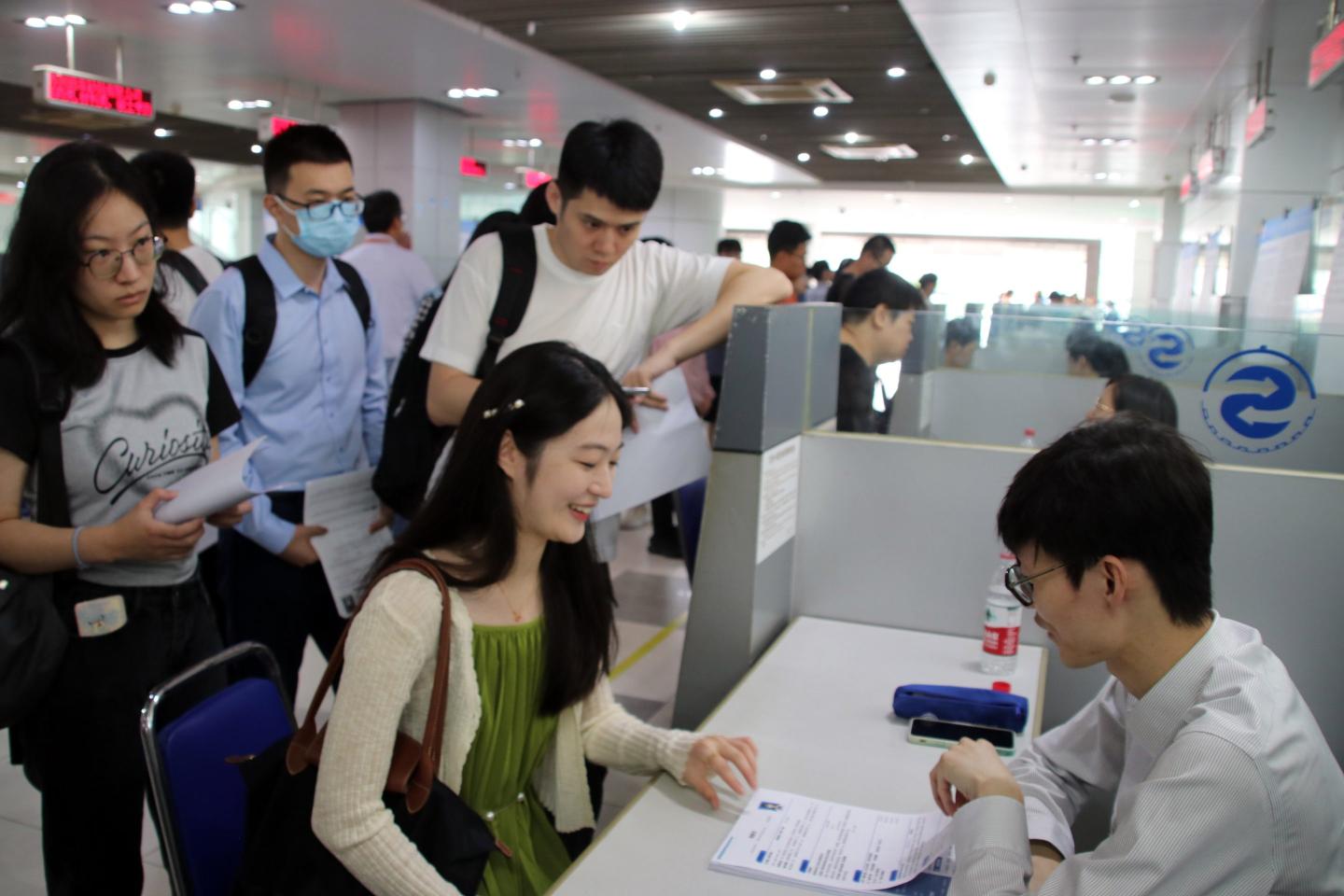
China’s youth unemployment figure, applying to those ages 16 to 24 without a job, hit a record high of 21.3% in June, the result of a slowing economy and a tighter job market in sectors like tech. Then, last August, Beijing unceremoniously halted the release of youth unemployment data, citing the need for “further optimization.”
Beijing brought back its youth unemployment rate in December, featuring a significantly improved rate of 14.9%. The NBS said the new methodology gave a more accurate picture of unemployment by excluding students.
Beddor thinks China’s data reporting has gotten better over the 15 years he’s spent observing the country, but that the progress isn’t linear.
“It’s not one step forward and two steps back. It’s sometimes one step forward and one step sideways,” he says.