
• Home
  • Latest
  • Fortune 500
  • Finance
  • Tech
  • Leadership
  • Lifestyle
  • Rankings
  • Multimedia
We have independently evaluated the products and services below. We may earn affiliate revenue from links in the content.

Trendingnow

1

Venezuela oil minister to U.S. companies: ‘It's an entire world waiting to be discovered’

2

Current price of oil as of August 20, 2026

3

Teachers in one of San Francisco's richest suburbs are so underpaid that a philanthropist just gave each of them $9,161

1

Venezuela oil minister to U.S. companies: ‘It's an entire world waiting to be discovered’

2

Current price of oil as of August 20, 2026

3

Teachers in one of San Francisco's richest suburbs are so underpaid that a philanthropist just gave each of them $9,161
Personal FinanceGold

Gold, silver, or cash: Which has been the better crisis hedge over the last 50 years?

Joseph Hostetler
By
Joseph Hostetler
Joseph Hostetler
Staff Writer, Personal Finance Commerce
Down Arrow Button Icon
Joseph Hostetler
By
Joseph Hostetler
Joseph Hostetler
Staff Writer, Personal Finance Commerce
Down Arrow Button Icon
August 21, 2026, 9:20 AM ET
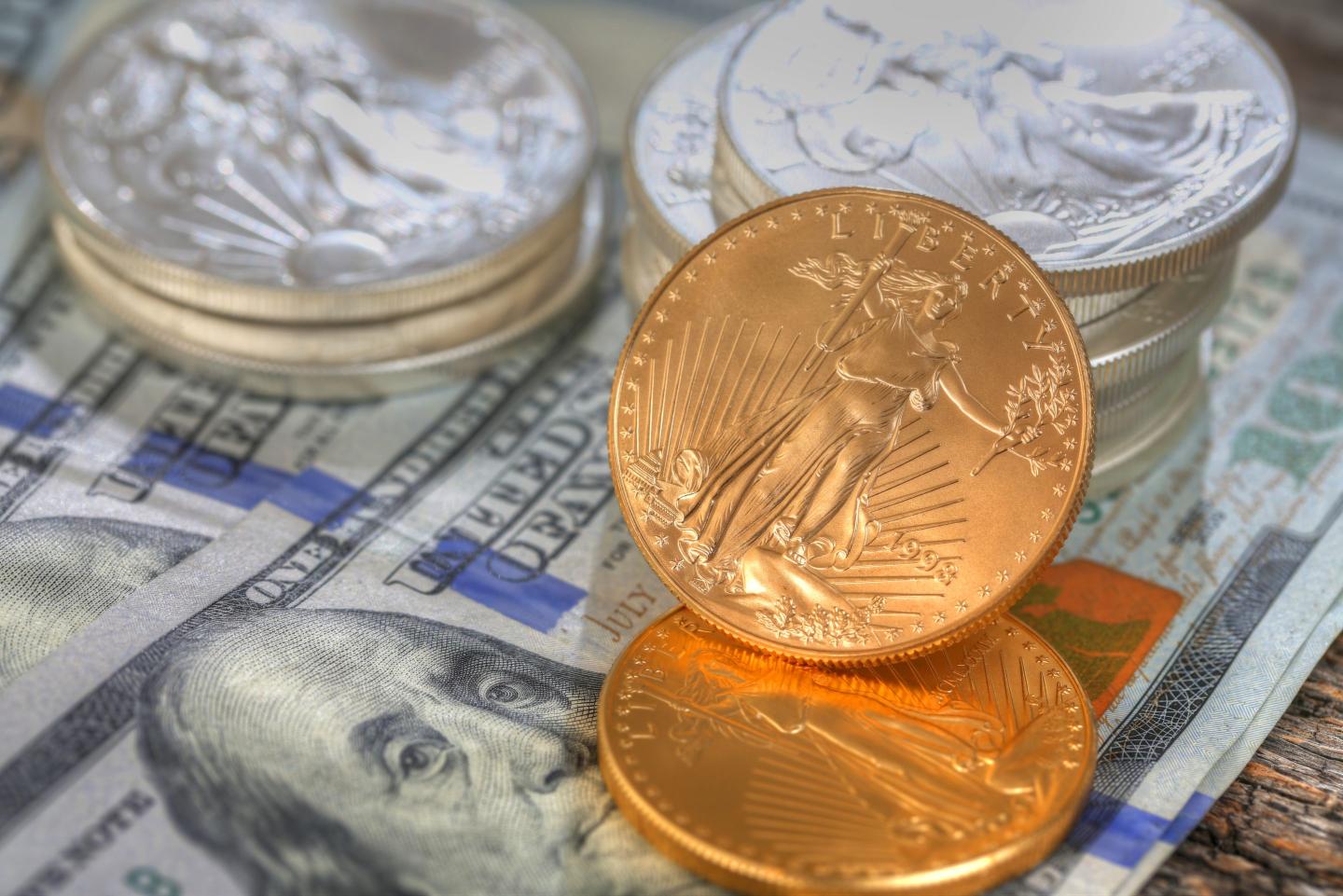
Getty Images
Add Fortune on Google for similar content.

This article was produced independently by our editorial team. Goldco provided a partnership fee to support our coverage; however, all opinions, research, and recommendations are our own.

The respite between global crises that affect your finances seems to keep getting shorter. If you’re like many savvy investors, you’re looking for an answer to the problem of inflation—and a safe-haven from the next inevitable downturn.

Three popular assets are gold, silver, and cash. All have upsides, but they behave differently under stress. Let’s take a look at how each has stood up against crises over the last 50 years.

ADVERTISEMENT

Goldco

Trustpilot rating:

4.4/5

ConsumerAffairs:

4.62/5

TrustLink:

4.8/5

Minimum deposit to start an account:

$25,000

Advertised fee waiver for qualifying activity:
Yes
View offer at Goldco
The Goldco logo.
  • Year Founded: 2006
  • Company Headquarters: Los Angeles, CA
  • CEO: Trevor Gerszt

What makes a good crisis hedge?

A crisis hedge is a safe-haven asset that historically stands up to economic downturn. It may not gain in value (or even stay flat), but compared to alternatives, it tends to lose less and limits your damage. In other words, a good crisis hedge helps you to ride out rough market stretches with minimal effect on your finances. Here are some key attributes to look for in an ideal hedge.

Can it keep up with inflation?

Find an asset that can retain its purchasing power despite inflation. One of the most popular options among investors (and everyday savers) is gold and other precious metals. Their centuries-long track record has shown them to be a great store of value, and one that isn’t tied to any single currency.

Cash is the opposite: It’s easy to spend, but it’s designed to lose ground to inflation over time. When prices go up, the U.S. dollar buys you less. In theory, you can sell precious metals for more dollars as fiat currency becomes less valuable.

How fast can you turn it into cash?

A good hedge should be something you can actually sell in a hurry. Cash is the obvious winner when it comes to liquidity; you can withdraw and use it instantly. Gold and silver aren’t extraordinarily tough to sell through dealers and trading platforms, but you’ll deal with spreads, fees, and considerably more wait time than cash. This is why metals are a better long-haul investment, but cash is still necessary for quick spending needs.

The specific precious metals dealer you use to buy your gold and silver can make a difference in how quickly you can liquidate them. For example, Goldco offers a buyback guarantee program, touting that you’ll get the highest price when liquidating your precious metals with Goldco.

How extreme are the price swings?

A good hedge has comparatively limited volatility. Gold tends to be steadier than silver because it’s used less prominently in industry, making it typically less sensitive to economic swings. In a downturn, that usually means gold can shrug off bad market news better than silver.

Gold, silver, and cash performance during major crises

A more “scientific” way to analyze which asset is the best hedge is to look back at past crises to find patterns. Again, bear in mind that gold, silver, and cash tend to move very differently from each other depending on how rattled the markets get and why.

And while history isn’t a flawless crystal ball when it comes to your investments, it’s a decent guide for how these might hold up against a future downturn.

1970s stagflation

In 1971, the U.S. dollar cut ties with the gold standard. At the time, gold was worth a fixed $35 per ounce. But once the dollar’s value was no longer tethered to gold, it skyrocketed, landing at roughly $850 by 1980. That’s a gain of more than 2,300% in less than a decade.

At the same time, silver rose from around $1.50 per ounce to nearly $50—translating to more than a 3,000% increase.

Cash, on the other hand, went the opposite direction. Severe inflation over this period ran into the double digits, making U.S. dollars markedly less valuable. The stark contrast makes this period a great case study into what holding metal can do to preserve your purchasing power.

2008 financial crisis

Gold didn’t rocket straight up during the infamous financial crisis of 2008. In fact, it dipped a couple times—and even dropped hard late in the year as panicked investors jettisoned nearly everything in favor of cash; but a year-over-year comparison showed that it actually stayed roughly flat. It showed small gains by the end of the year. By comparison, the S&P 500 fell more than 50% during that time.

After gold’s low point in 2008, it climbed aggressively—reaching well over a 150% rally by 2011. This was partially due to the Fed assigning rates near 0% and launching bond-buying programs (i.e. quantitative easing). When rates are low, gold becomes the go-to asset because high-APY accounts are less impressive. This is also the reason that, during this time, cash mostly kept its value.

Silver saw big swings in both directions. It priced near $12 by the end of 2007 and then fell to around $9 by October 2008. Exiting the Great Recession, it was worth close to $14—a small net gain.

2020 COVID-19 recession

The coronavirus pandemic saw gold prices falling right along with stocks. As everyone scrambled for cash, gold was dragged down, too. Its low for the year was around $1,470 per ounce—but it bounced back to around $2,070 by early August and closed the year around $1,900. That’s approximately a 25% increase from the end of 2019.

Silver had similar but more extreme movement. Again, it’s more utilized in manufacturing, so it felt the difficulties of many industries screeching to a halt. Once things started to roll again, it posted huge gains.

Put simply, cash was the loser of the Covid-19 recession. It actually held up quite well in early 2020, when there was a sharp selloff to liquidate stocks. But over the year, inflation climbed faster than APYs paid out as rates stayed near zero.

2022–2023 inflation surge

The post-Covid inflation surge didn’t follow the usual pattern of a slow, predictable price creep. Inflation hit 40-year highs. Gold stayed nearly flat in 2022 in part because the Fed continued to hike rates aggressively, which, again, made money assets and accounts that paid interest more appealing (CDs, high-yield savings accounts, etc.).

Still, gold was a solid inflation hedge. It moved faster than it typically would in a calm, low-inflation period, and it had huge gains in 2023 with around a 13% increase.

Due to similar reasons as gold, silver mostly treaded water during this time. And cash, as ever, lost ground. Inflation outpaced what most savings accounts paid for much of the period.

Gold vs. silver vs. cash: Side-by-side comparison

GoldSilverCash
Inflation protectionExcellent reputation as a store of valueGood reputation as a store of value though industrial demand makes for big price swingsWeak, as purchasing power always drops
LiquidityFair, as selling typically involves a dealer with a spread and feesFair, as selling typically involves a dealer with a spread and feesExcellent, as it’s spendable or withdrawable instantly
Price volatilityModerate; historically steadier than silverHigh, often taking similar directions to gold’s moves—but magnified due to industrial demandNone; price travels with inflation
YieldNoneNonePotentially earn interest when put in yield-bearing accounts
Driver of demandPrimarily used as a store of wealthUsed often as a store of wealth, as well as for industrial use (electronics, solar, etc.)Everyday transactional needs
Best forLong-term wealth preservationThose comfortable with higher volatility—for potentially bigger gainsShort-term needs, emergencies, day-to-day spending
Inflation protection
GoldExcellent reputation as a store of value
SilverGood reputation as a store of value though industrial demand makes for big price swings
CashWeak, as purchasing power always drops
Liquidity
GoldFair, as selling typically involves a dealer with a spread and fees
SilverFair, as selling typically involves a dealer with a spread and fees
CashExcellent, as it’s spendable or withdrawable instantly
Price volatility
GoldModerate; historically steadier than silver
SilverHigh, often taking similar directions to gold’s moves—but magnified due to industrial demand
CashNone; price travels with inflation
Yield
GoldNone
SilverNone
CashPotentially earn interest when put in yield-bearing accounts
Driver of demand
GoldPrimarily used as a store of wealth
SilverUsed often as a store of wealth, as well as for industrial use (electronics, solar, etc.)
CashEveryday transactional needs
Best for
GoldLong-term wealth preservation
SilverThose comfortable with higher volatility—for potentially bigger gains
CashShort-term needs, emergencies, day-to-day spending

Pros and cons of each asset 

Gold

Pros

  • Long track record as a store of value through inflation and currency devaluation
  • Historically less volatile than silver
  • Value not tied to any single government or currency

Cons

  • Selling physical gold usually involves dealer spreads and fees
  • Less liquid than cash for everyday spending or emergencies
  • Pays no interest or dividend

Silver

Pros

  • Benefits both as a store of wealth and growing industrial use
  • Can outperform gold during periods of strong industrial or manufacturing growth
  • Higher potential for upside than gold if industrial demand continues to expand

Cons

  • Significantly more volatile than gold
  • Price can drop during periods of inflation if industry suffers
  • Pays no interest or dividend

Cash 

Pros

  • Instantly usable with no conversion process or fees
  • Can earn interest, especially in high-yield savings accounts or CDs (unlike gold or silver)
  • Predictable value with relatively slow changes

Cons

  • Steadily loses purchasing power when inflation outpaces your APY
  • No upside to scarcity (unlike gold and silver)
  • Not a hedge against currency devaluation

The takeaway

Gold, silver, and cash all behave differently under the strain of financial crises.

If your primary concern is to keep your money from devaluing, gold is arguably the most useful option. But it’s far from a guarantee.

Silver offers a level of gold’s resilience, but its heavy utilization in industry means it’s more prone to swings. In other words, it may offer greater upside potential than gold—but with more risk.

Cash loses purchasing power to inflation, so it’s generally a bad store of value during crises. However, investing it in high-APY deposit accounts like a CD or high-yield savings account may keep your balance growing enough to mitigate inflation. This is something you can’t do with physical gold and silver. They don’t earn interest, so any return from your investment comes from changes in the sale price.

Frequently asked questions

Why do investors turn to gold during a recession?

Investors often turn to gold during a recession because it’s one of the best assets to retain buying power. Think of it like “petrifying” your dollar. If you buy $1,000 worth of gold today, you should theoretically be able to trade that gold for the same purchasing power a decade from now—even if the dollar is worth half what it is today.

Is gold or silver a better hedge against inflation?

Gold tends to be a better hedge against inflation because it’s used primarily as a store of wealth. Silver has more uses, as it’s heavily implemented in industry. That makes its price more susceptible to industry swings than gold.

What percentage of a portfolio should be in gold or silver?

It’s typically recommended that you keep your investment in gold and silver between 5% and 20%.

Is holding cash still important if I own gold and silver?

Yes, holding cash is still important if you own gold and silver. Though they’re not historically difficult to sell, precious metals aren’t nearly as liquid as cash, so they’re not good for everyday purchases.

How does the Federal Reserve’s interest rate policy affect gold and silver prices?

The Federal Reserve’s interest rate policy affects gold and silver prices by making precious metals either more or less desirable. When interest rates are high, you can get a better return from cash by storing it in high-APY accounts. When they’re low, gold and silver are more enticing because you’re not giving up much interest to hold them.

Fortune Daily breaks the traditional barrier between audience and newsroom. The show transforms Fortune’s trusted reporting into actionable, conversational, and entertaining insights for an emerging class of business leaders. Watch here.
About the Author
Joseph Hostetler
By Joseph HostetlerStaff Writer, Personal Finance Commerce

Joseph is a staff writer on Fortune's personal finance commerce team. He's covered personal finance since 2016, previously serving as a reporter and editor at sites like Business Insider and The Points Guy. He has also contributed to major outlets such as AP News, CNN, Newsweek, and many more.

See full bioRight Arrow Button Icon

Latest in Personal Finance

Finance
Lorem ipsum dolor sit amet, consectetur adipiscing elit, sed do eiusmod tempor incididunt ut labore et dolore magna aliqua. Ut enim ad minim veniam
By Fortune Editors
October 20, 2025
Finance
Lorem ipsum dolor sit amet, consectetur adipiscing elit, sed do eiusmod tempor incididunt ut labore et dolore magna aliqua. Ut enim ad minim veniam
By Fortune Editors
October 20, 2025
Finance
Lorem ipsum dolor sit amet, consectetur adipiscing elit, sed do eiusmod tempor incididunt ut labore et dolore magna aliqua. Ut enim ad minim veniam
By Fortune Editors
October 20, 2025
Finance
Lorem ipsum dolor sit amet, consectetur adipiscing elit, sed do eiusmod tempor incididunt ut labore et dolore magna aliqua. Ut enim ad minim veniam
By Fortune Editors
October 20, 2025
Finance
Lorem ipsum dolor sit amet, consectetur adipiscing elit, sed do eiusmod tempor incididunt ut labore et dolore magna aliqua. Ut enim ad minim veniam
By Fortune Editors
October 20, 2025
Finance
Lorem ipsum dolor sit amet, consectetur adipiscing elit, sed do eiusmod tempor incididunt ut labore et dolore magna aliqua. Ut enim ad minim veniam
By Fortune Editors
October 20, 2025

Most Popular

Finance
Lorem ipsum dolor sit amet, consectetur adipiscing elit, sed do eiusmod tempor incididunt ut labore et dolore magna aliqua. Ut enim ad minim veniam
By Fortune Editors
October 20, 2025
Finance
Lorem ipsum dolor sit amet, consectetur adipiscing elit, sed do eiusmod tempor incididunt ut labore et dolore magna aliqua. Ut enim ad minim veniam
By Fortune Editors
October 20, 2025
Finance
Lorem ipsum dolor sit amet, consectetur adipiscing elit, sed do eiusmod tempor incididunt ut labore et dolore magna aliqua. Ut enim ad minim veniam
By Fortune Editors
October 20, 2025
Finance
Lorem ipsum dolor sit amet, consectetur adipiscing elit, sed do eiusmod tempor incididunt ut labore et dolore magna aliqua. Ut enim ad minim veniam
By Fortune Editors
October 20, 2025
Finance
Lorem ipsum dolor sit amet, consectetur adipiscing elit, sed do eiusmod tempor incididunt ut labore et dolore magna aliqua. Ut enim ad minim veniam
By Fortune Editors
October 20, 2025
Finance
Lorem ipsum dolor sit amet, consectetur adipiscing elit, sed do eiusmod tempor incididunt ut labore et dolore magna aliqua. Ut enim ad minim veniam
By Fortune Editors
October 20, 2025
Fortune Secondary Logo
Rankings
  • 100 Best Companies
  • Fortune 500
  • Global 500
  • Fortune 500 Europe
  • Most Powerful Women
  • World's Most Admired Companies
  • See All Rankings
  • Lists Calendar
Sections
  • Finance
  • Fortune Crypto
  • Features
  • Leadership
  • Health
  • Commentary
  • Success
  • Retail
  • Mpw
  • Tech
  • Lifestyle
  • CEO Initiative
  • Asia
  • Politics
  • Conferences
  • Europe
  • Newsletters
  • Personal Finance
  • Environment
  • Magazine
  • Education
Customer Support
  • Frequently Asked Questions
  • Customer Service Portal
  • Privacy Policy
  • Terms Of Use
  • Single Issues For Purchase
  • International Print
Commercial Services
  • Advertising
  • Fortune Brand Studio
  • Fortune Analytics
  • Fortune Conferences
  • Business Development
  • Group Subscriptions
About Us
  • About Us
  • Press Center
  • Work At Fortune
  • Terms And Conditions
  • Site Map
  • About Us
  • Press Center
  • Work At Fortune
  • Terms And Conditions
  • Site Map
  • Facebook icon
  • Twitter icon
  • LinkedIn icon
  • Instagram icon
  • TikTok icon
  • YouTube icon

    Latest in Personal Finance

    Finance
    Lorem ipsum dolor sit amet, consectetur adipiscing elit, sed do eiusmod tempor incididunt ut labore et dolore magna aliqua. Ut enim ad minim veniam
    By Fortune Editors
    October 20, 2025
    Finance
    Lorem ipsum dolor sit amet, consectetur adipiscing elit, sed do eiusmod tempor incididunt ut labore et dolore magna aliqua. Ut enim ad minim veniam
    By Fortune Editors
    October 20, 2025
    Finance
    Lorem ipsum dolor sit amet, consectetur adipiscing elit, sed do eiusmod tempor incididunt ut labore et dolore magna aliqua. Ut enim ad minim veniam
    By Fortune Editors
    October 20, 2025
    Finance
    Lorem ipsum dolor sit amet, consectetur adipiscing elit, sed do eiusmod tempor incididunt ut labore et dolore magna aliqua. Ut enim ad minim veniam
    By Fortune Editors
    October 20, 2025
    Finance
    Lorem ipsum dolor sit amet, consectetur adipiscing elit, sed do eiusmod tempor incididunt ut labore et dolore magna aliqua. Ut enim ad minim veniam
    By Fortune Editors
    October 20, 2025
    Finance
    Lorem ipsum dolor sit amet, consectetur adipiscing elit, sed do eiusmod tempor incididunt ut labore et dolore magna aliqua. Ut enim ad minim veniam
    By Fortune Editors
    October 20, 2025

    Most Popular

    Finance
    Lorem ipsum dolor sit amet, consectetur adipiscing elit, sed do eiusmod tempor incididunt ut labore et dolore magna aliqua. Ut enim ad minim veniam
    By Fortune Editors
    October 20, 2025
    Finance
    Lorem ipsum dolor sit amet, consectetur adipiscing elit, sed do eiusmod tempor incididunt ut labore et dolore magna aliqua. Ut enim ad minim veniam
    By Fortune Editors
    October 20, 2025
    Finance
    Lorem ipsum dolor sit amet, consectetur adipiscing elit, sed do eiusmod tempor incididunt ut labore et dolore magna aliqua. Ut enim ad minim veniam
    By Fortune Editors
    October 20, 2025
    Finance
    Lorem ipsum dolor sit amet, consectetur adipiscing elit, sed do eiusmod tempor incididunt ut labore et dolore magna aliqua. Ut enim ad minim veniam
    By Fortune Editors
    October 20, 2025
    Finance
    Lorem ipsum dolor sit amet, consectetur adipiscing elit, sed do eiusmod tempor incididunt ut labore et dolore magna aliqua. Ut enim ad minim veniam
    By Fortune Editors
    October 20, 2025
    Finance
    Lorem ipsum dolor sit amet, consectetur adipiscing elit, sed do eiusmod tempor incididunt ut labore et dolore magna aliqua. Ut enim ad minim veniam
    By Fortune Editors
    October 20, 2025

    © 2026 Fortune Media IP Limited. All Rights Reserved. Use of this site constitutes acceptance of our Terms of Use and Privacy Policy | CA Notice at Collection and Privacy Notice | Do Not Sell/Share My Personal Information
    FORTUNE is a trademark of Fortune Media IP Limited, registered in the U.S. and other countries. FORTUNE may receive compensation for some links to products and services on this website. Offers may be subject to change without notice.