
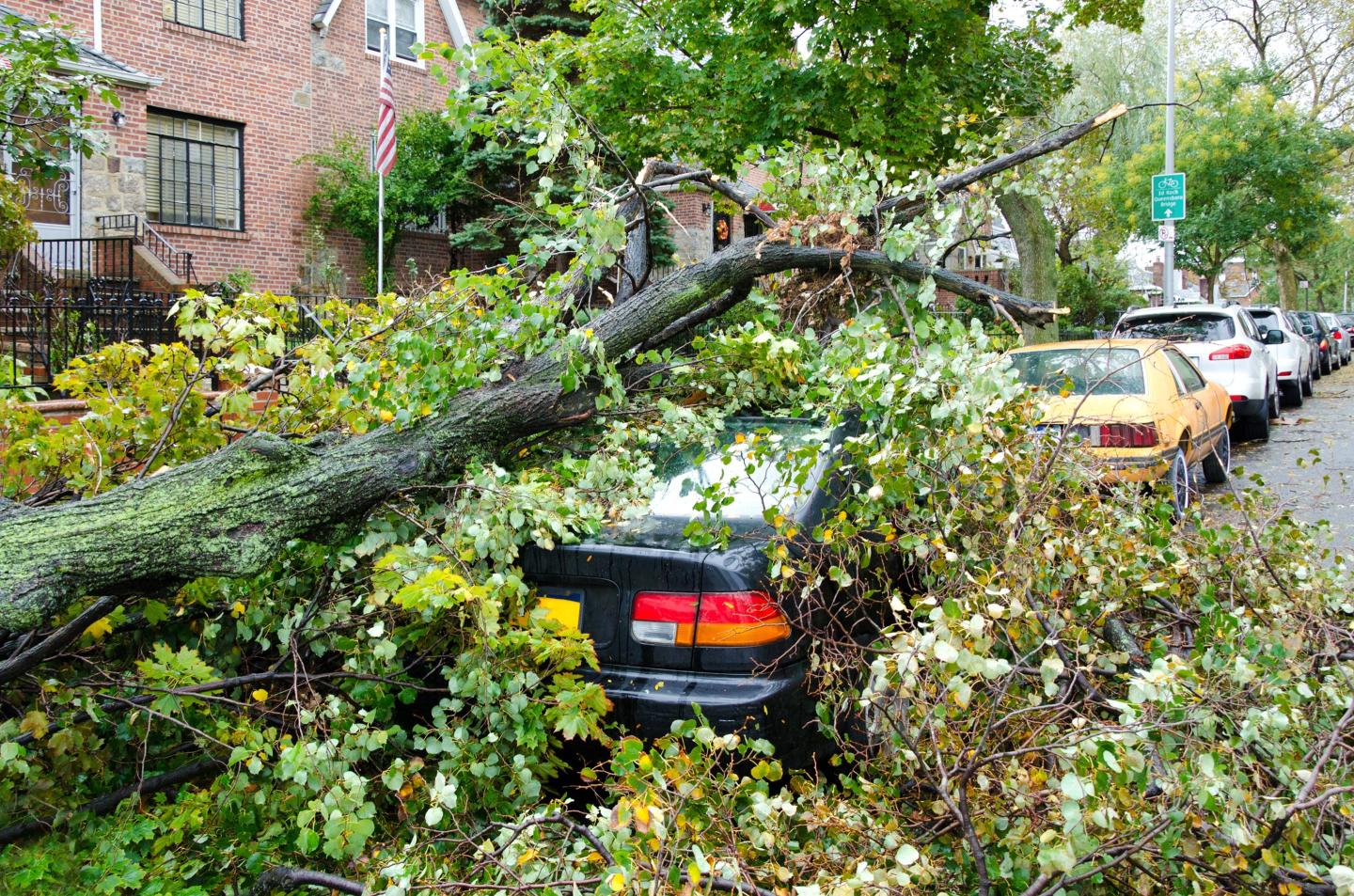
In most cases, car insurance covers storm damage to your vehicle as long as your policy includes comprehensive coverage. Other coverages may also prove helpful during a storm—like collision insurance in case you crash your car into a tree and liability insurance in case you injure another driver or damage their vehicle by causing a car accident.
Although comprehensive auto insurance provides broader coverage for storm-related perils than home insurance, there may still be limitations. For example, storm damage to items in your car and water damage stemming from neglect or lack of maintenance are generally excluded from coverage. In addition, you won’t be able to file a claim for minor storm damage if the cost of repairs is less than your deductible.
What types of storm damage does car insurance cover?
Depending on the coverage types included in the policy, car insurance may cover a wide range of storm-related losses—from direct vehicle damage caused by storms to car accidents that occur on wet roads. For the most complete protection against storms, you’ll generally need a full coverage car insurance policy that combines physical damage insurance with coverages that are required by law in your state.
ADVERTISEMENT
Comprehensive coverage pays for most types of storm damage
In most cases, full coverage car insurance covers storm damage through the comprehensive insurance portion of the policy. Comprehensive coverage can help pay to repair or replace your car if it’s damaged by something other than a collision. Perils covered by comprehensive insurance include animal strikes, vandalism, theft, earthquakes, fire, lightning, and practically all other types of direct storm damage.
Does liability car insurance cover storm damage?
Liability insurance doesn’t provide any protection for your vehicle, so your repair bills won’t be covered after your car is damaged by a storm if you have a liability-only auto insurance policy. That said, liability coverage is still critical (and most states legally require you to have it) because it can cover another person’s car repairs or medical expenses if you crash into them because you can’t see well while driving in heavy rain.
Does car insurance cover hail damage?
Comprehensive car insurance covers hailstorm damage. Around 300,000 hail damage claims are filed on personal auto insurance policies in the United States each year, and the cost to repair significant hail damage may range from as low as $750 to as high as $10,000. As a result, comprehensive auto insurance is crucial to prevent major out-of-pocket losses if you live in a hail-prone region.
Does car insurance cover flood damage?
A standard comprehensive insurance policy includes coverage for flood damage to your vehicle. This notably differs from home insurance, which excludes coverage for flooding, necessitating separate flood insurance for homeowners in high-risk flood zones. Without comprehensive coverage, the cost to repair severe flood damage could potentially be higher than the amount your car is worth.
Are hurricane and tornado damage covered by car insurance?
As long as you have comprehensive coverage, your auto insurance policy should cover damage from windstorms, including hurricanes and tornadoes. Although wind may not inflict much direct damage on your car, it can cause several other covered perils that could damage your vehicle, such as flying debris, downed power lines that fall on your car, or structural collapses in a garage or some other building where your car is parked.
Does car insurance cover a tree falling on your car?
Damage from trees or branches that blow over during a storm and fall onto your car is covered by comprehensive insurance. However, storm-related tree damage could also be covered by another type of auto insurance, depending on the situation. For example, if you crash into a tree that has already fallen in the road, the damage will likely be covered by collision insurance instead.
What types of storm damage aren’t covered by car insurance?
While comprehensive insurance typically provides broad coverage for storm damage to your car, exclusions may apply in certain situations. For example, car insurance generally doesn’t cover losses that can be traced to negligence or poor maintenance on your part—meaning you may not be covered if you forget to roll up your windows or close your sunroof before a rainstorm.
How much does insurance pay for storm damage?
After you experience covered storm damage, your insurance company should pay out the full cost to repair your vehicle or—if it would cost more than your car is worth to fix—the current actual cash value of your vehicle. Keep in mind that comprehensive claims require you to make an out-of-pocket contribution known as a deductible, so your insurer won’t cover minor claims if the cost of repairs is lower than your deductible.
Should you file a car insurance claim for storm damage?
To determine whether you should file a car insurance claim for storm damage, you need to weigh the total cost of repairs against the potential drawbacks of seeking reimbursement from your insurance company. Filing claims can cause your car insurance premiums to go up, meaning any short-term savings from filing an insurance claim may be undone in the long run unless the cost of repairs is well above your deductible.
How to file a storm damage car insurance claim
If your vehicle needs to be repaired because of storm damage, you can file a claim on your comprehensive auto insurance policy by following these steps:
- Record the extent of the damage to your car by taking pictures or videos.
- As part of the initial claims process, send your insurance company the pictures and videos you take—along with any other documentation or evidence that’s relevant to your claim.
- Talk to your insurance agent about scheduling an appointment for an insurance adjuster to inspect the damage to your car.
- Make sure you understand the details of your policy—including what’s covered and how high your deductible is—to get an idea of what your insurance payout could be.
- Reach out to local mechanics or auto shops to receive repair quotes.
- Upon reaching a settlement with your car insurance company, use the money to pay to get your car fixed.
Car insurance and storm damage at a glance
- Overview: If you have a storm-damaged car, insurance may step in to cover repairs, depending on the coverage types included in your policy and the exact source of the damage.
- Comprehensive coverage: Most types of storm damage are covered by comprehensive insurance, including flooding, wind, hail, lightning, and even earthquakes.
- Other coverage options: Car insurance may include multiple other coverages that can cover losses stemming from storms. For example, liability insurance covers other people’s expenses after an at-fault accident, while collision insurance covers damage to your vehicle if you crash into another car or a stationary object amid stormy weather.
- Tree damage: Comprehensive coverage takes effect if a tree falls on your car during a storm, but you may need to file a collision insurance claim instead if you crash into a tree that has already fallen.
- Exclusions: Your insurance company won’t cover damage caused by neglect, like if your seats are ruined because you forgot to roll your windows up before a rainstorm. Also, car insurance doesn’t cover items in your vehicle that are damaged by a storm—though homeowners or renters insurance may.
- Cost considerations: You can’t file a car insurance storm damage claim unless the cost of repairs is higher than your deductible. Since your premiums can go up after you file a claim, it may be cheaper to cover the repair costs out of pocket if they would barely meet or exceed your deductible.
ADVERTISEMENT

How to protect your car before a severe storm
Here’s what you need to do before a storm hits to prevent severe damage to your vehicle:
- Fill your car with gas in case the storm leads to power outages or fuel shortages.
- Pack an emergency kit with supplies like tools, jumper cables, a spare tire, and flashlights.
- Park your car inside a garage or underneath a carport if possible.
- Use a car cover to protect your vehicle from the elements as much as possible if it must be parked outside.
- Make sure you have comprehensive insurance to cover storm damage to your vehicle.
- Move your vehicle to higher ground if flooding is a possibility.
Frequently asked questions
Will insurance cover storm damage if you only have minimum coverage?
No, minimum coverage car insurance doesn’t cover direct storm damage to your vehicle. Storm damage is generally covered by comprehensive insurance, which isn’t required by law in any state.
Do you have to pay a deductible for storm damage?
Yes, you’ll generally need to pay a deductible when you file a comprehensive insurance claim for storm damage to your vehicle. However, if you have full glass coverage, the deductible may be waived for window-related claims, like if a falling tree branch cracks your windshield during a storm.
Can you add comprehensive coverage before a storm?
Some car insurance companies may not allow you to add comprehensive coverage to your policy shortly before a forecasted storm.
Does car insurance cover wind damage?
Yes, car insurance should cover wind damage if your policy includes comprehensive coverage.
Will car insurance cover personal belongings damaged in a storm?
No, car insurance doesn’t cover personal belongings damaged in a storm. Nevertheless, items stored in your vehicle may be covered by the personal property coverage portion of your homeowners insurance policy.