The popularity of prediction markets has exploded over the past two years, with leaders Kalshi and Polymarket disrupting traditional gambling platforms with easy-to-use apps that let users wager on everything from sports to politics and pop culture. The investment firm Bernstein estimates their trading volume could reach $1 trillion by 2030 at their current pace. That growth is riling competitors, but also state governments that depend on revenue from sports betting—and have so far been unable to collect any from the upstart prediction market platforms.
The situation stems from Kalshi and Polymarket’s view that they are beholden only to federal agencies, and not state governments. This has left states like New York, New Jersey, and Kentucky scrambling for strategies to preserve a stream of tax revenue that pays for everything from college athletics to services for senior citizens and gambling treatment programs.
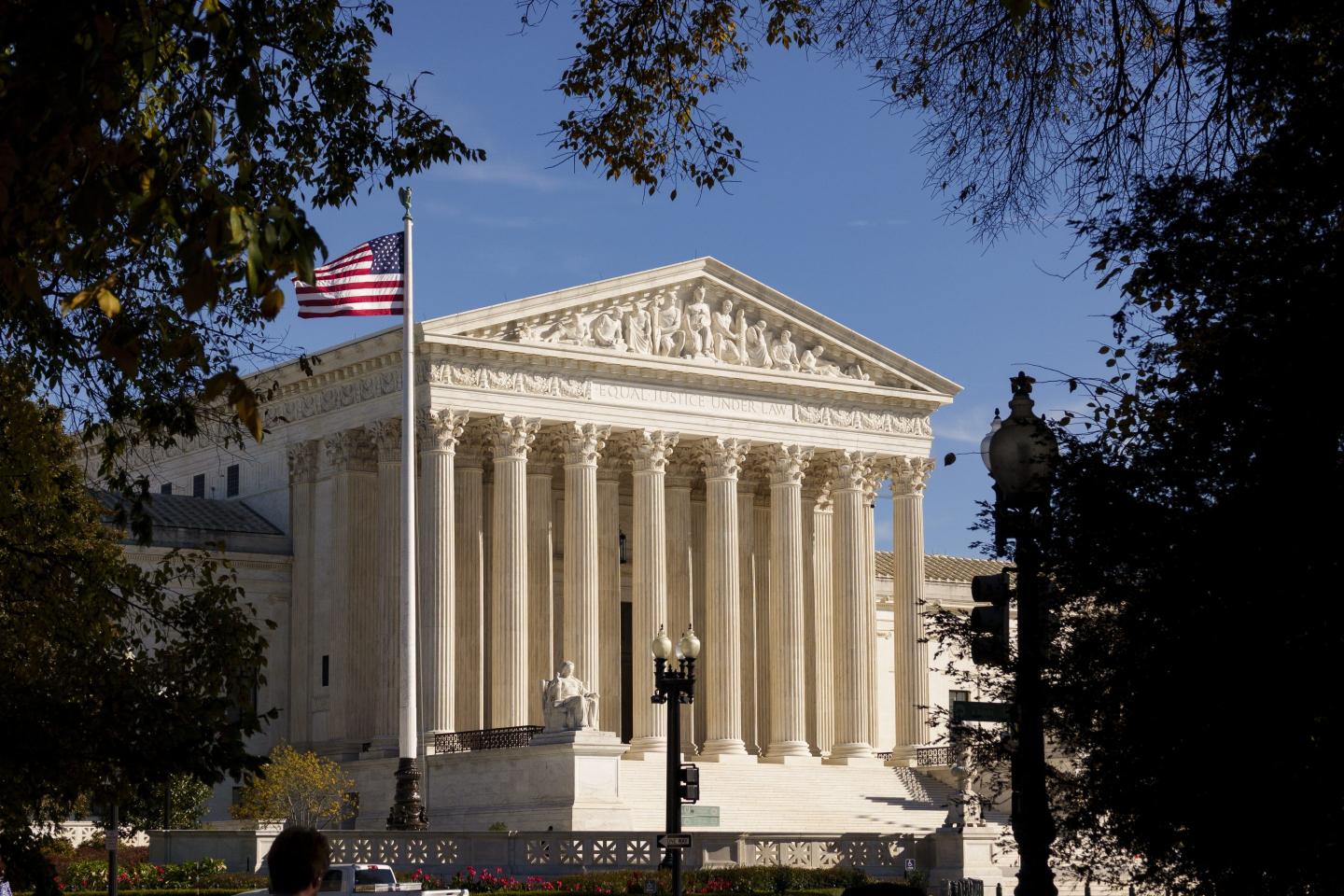
In response, roughly 14 states have sued to shut down the prediction markets, resulting in a mixed bag of appeals court rulings that are rapidly heading towards the Supreme Court. Meanwhile, at least seven states have also proposed or enacted legislation to impose taxes on prediction markets. But the legal status of those taxes is unclear, and will ultimately depend on how the Supreme Court defines prediction markets and the limits of state oversight.
A looming loss of revenue
Prediction markets burst on the scene during the 2024 election, when contracts on Kalshi and Polymarket forecast the victory of President Donald Trump and members of Congress with remarkable accuracy. In early 2025, Kalshi seized on a shifting regulatory climate to offer sports wagers in the U.S., leading other prediction markets to do the same. According to Jacob Macumber-Rosin, a tax analyst at the Tax Foundation, “it’s likely that the prediction market activity is going to eat up some of the market share of sports betting and eat into those revenues.”
Some organizations, like the American Gaming Association, which represents the gambling industry, have already put a number on it, estimating that, nationally, prediction markets have so far displaced roughly $1.7 billion in state sports-betting tax revenue.
Sports betting taxes in and of themselves don’t make up a whole lot of most states’ total tax revenue. “In most states it’s less than one percent of total tax revenue,” Mark Robyn, a senior officer with The Pew Charitable Trusts’ state fiscal health project, told Fortune.
But he added that the revenue is nonetheless significant, especially considering that, “in some states, the sportsbook revenue is earmarked” for specific services that communities rely on.
New York is a good example. The state places a 51% tax on gaming revenue from mobile sportsbooks, with the proceeds primarily used to support public education and specific allocations also set aside for sports programs for underserved youth and problem-gambling treatment. One June analysis by the Tax Policy Center that looked at the situation in the state alone estimated that even a 5% shift from sportsbooks to prediction markets could cost New York roughly $66 million a year in tax revenue.
“They’re going to need to look for either increased taxes on sports betting to cover it, or increase taxes elsewhere,” Macumber-Rosin said. Several, including New York, have opted for the latter.
New markets, new taxes
At least 15 states have proposed legislation to regulate prediction markets in one capacity or another, according to a November report by the National Conference of State Legislatures. Some, like California and Connecticut, have proposed limiting children’s access to the platforms, while others, like Ohio, have sought to restrict their use by public officials.
Around half of those bills focus on taxation. Kentucky was an early mover: In April, it enacted a 14.25% tax on operators’ transaction fees, set to take effect in January. North Carolina followed in July with a 6% tax on prediction markets’ net trading fee revenue, projected to bring in $2 million in 2027 and $7.7 million in 2030. That money would flow into its General Fund—the state’s main pool of funding for services including education, healthcare, and public safety.
Others are still actively working to get such a bill passed. In New Jersey, lawmakers advanced a proposal in June to place a 9% surtax on prediction market operators’ income, nearly three months after a federal appeals court sided with Kalshi in its fight with state regulators.
In an accompanying fiscal estimate for the bill, legislative analysts warned that if the platforms grow “at the expense of the other wagering and gaming licensees, there would be a reduction in the State revenue collections from those licensees.” They also estimated that the surtax would bring in roughly $10 million to $15 million in its first year alone.
New York became the latest mover on Monday, when a state senator unveiled a proposed 10% surcharge on operators’ net trading-fee revenue. If passed, the measure would direct the proceeds to a “futures fund for early education” supporting statewide universal pre-K.
But getting these taxes through a state legislature is only one hurdle. Whether they survive the broader legal fight over states’ authority to oversee prediction markets is another—one poised to land before the Supreme Court.
A high stakes legal battle
The experience of Illinois underscores the legal challenges faced by states as they seek to impose taxes on the likes of Polymarket and Kalshi. In June, Governor JB Pritzker signed a budget-related tax package that required prediction market operators to get a state gambling license and pay a tax on each bet placed through their platforms. The rate started at 1.75% of the amount wagered and rose to 3.5% after an operator’s first 5 million bets each year.
Four months later, a judge blocked Illinois from collecting the tax from federally regulated exchanges, finding that federal law likely preempted the state’s license requirement. “Because the licensing regime fell with respect to prediction markets, that meant the taxation went down with it,” explained Lauren Ferrante, a Chicago-based state and local tax attorney at the law firm Kilpatrick Townsend & Stockton.
North Carolina, by contrast, took a different approach. In a bill signed in July, the state explicitly acknowledged the exclusive regulatory authority of the Commodity Futures Trading Commission over prediction markets, but nonetheless placed a separate tax on operators’ net trading fee revenue.
“[It’s] clearly staying in its lane, and it’s not trying to regulate or license Kalshi and the other prediction markets at all,” said David Hughes, also a state and local tax attorney at Kilpatrick Townsend & Stockton.
North Carolina’s legislation is also notable for its relatively modest ambitions. Unlike states like Kentucky, which will tax prediction markets at a 14.25% rate—the highest figure of any state proposal—North Carolina’s 6% rate is among the lowest, especially when compared to the 23% levy it imposes on the revenue of traditional sportsbook platforms like DraftKings.
“They’re trying to find a way to pass something that’s going to make everyone happy without having to fight a huge legal battle,” Nathan Goldman, an accounting professor at North Carolina State University, told Fortune.
But even that approach isn’t guaranteed to hold up. “A standalone tax that has nothing to do with regulating or licensing prediction markets… might be enough of a form of regulation for a court to get concerned,” Hughes said.
For Macumber-Rosin, that uncertainty is reason enough for states to wait before collecting the money.
Otherwise, a new source of revenue could become a new budget problem: States could collect the money, spend it, and later find themselves having to give it back. Those that move ahead should “set that money aside and just keep it in case they have to pay it back,” he said.