
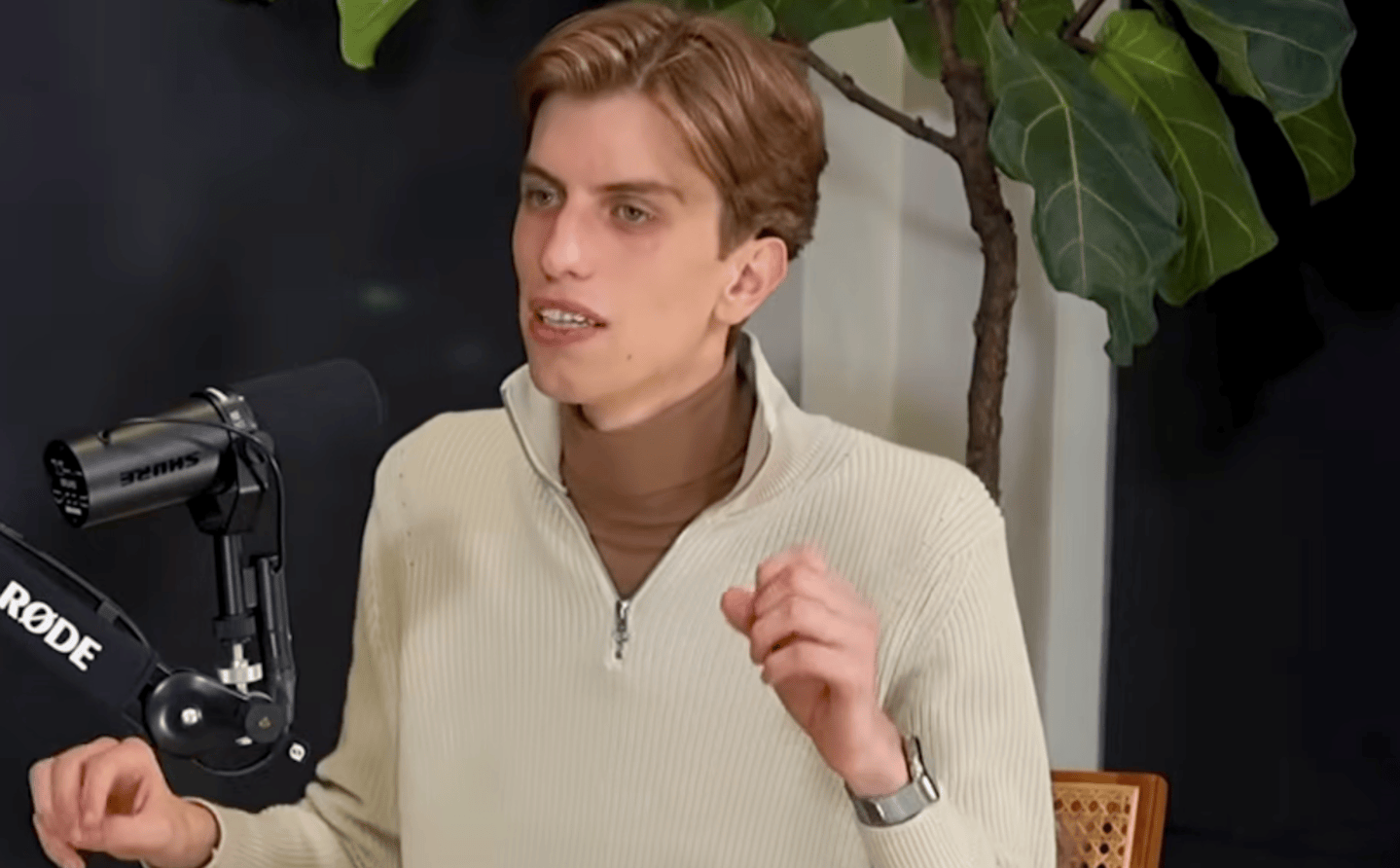
Leopold Aschenbrenner has bet billions of dollars that artificial intelligence will remake the economy faster than almost anyone expects. But for his two younger sisters, who are still in school, he has some surprising advice.
“I tell them to study the classics,” the 25-year-old founder of the AI-focused hedge fund Situational Awareness told Stephen Witt in a profile in The New Yorker.
The advice stands out coming from someone who expects human intellectual labor to become obsolete. Aschenbrenner told Witt that “agent swarms,” hundreds of AI agents working in tandem, will soon do most white-collar work, concentrating enormous leverage in the hands of the few people who direct them. At his own firm, he said, two employees do the work of about 60 software engineers.
He also predicts that 2027 will be the last year modern life still feels “a little normal,” as AI models begin doing a meaningful share of the research behind the next generation of models.
A Columbia valedictorian who reads Burke
Aschenbrenner took his own advice. Born in Berlin in 2001, he enrolled at Columbia University at 15 to pursue a classical liberal education and graduated as valedictorian at 19.
He told Witt that political economy was his favorite subject, and that he especially admires Edmund Burke, the 18th-century Anglo-Irish statesman who held that a just society is built on centuries of accumulated experience. Burke predicted, nine years before Napoleon seized power, that a military strongman would end the French Revolution. Aschenbrenner fears AI could produce similar outcomes.
He also credits his great-grandmother—who lived through Nazi rule, Soviet occupation, the fall of communism and is now in her early nineties—with giving him a sense that historical turbulence will return.
His view of human expertise is blunt. He sketched a curve for Witt in which the value of a human skill rises, then collapses once AI masters it. His mother-in-law, the poet Devon Balwit, now earns more than $100 an hour critiquing AI-written poetry for an AI-training firm, a job he expects to disappear once the models learn the craft.
Tech leaders are split on the humanities
Aschenbrenner is one of several AI insiders steering young people toward the liberal arts. Microsoft chief scientist Jaime Teevan told The Wall Street Journal that building critical thinking takes friction and hard, deep work, which a traditional liberal-arts education provides. Anthropic cofounder Daniela Amodei has said the humanities will matter more than ever.
Their arguments fit into a broader push by tech leaders to revive the liberal arts in the AI era. But Palantir CEO Alex Karp warned at Davos this year that AI will destroy humanities jobs, using his own philosophy training as an example.
A record loss hasn’t changed his bet
Aschenbrenner’s forecasts carry weight on Wall Street because many of them paid off, as Fortune reported in its 2025 profile of the AI investing boom’s posterboy. According to The New Yorker, Situational Awareness reported returns of more than 1,000% from late 2024 to mid-2026, mostly on AI-infrastructure bets.
Then its heavily leveraged positions turned. In July, the fund sold most of its public-stock portfolio to Ken Griffin’s Citadel at a 10% discount and told investors it lost an estimated $30 billion that month, a drawdown The New Yorker calls the largest in hedge-fund history.
Aschenbrenner held on to his early stake in Anthropic, which went public this month at a valuation of about $1.5 trillion. The fund still manages more than $10 billion, and Hedgeweek reported on Nov. 19 that he is exploring a relaunch that would include a return to leveraged trading.
The broader economy has not yet followed his timeline. U.S. unemployment was 4.1% in October, and The New Yorker notes that GDP growth is on track for about 3% this year, well short of the 10%-plus he has predicted. Workers who use AI on the job told surveyors in August that it saves them about 2% of their time, according to an analysis the magazine cited.
Aschenbrenner doesn’t exempt himself. In a decade, he told Witt, people won’t ask him what to invest in. They’ll ask an AI.