
When OpenAI released ChatGPT on Nov. 30, 2022, Derin Suzener was a high school senior already leaning toward a career in AI. He got there “without having taken a single computer science course back in 11th grade,” he told Fortune. “I did not start using ChatGPT until I entered university, actually.”
Nikita Kravcenko, his future cofounder, was also in high school, taking AP classes where “my teachers were bombarding students with anti-AI policy, because it was like a new technology at that point,” he said. “So they were very fearful of what it could do and write. So they were essentially having a craze over it.”
By the time they got to Purdue, the craze had casualties. “I was seeing all of my friends get accused of cheating with AI on their computer science assignments,” Suzener said. “And they would have a pretty hard time proving it, actually.”
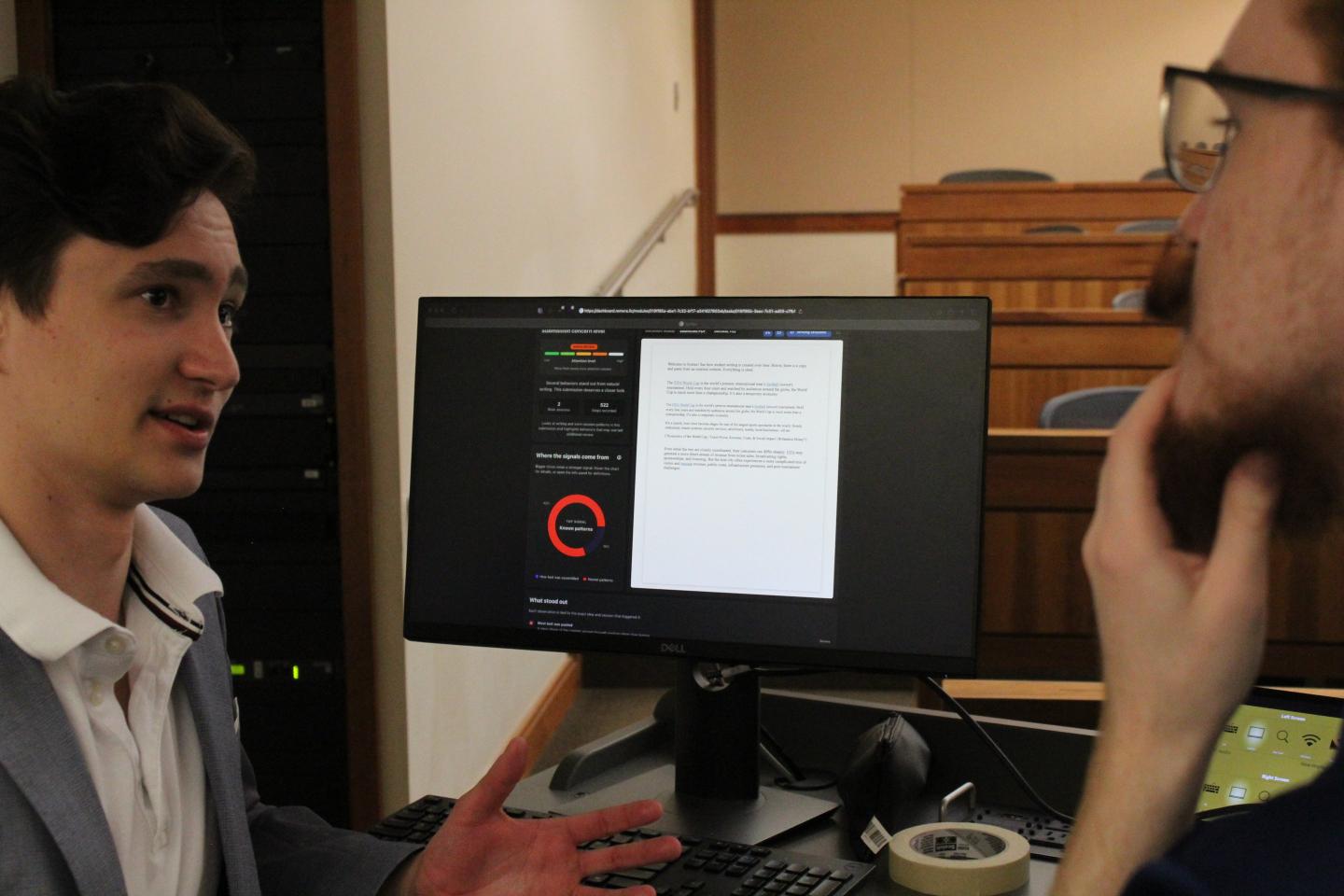
So Suzener, Kravcenko and two classmates built a way to prove it. Their company, Remora, makes Syntax, a document editor that records how a student writes a paper (typing speed, cursor movement, what gets pasted in) and flags anything odd for the teacher to review. The founders say it’s used in classrooms at 40 U.S. colleges and universities, though they declined to name any, saying that identifying customers could help larger competitors go after the same schools. The company says four more institutions will start using it next semester. Students can also buy it themselves, starting at $9.99 for three months.
The pitch is protection for students who did their own work. “The guilty are truly proven to be guilty, and then the innocent are exonerated,” Kravcenko said. The fear is common. In a YouGov poll of 2,373 UK students, commissioned by the student-support company Studiosity, 52% named “being accused of cheating when I did nothing wrong” as one of the things stressing them out, Times Higher Education reported in February.
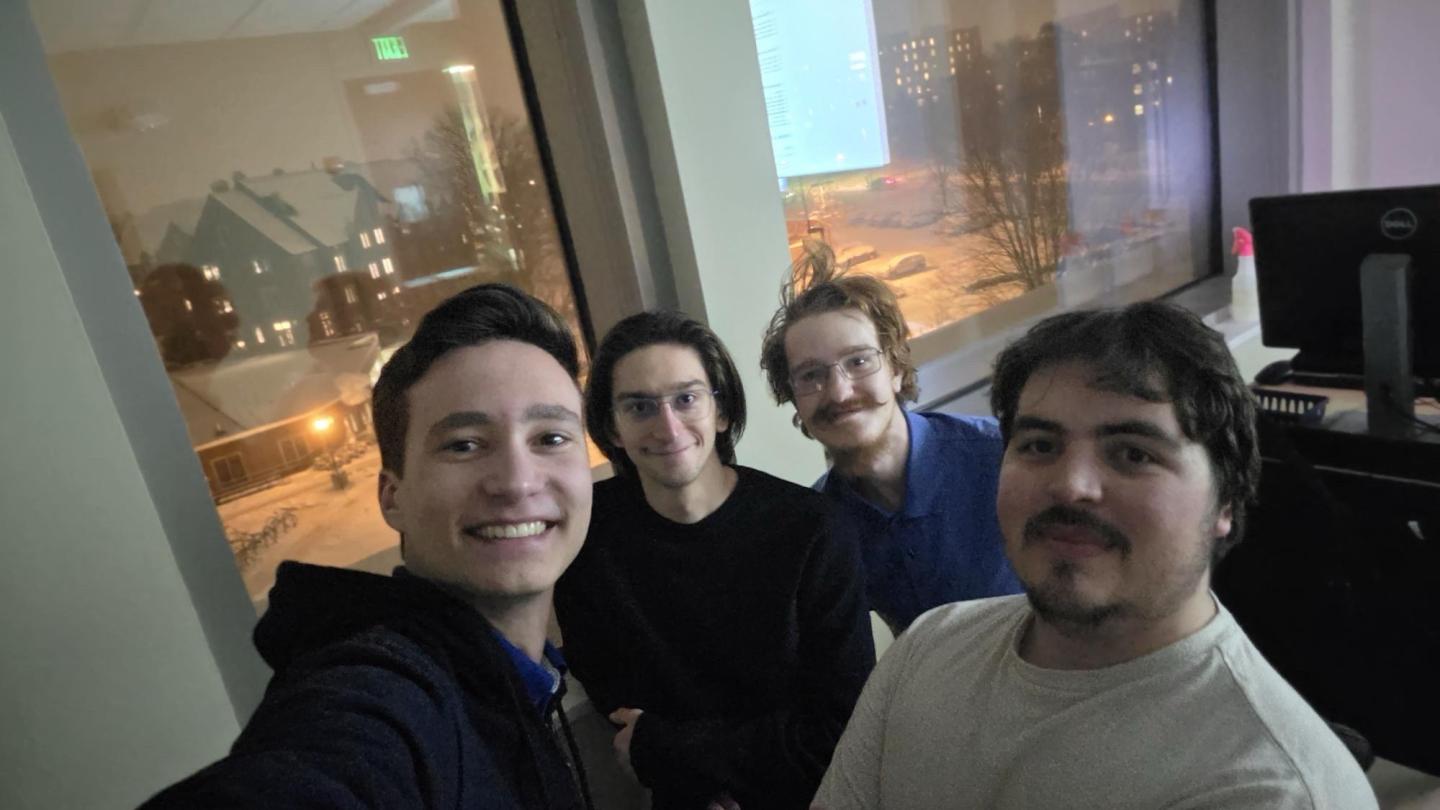
Kravcenko, the company’s CFO, is a third-year finance and accounting student at Purdue’s Daniels School of Business who oversees finances and outreach. Suzener, the CEO, is a senior studying computer science, AI and philosophy. He oversees product, engineering, strategy and research, along with the analysis algorithms, and is spending this semester on exchange at KTH Royal Institute of Technology in Sweden. Their cofounders are CTO Robert Juliano, a Purdue junior studying cybersecurity, network engineering and forensic science; and Nicholas Ball, the chief information security officer, a recent Purdue cybersecurity graduate now in the university’s master’s program. The four came up with the idea in the spring 2025 semester and founded the company that June.
Called into a meeting
Suzener remembers one friend in particular from his first year. The friend was accused of cheating on a coding assignment and called into a half-hour meeting to explain his code. “He studied hours for it just to be able to explain it perfectly,” Suzener said. “He was really stressed about it.” He passed, because he had written the code himself. The stress lasted longer than the meeting.
In Suzener’s philosophy classes, detectors were flagging essays because they read like machine output. “But an AI and a person can arrive at the exact same sentence by some given probability,” he said.
While testing Syntax in Purdue courses, the founders met a student who, Kravcenko said, “was embroiled in an academic dishonesty hearing for the majority of the year.” To clear himself, the student had to produce “Google Docs history documents, actual time receipts,” Kravcenko said. The student told the founders Syntax would have taken much of that pressure off him.
The founders started with Turnitin, the plagiarism checker most students know from high school. Kravcenko said its AI scoring, which reads only the finished text, produced false positives. “Why not make something that can portray the entire picture of how the work was written instead of just diluting it into a score?”
The blank page
Suzener explains Syntax the way he explains it to teachers. “When you open a document for the first time, like Google Docs, you have a blank page. And as a student, you will start writing things. And maybe this is just the brainstorming phase. Maybe you’re just taking notes. Maybe you write a whole paragraph in one sitting. It’s completely possible and this changes based on who you are, how you write.”
Text-based detectors like GPTZero, Suzener said, train models on human and machine writing and score the finished product. Syntax skips the prose. “We don’t actually look at the text that’s being written,” Suzener said. “We look instead to the entire behavioral process that took place to actually arrive at that final text.”
He compares it to a CAPTCHA, which cares less about whether you clicked the right traffic lights than about how your cursor got there. Syntax logs typing speed, typing behavior and cursor movement inside its own editor. From that, Suzener says, it can tell a human from a script and see how a student pastes and cites. It can also catch something subtler. “Are you typing something while looking at something else completely at a steady pace? Which is obviously not a great sign of your own work being done.”
Syntax flags those patterns, and the teacher decides what they mean. “A lot of AI detectors have the final product only,” Kravcenko said. “We have access to the entire writing process from start to finish.”
Suzener described a case where an instructor at a California university got a flag on a student’s paper, called the student in and went through Syntax’s record. The student had pasted in material from an outside document and cited none of it. That was sloppy, not AI. Suzener recalled the teacher writing back, “great job, guys. Thank you for making it very clear.”
Teachers also get GraderAid, a grading tool built on Bloom’s Taxonomy, a framework educators use to gauge how deeply a student understands material. It checks a submission against the instructor’s own course objectives. The company says GraderAid doesn’t use large language models, and the teacher makes the final call.
Who pays
Students can buy access directly: $9.99 for three months, $14.99 for six and $19.99 for nine, with a seven-day free trial. Instructors can cover a whole class, and schools can license Syntax through their learning-management systems, with setup for Canvas and Brightspace. Both are priced case by case. In other words, a student who’s afraid of being accused can pay for their own alibi.
The pilots were free. Then the company started charging, and “we’ve actually started making enough to compensate for the cost of actually hosting the service,” Kravcenko said. Remora started charging subscriptions in September, and that revenue has covered its operating costs since, Kravcenko said in an email. The company reached operating break-even in October and is still self-funded. The founders declined to disclose revenue or the number of paying users. They priced it as students, Kravcenko said: “we, as students, know what teachers want to pay, we know what students would like to pay.”
The founders count GPTZero and Turnitin as the incumbents. They hadn’t heard of Pangram, a newer detector, when they started. “Pangram has only recently become sort of like a bigger deal across academic circles,” Suzener said.
A much bigger company already sells something similar. Grammarly’s Authorship feature, rolled out widely in October 2024, logs what a student types and pastes and can replay how a document was made. Grammarly offers it on its free tier and pitches it the same way, to “a student seeking to protect yourself against accusations of plagiarism,” according to the company.
Kravcenko said in an email that Authorship documents a single document’s history, while Syntax “takes a longitudinal approach, building a behavioral fingerprint across a student’s submissions.” It learns how a student normally writes, he said, and flags when a paper departs from that.
Teachers have responded warmly, the founders say. One instructor emailed to say they had been needing a tool like this and had recommended it to colleagues in other departments. Another sent long feedback describing Syntax as a “friendly neighborhood watch” that left students less inclined to cheat. The founders say they also saw more engagement with the material in that class.
Being watched
Asked whether students had pushed back, Kravcenko said not “directly from students.” He suspects the ones who object keep quiet. “They will just try to find a way to cheat.”
Suzener expects some resentment. “We sort of know students, and we know how they will react to things,” he said. When a teacher runs every paper through GPTZero, “the students will generally not be happy.” Syntax is trying to do better “by trying to bring transparency,” he said, “but there will obviously be some discontent, and that’s not very easy to stop.”
In a follow-up, the company said it actively welcomes student feedback and that Syntax is designed to rebuild the trust students have lost in today’s AI detectors. It says it records behavior only inside its own editor, doesn’t sell student data or use it for advertising, lets students keep ownership of their work and doesn’t use that work to train AI models. When teachers ask whether Syntax is a policing tool, Kravcenko said, “the answer is no.”
Critics of process tracking have two objections: the privacy of the draft, and how easy the tracking is to beat. “I feel entirely naked just describing how I write—I would be mortified if someone could see that entire process,” Marc Watkins, a faculty member who writes about AI in education, wrote in a 2025 post on Grammarly’s tool. He added: “Simply opening a new tab and manually copying an AI output via typing or automating the task will defeat it.” That steady retyping is the pattern Suzener says Syntax is built to catch.
The founders aren’t anti-AI. Kravcenko said a mentor of his uses AI to role-play emails and presentations, which he thinks is how it should be used: “having, like, a partner that is sitting on your shoulder instead of at the keyboard writing for you is very helpful.”