Welcome to this week’s Fortune Gulf Brief. We’ll be covering:
- Saudi’s PIF faces growing funding pressure
- Fizz app goes viral with a fresh take on social networking
- Qatar and Brookfield pledge $16.5bn investment in Germany
- ExxonMobil signs $400 million Oman gas deal
- And, the three we enjoyed reading this week
In war, optics matter.
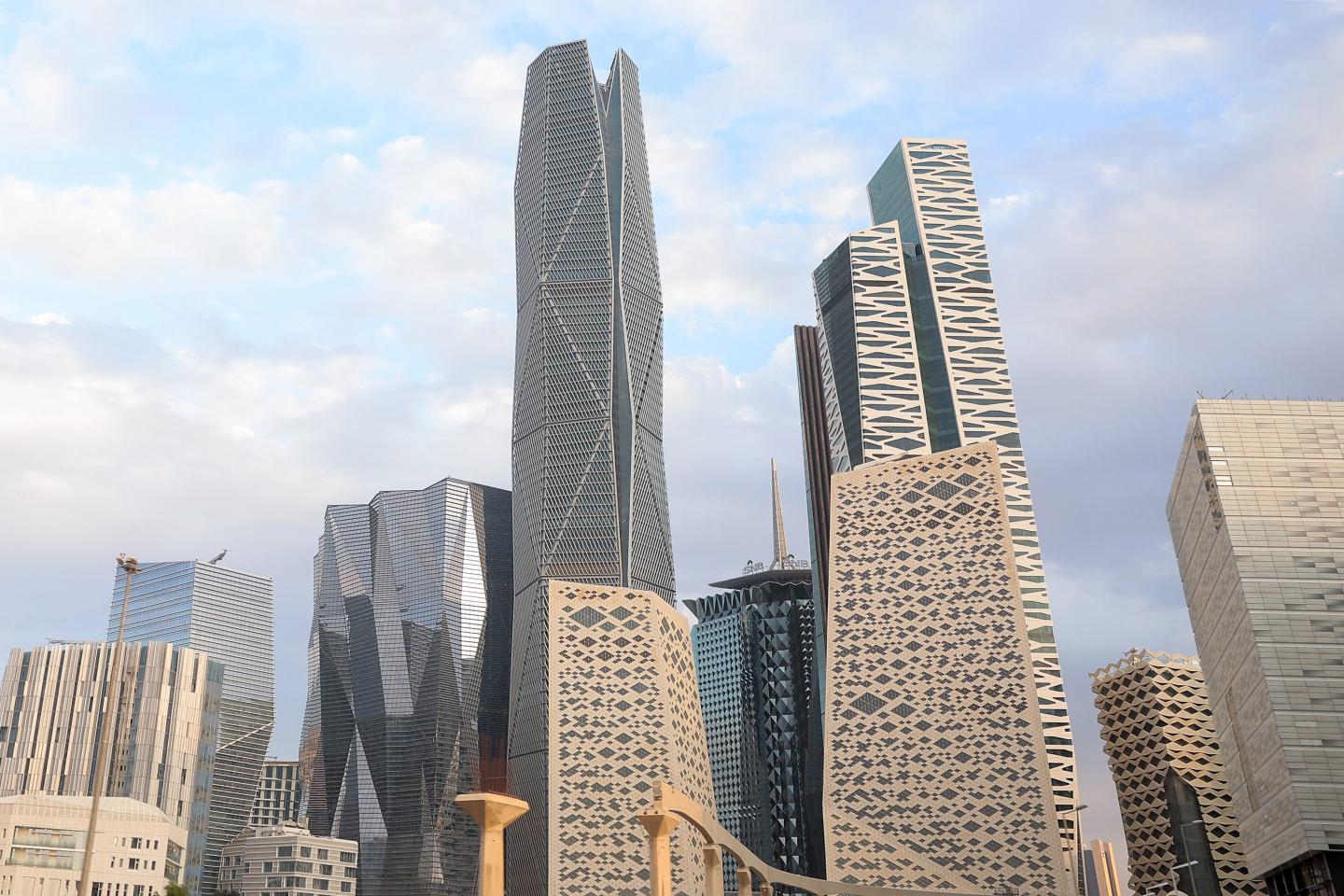
On Tuesday, the Iran-backed Houthis struck the headquarters of the Public Investment Fund (PIF), Saudi Arabia’s $1 trillion sovereign wealth fund, for the second time in less than a week.
The strike injured 11 people and occurred on the same day that Riyadh unveiled its annual budget for 2027, with an estimated deficit of SAR190 billion ($50.64 billion). The kingdom is now preparing for its first economic contraction in several years.
The economic toll of the U.S.-Iran war on Saudi’s economy has been gradually building during the course of this year.
Foreign direct investment (FDI) into Saudi Arabia declined 18% in the second quarter, reaching SAR 22.3 billion ($5.95 billion), compared with the previous quarter.
Many foreign investors are adopting a wait-and-see approach until the trajectory of the war becomes clearer—a delay the kingdom can ill afford.
Riyadh is targeting $100 billion in annual FDI by 2030. It attracted $33 billion in 2025, but that figure is likely to be lower in 2026, Tim Callen, a visiting fellow at the U.S. think tank Arab Gulf States Institute and a former IMF mission chief to Saudi Arabia, tells me.
“To get to $100 billion in 2030 would require exceptionally strong growth,” he said. “There is no evidence to suggest this will happen. If the war ends, it may go up, but not to this level.”
But PIF is reluctant to stump up any more cash itself given its declining assets and mounting losses. Callen calculates its cumulative impairments stood at nearly $30bn during 2024 and 2025.
Earlier this month, Reuters reported that PIF is beginning to explore new fundraising avenues, including raising funds against future revenues from some portfolio companies.
“Selling stakes in companies is certainly possible, although it will not be easy in the domestic market at present,” said Callen.
“I think the most likely route is that they will borrow more and also look for more public-to-public transactions such as that recently agreed with Aramco for Humain.”
On November 1, PIF sold a 49% stake in Saudi AI firm Humain to state-owned oil giant Aramco, which is set to inject $2.6 billion into Humain this year.
Around the same time, it secured a €2.8bn ($3bn) loan from a 25-bank consortium, backed by a guarantee from Italy’s credit-export agency. Meanwhile, in May, it sold a three-tranche bond worth $7 billion.
In August, a senior executive at PIF said it planned to return to the global debt market early next year.
But as borrowing increasingly underpins new investment, rising financing costs could prove a challenge.
With the riyal pegged to the U.S. dollar, the kingdom’s monetary policy is closely tied to that of the U.S. This leaves the kingdom facing higher borrowing costs just as both its current account and fiscal deficits are widening.
“PIF will have to focus on higher return projects that make sense when they are funded at higher interest rates,” says Callen.
In addition, Callen said he suspects there will be further write-downs on Neom, the planned futuristic desert city, and, to a lesser extent, on other giga projects.
PIF recorded $8 billion in write-downs on its five gigaprojects in 2024, with Neom accounting for the largest share. Payments to contractors to terminate long-term Neom agreements are expected to total $16 billion over the next five years—more than it plans to spend on construction.
Khalid Azim, director of the MENA Futures Lab at the Atlantic Council’s Rafik Hariri Center for the Middle East, said that focusing on the returns from investing in people will ultimately be more important than financial capital in the next phase of Vision 2030.
“Human capital and productivity will increasingly determine economic competitiveness,” he told me, noting that approximately 71% of Saudi citizens are under the age of 35.
“To realize that demographic dividend, Saudi Arabia must turn its investments in education and skills into productive economic output.”
For a deeper look at how the U.S.-Iran war has been testing the resilience of Vision 2030, read my Fortune colleague Vivienne Walt’s piece here.
Melissa Hancock
As ever, thanks for reading, and do keep in touch with your thoughts and ideas.
melissa.hancock@fortune.com
Fizz factor
Fizz: The U.S. social media app taking off across the Gulf
When Teddy Solomon launched his college social media app Fizz in Saudi Arabia in March, he was stunned by the response.
Within 48 hours, it was the most downloaded app in the App Store. It has since topped the charts in seven markets across the Middle East, with users sending 60 million direct messages on the platform.
It went “crazy viral,” Solomon, the 24-year-old co-founder and CEO, said.
While the GCC is home to highly active social media audiences across a plethora of platforms, including Instagram, Snapchat, TikTok, and WhatsApp, U.S. firm Fizz has found a niche through its community-focused feeds.
“Our aim is to connect people with others in their immediate surroundings,” Solomon said. “We’ve found that proximity matters, with users more interested in engaging with people just two miles away than with those living in another country.”
Sports is a hot topic of conversation in Saudi Arabia, more so than any other country in the region, while cars are a popular topic across the region, especially in Saudi and the UAE. Coffee, meanwhile, is a popular topic throughout.
With a young, digitally native population—more than half the GCC population is under the age of 30, according to Bain & Company—the region seemed the ideal testbed for overseas expansion. The average Fizz user is 27 years old, while 5G subscription penetration across the GCC stood at 53% at the end of 2025, among the highest rates globally, and is projected to climb to around 90% by 2031.
Fizz has since recruited Arabic speakers to help localize the platform further, while investing heavily in Arabic natural language processing tools to strengthen its content moderation capabilities.
“The reality is that people are craving human connection more than they ever have,” Solomon said. “We want to fulfill the dream that Facebook failed to deliver in bringing people closer together in real life.”
In July this year, Fizz raised an undisclosed strategic investment at a $200 million valuation cap as it builds out its advertising business with brands including Sony Pictures, Amazon, and Perplexity. The deal follows a $25 million Series B round in 2023.
The big question now is whether it can turn its initial download and messaging growth into long-term user retention and sustainable revenue.
It’s still early days, but so far, the stats look promising: 88% of Fizz’s revenue is generated by subscriptions, while 12% is from in-app purchases. Subscriptions boosted revenue by 60% in October, with subscribers spending up to $11 per week.
“We've got lightning in a bottle in the region, so we want to scale it up and really give people a product that they love,” says Solomon.
Berlin bound
Qatar and Brookfield choose Germany for next investment partnership
Qatar Investment Authority (QIA) and Canadian asset manager Brookfield have agreed to invest up to €15 billion ($16.5 billion) in Germany over the next five years, strengthening their burgeoning partnership.
Brookfield has struck several deals with the QIA, Qatar’s sovereign wealth fund, in recent months.
On 3 Nov., the two agreed to commit £2.5 billion ($3.3 billion) to a data center project in North Yorkshire, alongside U.K. energy producer Drax Group. Brookfield estimates that total investment in the development could potentially exceed £20 billion.
The $16.5 billion investment into Germany will target sectors ranging from AI, semiconductors, aviation, defense, and security, energy infrastructure, green tech, advanced manufacturing, digital technologies, and R&D.
The announcement was made during a two-day state visit to Berlin last week by Qatar’s Emir, Sheikh Tamim bin Hamad Al Thani.
The latest investment pledge builds on Qatar’s existing investment portfolio in Germany—worth over €25 billion (£27.4 billion)—which already spans sectors such as automotive, industrial, energy, technology, infrastructure, and financial services.
Despite the ongoing U.S.-Iran conflict, the QIA, with assets worth $580 billion, has pressed ahead with its global investment strategy, announcing a $20 billion partnership with JPMorgan Chase in September, following a $25 billion investment partnership with Goldman Sachs in January.
On Monday, Qatar signed a critical minerals agreement with the U.S. to align national strategies on diversifying and strengthening supply chains.
The agreement was signed during the eighth US-Qatar Strategic Dialogue. The U.S. undersecretary of state, Jacob Helberg, said that the dialogue builds on Pax Silica, a Washington-led initiative to secure supply chains related to AI, semiconductors and rare earth elements.
Exxon Mobil sees Oman potential
LNG facility could deliver millions of tons of gas per year
State-owned Energy Oman has signed a concession agreement with ExxonMobil to evaluate and develop gas resources in the Greater Makarem area, with initial investment expected to exceed $400 million.
The agreement provides a framework for an integrated natural gas production and liquefied natural gas (LNG) project, with total investment potentially reaching several billion dollars across its development and production phases.
The initial stage will focus on assessing the area's gas reserves and evaluating the fields’ production potential.
The project also envisages an LNG facility in the Special Economic Zone at Duqm, on the sultanate’s central coast, with an annual production capacity of between 6 million and 9 million tons.
In addition to offering an alternative export route on the Arabian Sea coast, Oman’s ministry of energy and minerals said that it hopes the project will bolster the competitiveness of its gas sector and strengthen its role in global energy markets.
The Big Number
$6.5 billion
The value of a freezing order obtained by Binance from an Abu Dhabi court as the cryptocurrency exchange seeks to recover assets stolen in a massive hack last month. The Abu Dhabi Global Market Courts issued the injunction, which also requires market participants to be notified of an updated list of crypto wallet addresses associated with the stolen funds.
The 3 things we enjoyed reading this week
- Nearly nine months into the U.S.-Iran war, it has become increasingly difficult to determine how much oil is actually passing through the Strait of Hormuz. This opinion piece considers whether the growing alignment between commercial assessments and Washington’s narrative—which suggested significantly more oil was leaving the Gulf than shipping data showed—points to increasing U.S. government influence over the energy sector.
-
Private credit firms see an estimated $100 billion opportunity in Saudi Arabia, but regulatory hurdles and lengthy licensing processes are slowing investment. A $150 million financing deal backed by Goldman Sachs, HSBC and Fortress took months to complete. Partnerships between local and international managers could help unlock the market as Riyadh seeks to attract more private capital to support economic diversification.
-
The UAE's highest-paid executives earn up to Dh2.46 million ($670,000) annually, with group chief information officers and chief investment officers among the top earners, according to a new survey. Technology, legal, banking and financial services are the highest-paying sectors. During 2026, businesses across the UAE, Saudi Arabia and the wider Gulf region shifted their focus from rapid headcount growth towards specialist skills, leadership capability and commercial expertise. 33% of employers said budget constraints will provide the main challenge to hiring in 2027.
Quick note: Companies are facing growing pressure to demonstrate returns on every investment while continuing to build for the future. To further explore how CMOs and CFOs are collaborating to drive growth, register to join Fortune’s Creativity Meets Capital Breakfast on Thursday 26 November, 9am–12pm, at LinkedIn’s London office. Register here.