
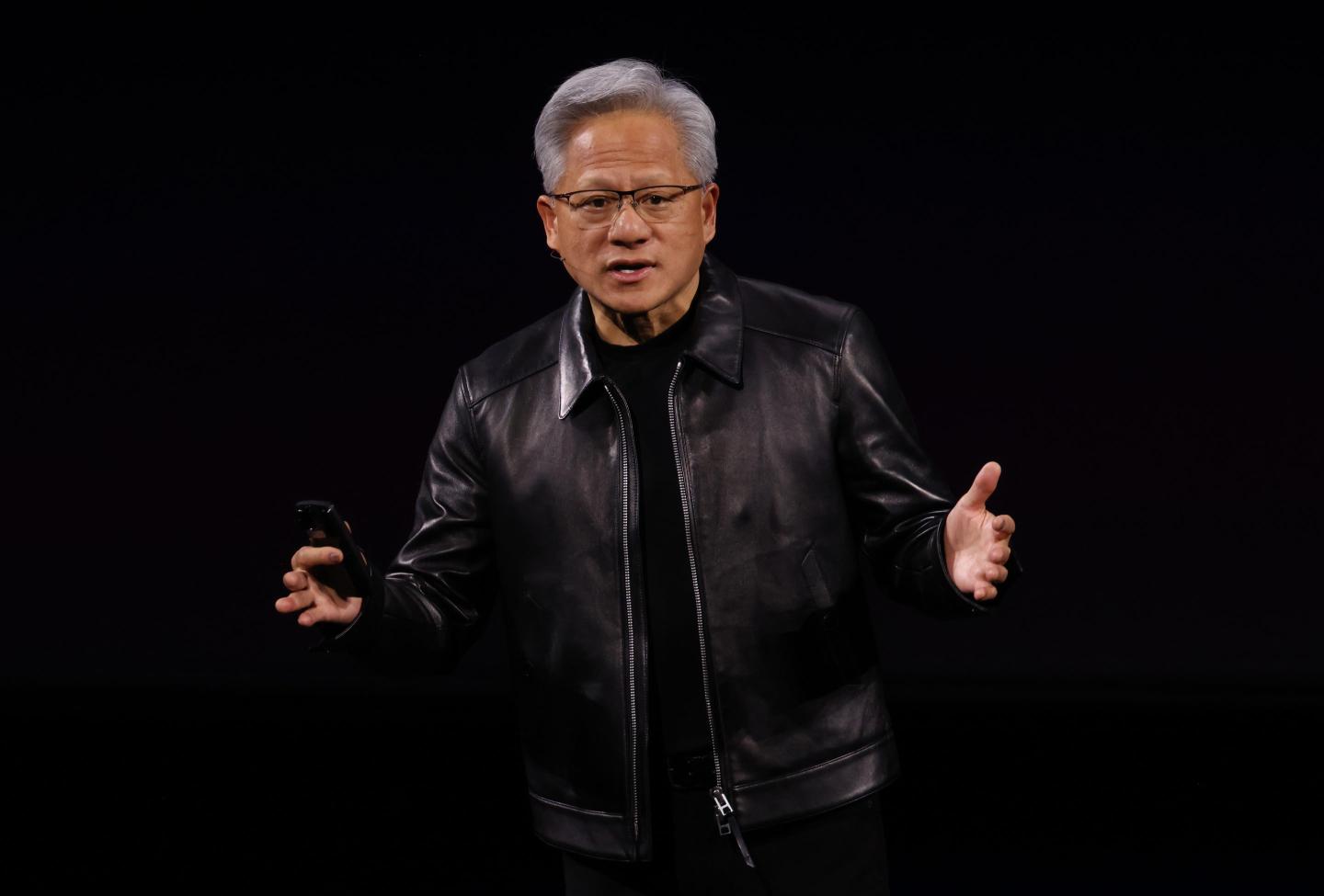
Good morning. It’s the biggest story in tech since Nvidia co-founder and CEO Jensen Huang resigned in the wake of three extramarital affairs (one with a customer and suspected Chinese spy) and months of lies to the company’s board of directors:
Nvidia’s Jensen Huang has been reinstated after 11 wild days. (The apparent reason? Candor. Ahem!)
Chalk one up for capitalism, certainly. The cult of personality that comes from what we now call “Founder Mode,” unquestionably. And perhaps fiduciary responsibility, too, after Nvidia shares lost $2.7 trillion in market value in short order. (The share price jumped some 30% in the wake of this latest news, though it’s still well off its former trajectory.) But morality? No. Due process? Also no. And national security? As the saying goes: The jury’s still out.
For now, the only penalty incurred by Nvidia for two weeks of genuinely extraordinary revelations is a temporary stock drop, a few canceled speaking appearances, and a hot date with Congress.
There’s no question that Jensen Huang, magnetic as he is menacing, has been instrumental to Nvidia’s remarkable success. But I struggle to imagine how the chipmaker’s board will maintain any shred of governance authority moving forward—a trivial consideration for a venture-backed startup, perhaps, but not for a publicly traded Fortune 500 colossus.
Agree? Disagree? Reply and make your voice heard. More tech news follows. —Andrew Nusca
P.S. There’s a new worst job in tech, by the way: Nvidia chief compliance officer. Can’t begin to imagine the KPIs for that one.
Thoughts? Suggestions? Hot tip? Drop me a line.
THE BIG STORY
Nvidia board’s rehiring of Jensen Huang splits corporate governance experts
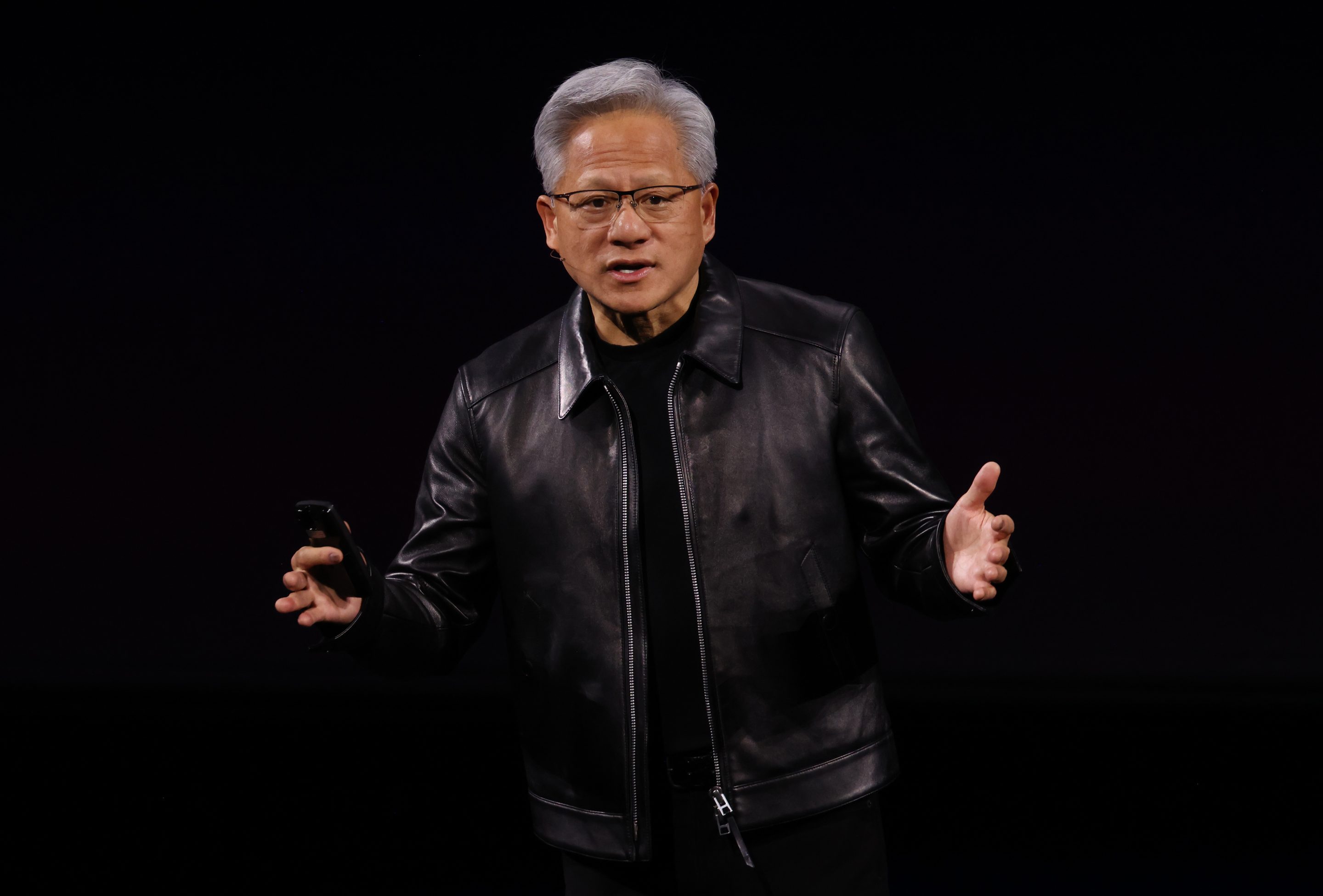
Last week, Nvidia’s board chair said that Jensen Huang had violated the company’s code of conduct and that the former CEO had no future at the company.
This week, the chair welcomed Huang back with open arms.
The stunning flip-flop instantly made headlines and sparked a massive stock market rally. It also brought immediate—and deserved—scrutiny to the corporate governance at the $4 trillion company.
Some governance experts slammed Nvidia’s board for its decision to rehire Huang as CEO. But others said the board had little choice in the face of the plunge in Nvidia’s stock and pressure from shareholders and U.S. President Donald Trump.
“Morality and ethics just walked out of the back door for any large corporation,” Umesh Ramakrishnan, cofounder and chief strategy officer at executive search firm Kingsley Gate, told Fortune. “All the board had to do to advertise its incompetence was to reverse direction on the most monumental decision they’ve ever made together as a board within six days.”
The fact that several investigations have yet to be completed—including into Huang’s actions and reportedly into Nvidia’s accounting—added to the sense that the board acted rashly in reinstating Huang.
Still, “Restoring stability to the markets and the AI industry, which is driving a significant portion of our economy, was paramount,” said Jeff Christian, CEO of executive search firm Christian & Timbers. “The board had to act, and the market’s response demonstrates the stabilizing effect of bringing Jensen back. His continued absence was a greater detriment to the company than his reinstatement.”
Linda Ford, CEO of the Chartered Governance Institute U.K. & Ireland, said that Nvidia’s board was under unusual pressure because of Huang’s outsize role at Nvidia and the fact that the board had failed to develop a succession plan prior to the current crisis. “The episode shows how hard it is for a board to hold its position when a company’s leadership is built around one person,” she said.
Jesse Fried, a professor at Harvard University Law School who specializes in corporate governance, told Fortune that the board was being true to its fiduciary duty in rehiring Huang. “At a high level, the board’s job is to generate long-term value for shareholders, and based on what I saw this morning, the stock market’s reaction was very positive, so they seem to have served well the constituency they are supposed to have served,” he said.
Lindsey Stewart, director of Institutional Insights at Morningstar, said that many investors would probably welcome Huang’s return “given his history of value creation at the company.” But she also said that “there are sure to be questions about who is best placed to provide appropriate governance and oversight of key risks at the now-giant company at the center of a critically important global AI ecosystem.”
There was no chairman of Nvidia’s board until Huang’s resignation, at which point Harvey C. Jones became the chair.
Penny Herscher, chairman of Lumentum Holdings and cofounder of the Chairs Circle, an organization dedicated to discussions on corporate governance, applauded Jones for being “pragmatic.” “I’m sure he stepped back and looked at the situation and said, you know what, we’ve got to manage through this. We need Jensen back,” she said. “I’m sure they will now put a good CEO succession process in place, and they’ll reexamine all their governance procedures.”
Fried, of Harvard Law, said that Nvidia’s board would probably impose some kind of penalty on Huang—such as canceling stock option awards or forcing him to take a pay cut—to punish him for violating company policy. But it would be a largely symbolic gesture, he added.
Reese, the NYU professor, said that Huang’s rehiring raises troubling national security issues. “The reinstatement of Huang may provide stability and confidence for markets,” he said, “but it spells real instability for national security and homeland security professionals.” —Emily Forlini and Jeremy Kahn
THE BLIND BOX
“We have to protect our geniuses.”
THE RUNDOWN
—CrowdStrike will acquire Zscaler for about $43.9 billion in stock.
—The U.S. reportedly plans to bar companies from selling chips to Megaspeed without a license.
—Amazon will acquire most of Decart for a reported $7.5 billion.
—Adyen co-CEO Pieter van der Does will step down at the end of the year.
—Oregon and Virginia sue SpaceX, alleging Grok’s “spicy mode” illegally created sexualized images of women and children.
—Arm extends CEO Rene Haas'contract through 2033 after Nvidia recruiters approached him about its top job.
—The Port of Los Angeles saw 120 million thwarted cyberattacks in August alone, nearly double its monthly average three years ago.
—The U.S. is trying to recover more than $1 billion from last month’s Binance hack.
—Oracle’s Larry Ellison: No longer among the top 10 richest billionaires in the world.
THE PARTING SHOT

From another bumper crop of Jensen memes, my favorite. (With apologies to the original.)