One afternoon in October 1973, John H. Douglas of Long Island was driving with his 15-year-old son, listening to New York City’s WBAI. The station, a key force in the FM revolution of the 1960s, rejected the rigid “Top 40” three-minute hit-song format of AM radio in favor of full albums, irreverent “free-form” commentary, and offbeat interviews. Owned by the nonprofit Pacifica Foundation, WBAI eschewed commercial sponsors and broadcast the countercultural vibes emanating from the East Village, Haight-Ashbury, and campus protests into the ears of Gothamites and nearby suburbanites.
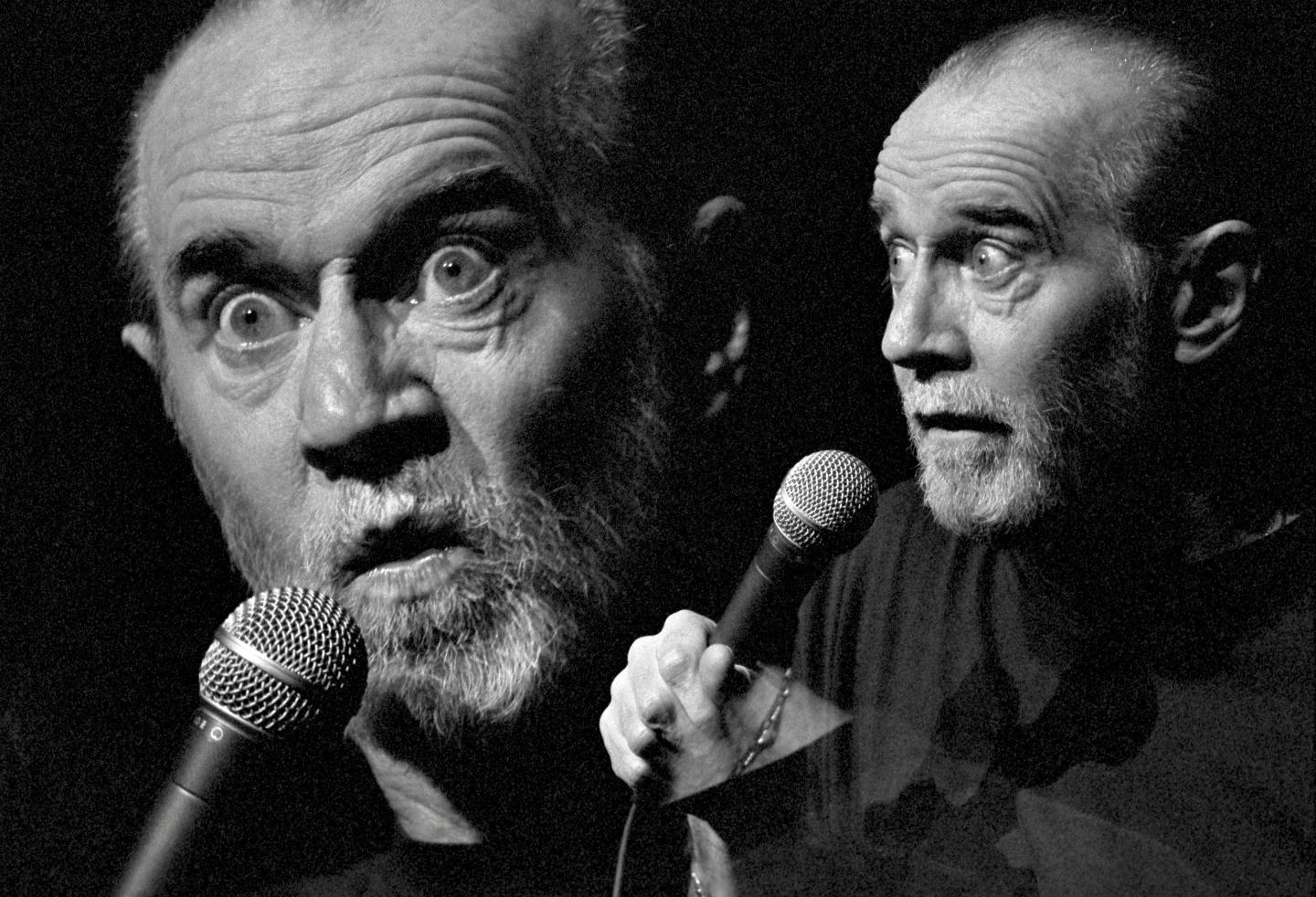
Douglas and his son listened as a 12-minute track from George Carlin’s fifth record album, Occupation: Foole, played on their car radio. The monologue was in fact an elaboration on a shtick Carlin had once heard from one of his heroes, the late Lenny Bruce. In it, Carlin introduces the seven words you couldn’t say on television to laughter from his audience at the Circle Star Theater in San Carlos, California. (Fortune will cut them for this specific excerpt, for obvious reasons.) “Those are the ones that will curve your spine, grow hair on your hands,” Carlin jokes, before riffing on each profane term one after the other.
John Douglas happened to be a board member and officer of Morality in Media (MIM), a private watchdog group organized in 1962 by three New York City clergymen with the express intent of protecting children from obscenity. Armed with the Carlin broadcast, and in line with MIM’s mission, Douglas wrote to the FCC in Washington. “Any child could have been turning the dial, and tuned in to that garbage,” he complained. “Should not this station lose its license entirely for such blatant disregard for the public ownership of the airwaves?”
Thus began the case known as FCC v. Pacifica Foundation, which worked its way up to the U.S. Supreme Court in 1978. The high court sided with Douglas’s complaint, holding WBAI and the Pacifica Foundation at fault. The court used the case to confirm a distinction in First Amendment law as it applied to sexually and scatologically explicit words. Some media content, such as Carlin’s, could be classified not as “obscene” but rather as “indecent,” a lesser offense. But this meant that the FCC was empowered to fine stations that aired indecent content in the hours between 6 a.m. and 10 p.m. when kids might hear it.
The ruling created what became known as the “Carlin Rule,” a daytime and evening radio ban on indecent material like Carlin’s, though it could be aired overnight, when minors were presumably asleep. Meanwhile, broadcast television remained sacrosanct, untouched and untouchable by either obscenity or indecency at any hour. On the eve of the Reagan Revolution of 1980 and amid the rise of a new Family Values politics tied to a resurgent religious conservatism, it appeared that reports of the demise of the Word Police had been greatly exaggerated. The Carlin Rule remains in effect today for FCC-regulated radio broadcasts, nearly half a century later. Yet rather than totally banishing indecent words from the radio airwaves, FCC v. Pacifica Foundation shunted them off to the wee hours. Yes, words deemed obscene because of their “prurient appeal” (promoting sexual preoccupation or arousal) were kept off radio by the FCC’s power to fine stations or withdraw their licenses. But merely indecent words—“patently offensive references to excretory and sexual organs and activities,” as in comedy routines—enjoyed a “safe harbor” for adult listeners overnight. The Carlin Rule resembled nothing so much as the nightclub policy of letting comedians get raunchy after midnight. And while interested parties might argue over whether a given skit or statement was obscene or merely indecent, the distinction rejected the sweeping Comstockian ban on all sexual content as automatically obscene.
Times, tastes, and legal standards were again changing, making the balance between public morals and free expression more complicated. The seven words you couldn’t say on television or, after 1978, on daytime radio were the seven words George Carlin could say on his record albums (Occupation: Foole sold 500,000 copies) and on overnight radio. In the court of personal attitudes, the capper was provided by John H. Douglas himself. Reminiscing in 2008 about his eventful car ride, Douglas admitted that he had admired Carlin as “the funniest comedian of his generation”—just one who adults should be able to keep out of the earshot of youngsters. When asked if he had been a zealot deliberately sniffing out indecent broadcasts to try to narrow the reach of the First Amendment, Douglas responded, as many a self-respecting member of his generation might, with a Carlinesque retort: “That’s bulls—.”
Saturday Night Live’s “Dr. No”
Even network television began flirting with the New Normal of looser public speech and humor to attract the crucial 18- to 49-year-old audience beloved by sponsors. Bill Clotworthy, NBC’s director of program standards, walked a fine line as he undertook the thankless task of monitoring material for the enormously popular Saturday Night Live between 1979 and 1991. The straitlaced 53-year-old Clotworthy knew that he had his work cut out for him when it came to a show that was a generational touchstone almost from the moment George Carlin took the soundstage as guest host on the show’s October 11, 1975, premiere.
On one hand, Clotworthy drew flak from conservatives. On the other, he exasperated SNL writers with his red pencil. “First Amendment! First Amendment!” the writers cried. “Wake up and smell the coffee, boys,” Clotworthy shot back, “this is network television.” He earned the nickname “Dr. No” by keeping sketches off the air. Yet even he laughed at once-unthinkable skits he green-lighted, such as “The Party” (1980), featuring “Lord and Lady Douchebag” (Buck Henry and Gilda Radner) and such repartee as “Spoken like a true Douchebag!” And with the Carlin Rule in place, the FCC honored the idea that the show’s 11:30 p.m. airtime made it a “safe harbor” for an occasional seamy joke, as long as things didn’t get too out of hand. The days of Lucille Ball being “enceinte” rather than pregnant were very much over.
The Carlin and SNL stories are useful parables for understanding how Americans used and reacted to dirty English in the last three decades of the twentieth century. On one hand, the era spawned a new wave of Word Policing whose impact is still with us every time we watch a movie or stream a song, whether or not we notice it. On the other, the cultural turning point of the 1960s had let the profanity genii out of the bottle, and the genii resisted being recorked more effectively than at any previous moment in American history. The last third of the century witnessed a series of high-profile efforts to limit the reach of pornography and cleanse youth-oriented media of explicit images and words. None succeeded to any great extent. Whether defined as obscenity, indecency, free speech, hip honesty, or simply the way we talk, Total Assault on the Culture had hatched a semi-domesticated status for dirty words on the edge of mainstream American life, slowly but surely inching toward the center.
Excerpted from: Four-Letter Nation: The Long, Dirty History of American Profanity by Steven H. Jaffe. Copyright © 2026 by Steven H. Jaffe. Reprinted by permission of Simon & Schuster, LLC.