My great-great-grandfather came to the Tuscan ghost island of Pianosa as a prisoner. I arrived there on a luxury vacation.
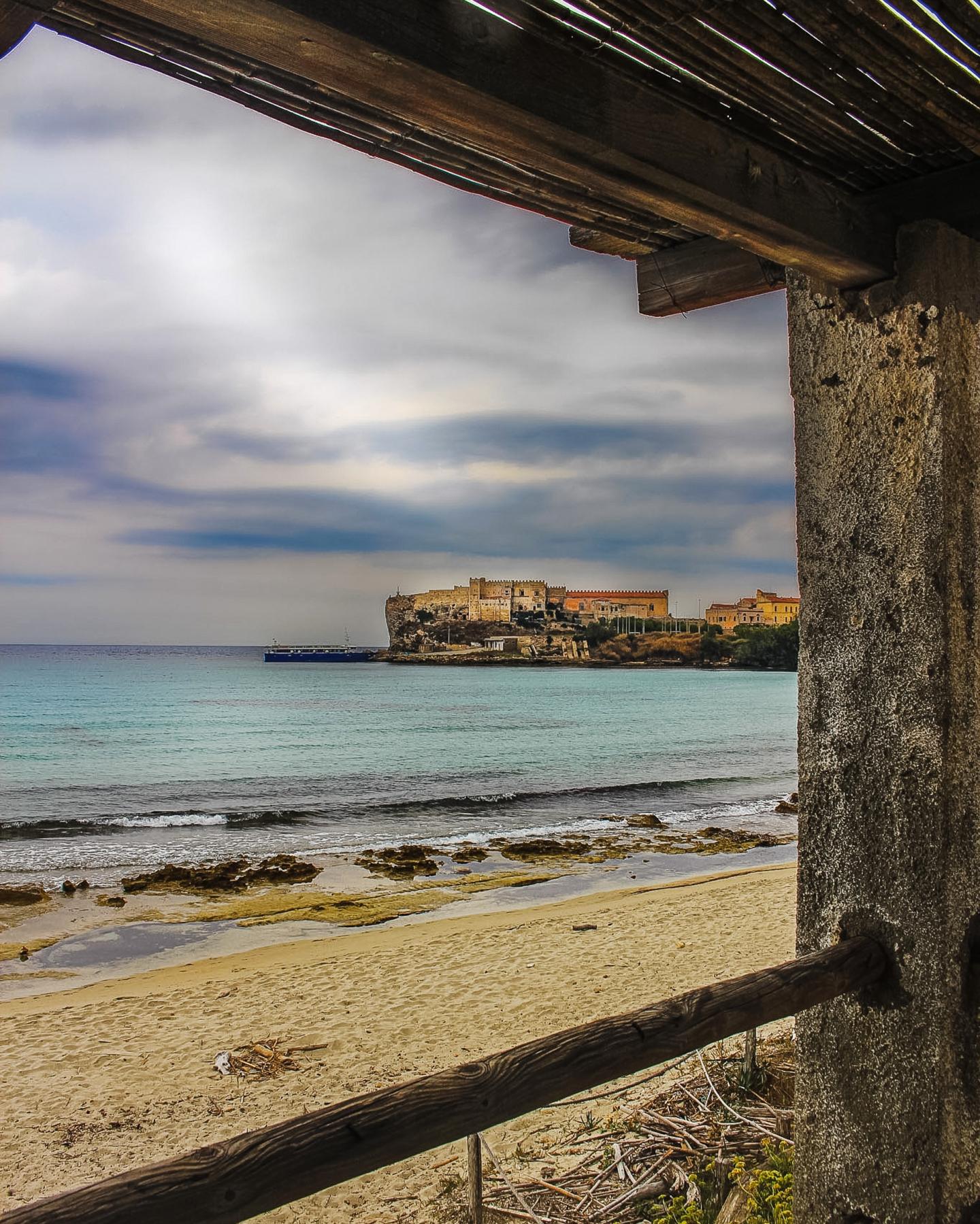
The island lives up to its name, I thought as my ferry drifted toward the sole dock on this protected isola fantasma. “Pianosa” is derived from piano, Italian for “flat,” and indeed the island crouches low to the cyan Tyrrhenian Sea, its shores fringed by parasol pines and deserted prison watchtowers. From 1856 to 1998, Pianosa was a remote penal colony—and the place where my ancestor, Salvatore Giovanni Pellegrino Irace, died.
I’d learned this family lore thanks to a partnership between Ancestry, the Blackstone-owned leader in the at-home DNA-testing space, and Kensington, a bespoke travel outfitter, which invited me to test-drive its Personal Heritage Journey. After I submitted a DNA sample, Ancestry got to work filling in my Italian family tree, with researchers combing archives in Tuscany, Molise, and Campania. “So the interesting thing about Salvatore,” genealogist Kyle Betit said on our initial call, “is that he died in prison of tuberculosis in 1894—and we don’t know why he was there.”
Who doesn’t love a good family mystery? That’s part of what draws clients to Kensington’s genealogical-based trips. The journeys average $20,000 to $25,000 per person, with the company’s travel desk handling all the details in high style.
For me, that meant a chartered boat from mainland Tuscany to the island of Elba; chauffeured SUVs between regions; a private guide in Pompeii; and some spectacular accommodations, including Casa Angelina and Palazzo Avino on the Amalfi Coast. The major flex, though, was having a professional genealogist, Gabriele Musumeci, riding shotgun.
Once upon a time, possessing one’s comprehensive genealogy was a signal of wealth and pedigree. Then, in the 2000s, the rise of at-home DNA-testing kits from Ancestry and 23andMe made such knowledge commonplace. The ultrawealthy can now seek out deeper stories through first-person ancestry tourism, from China to Ghana. Kensington reports that demand has doubled and revenue has quadrupled in five years. Grand View Research put the global value of “heritage tourism”—of which ancestral travel is a segment—at $625 billion in 2025. It’s expected to reach almost a trillion by 2033.
“I think there’s a deep need in any of us to understand who we are,” Musumeci said as we descended the concrete steps to Pianosa’s white-sand beach, Cala Giovanna. “For most Americans, your story is cut.” He made a chopping motion. And then a sewing motion: “We stitch it back together.”
Most luxury travel planners now offer some variety of ancestry service. Alexandrea Padilha, director at the membership-based Fischer Unlimited, recently hired genealogists in Germany and the U.S. to trace a Louisiana tech entrepreneur’s ancestry. The results were bound into a book for the client’s father’s 80th birthday and also informed the itinerary for a trip to Germany—a way to show younger family members their roots. “I think that’s grounding for young adults today,” Padilha says, “living in a world that’s slowly slipping away.”
Existential dread is one hell of a motivator. “When it feels like the world may be shifting every second, people reach for something enduring,” says Dr. Katie Blake, a Texas-based social psychologist who specializes in travel. “The archives give you the facts, but it’s the place itself that gives you the identity pull that’s different than something you just see on paper.”
A sudden, biblical rainstorm broke open during our mile-long bike ride from Cala Giovanna to Pianosa’s imposing Agrippa Prison. We sheltered inside the Zante wing, where prisoners like Salvatore slept four to a concrete cell on metal beds, as thunder rattled the rusty gates.
My itinerary traced Salvatore’s life backward. A few days later, Musumeci and I rendezvoused in Molise, where Salvatore grew up. My great-great-great-grandfather, Vincenzo, moved his family to Montenero di Bisaccia, a mountain keep surrounded by vineyards and wheat fields sloping down to the Adriatic, in 1838, when Salvatore was a boy. At Montenero’s city hall, the clerks hauled out massive, crimson-bound books, and Musumeci leafed through until he found the birth and marriage records of Salvatore’s second son, Giuseppe—my great-grandfather.
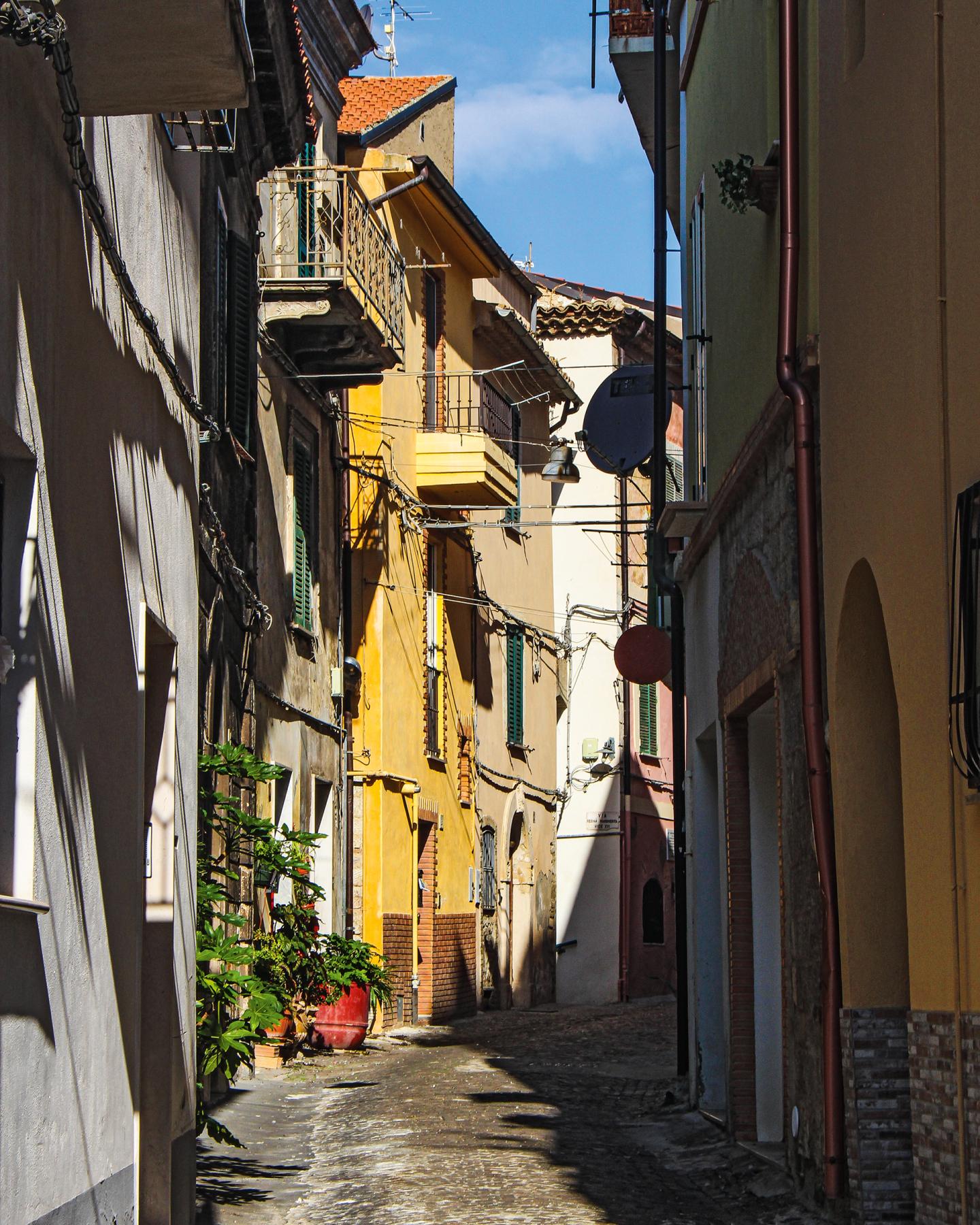
Walking through Montenero’s hilltop puzzle of alleys brought those pieces of paper to life—and conjured a story of downward mobility. Along the town’s outer promenade, ringing the remains of medieval stone walls, a lookout faced the amber foothills where Vincenzo bought land and a farmhouse. I walked the narrow alley the family lived on after they lost the farm. Within four years, Vincenzo had spiraled from merchant and farm owner to street sweeper. He died in 1842, leaving his son on the poverty-to-prison pipeline.
I also saw the house in the old ghetto where my great-grandmother, Nicoletta, grew up. She and Giuseppe had a daughter out of wedlock, Mattia. (Nobody in my family had known Mattia existed until Musumeci discovered her.) The infant likely died during the couple’s 1900 journey to America, where, at Ellis Island, Irace became Erace. Giuseppe and Nicoletta settled in Philadelphia and had 16—yes, 16—more children, including my paternal grandfather, Michael Erace, who died in 2013.
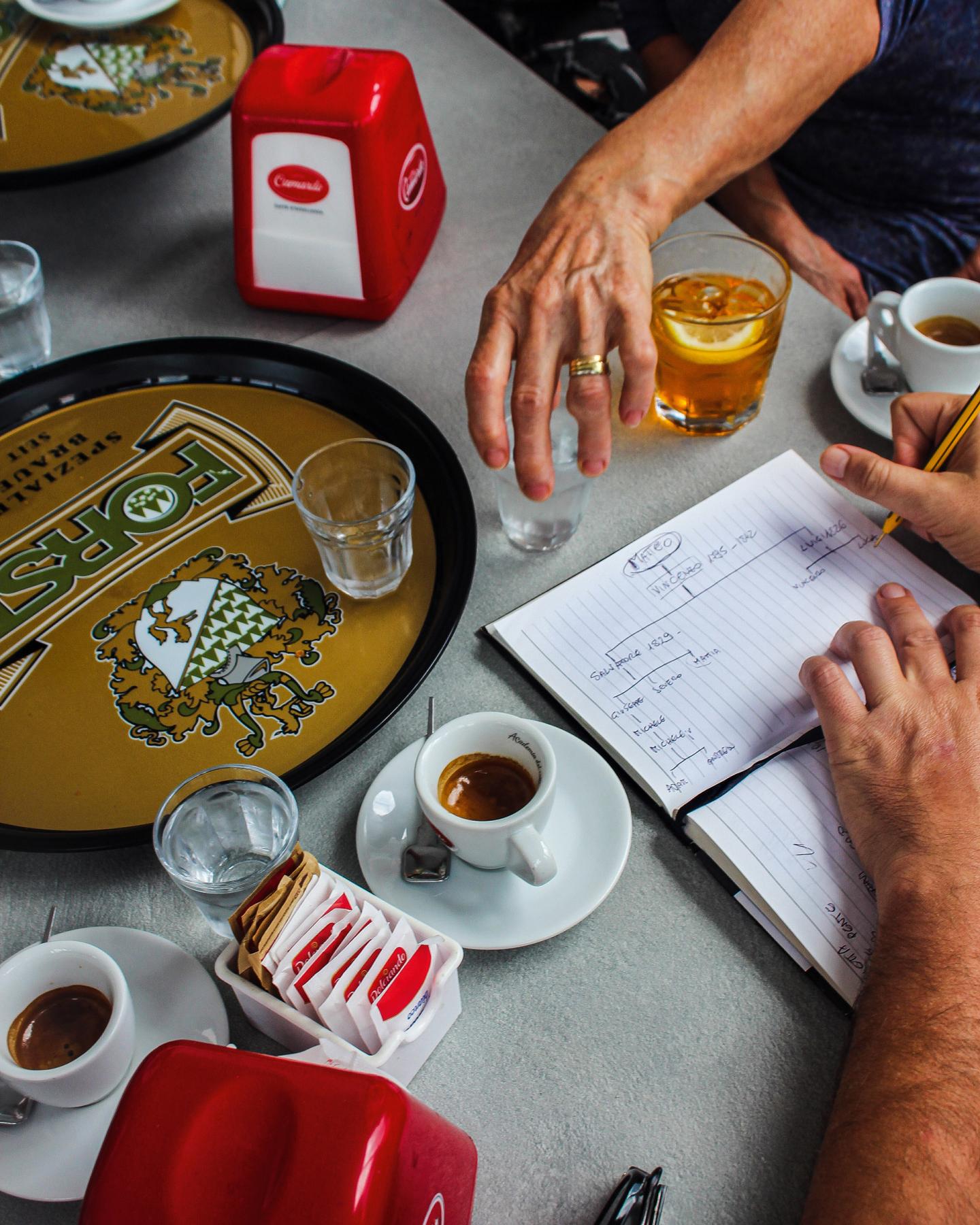
It was like I was looking at Grandpop Mike’s long-lost brother when we met Bruno Irace, a 74-year-old Ironman triathlete and my fourth cousin, that afternoon. Smile, hair, complexion, bone structure; it was uncanny. We sipped espresso and compared photos, then visited a cemetery where “Irace” seemed to be engraved on every other gravestone. Two Iraces were listed on an obelisk in the village park honoring fallen soldiers. When it was time to leave Montenero, Bruno told us to come back soon. “You have family here,” he said.
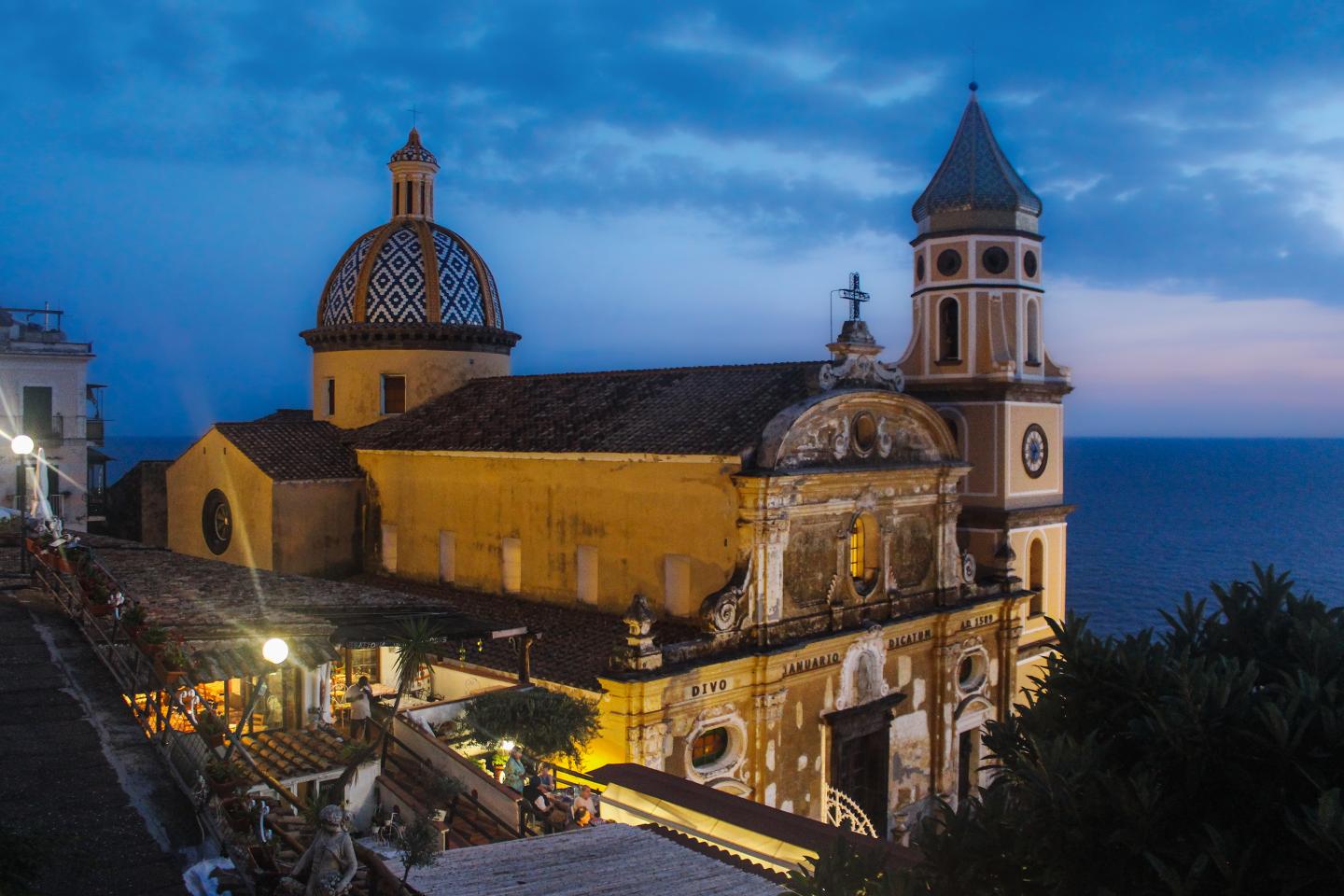
The name Irace was also everywhere in the archives of San Luca, the family’s neighborhood church, in Praiano, on the Amalfi Coast, the final stop on my journey. This dramatic shoreline of improbable cliff-top villages and citrus groves set high above the sapphire sea is one of the most beautiful places in the world. I couldn’t help but wonder about the Iraces: Why did these fools leave? What misfortune befell my reasonably prosperous ancestors to make them abscond from this stunning seaside real estate?
Musumeci had coordinated with the pastor, who granted us free rein of his office, a charmingly cluttered room with sea views through diamond-paned windows. Hundreds of books, some dating to the 1600s, filled a tall cabinet, their yellowed pages brittle as autumn leaves. Handwritten in meticulous script were the births and baptisms, marriages and deaths of San Luca’s parishioners, which included generations of Iraces.
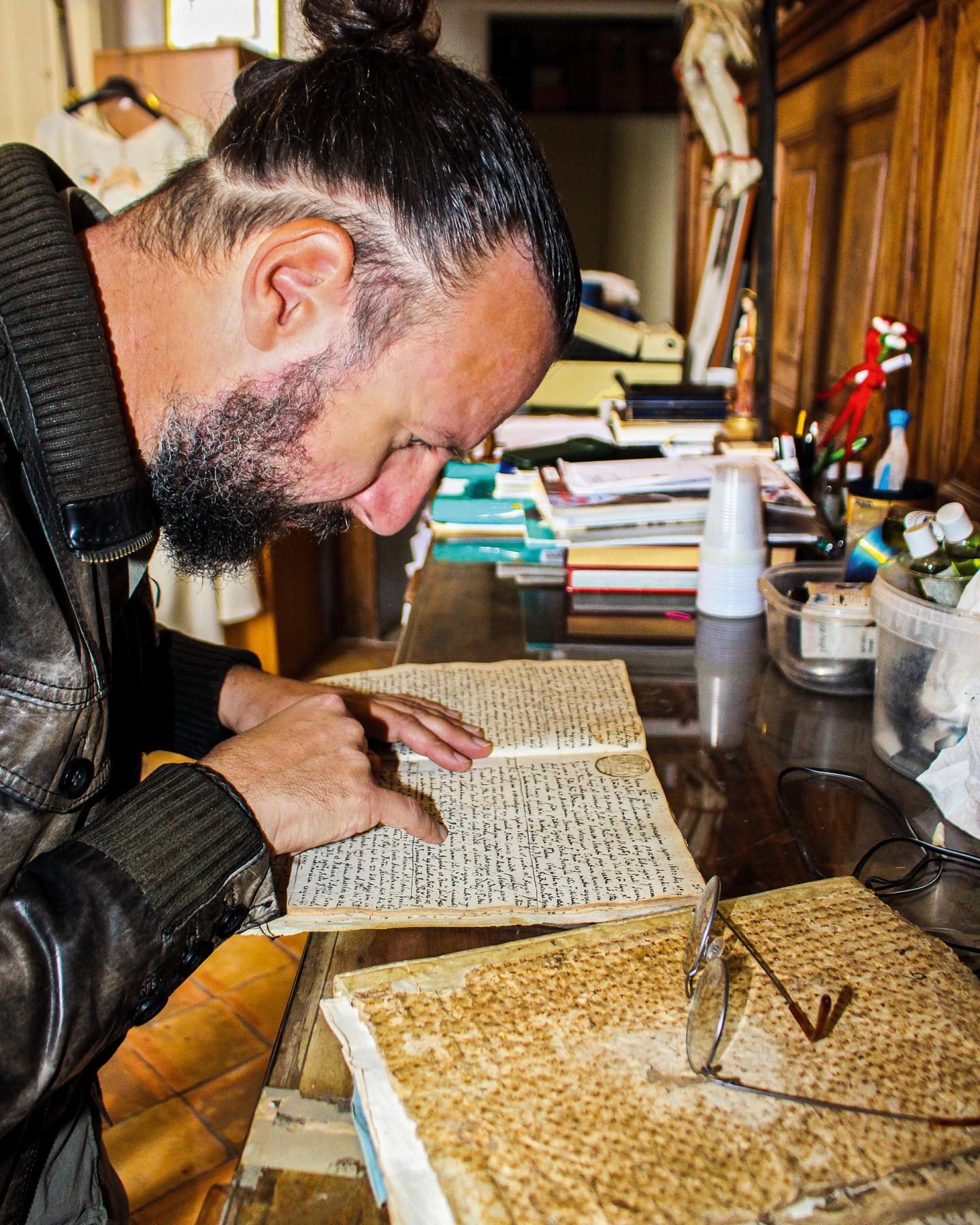
“Oh, wow … ” Musumeci stopped suddenly as his finger moved across a page. He pointed to Vincenzo’s marriage record. “Adam, the date … ” October 10, 1807.
It took a few seconds to dawn on me. I checked my phone: October 10, 2026. Exactly 219 years earlier, Vincenzo Irace and Mariangela Rispoli, ages 21 and 18, had stood at San Luca’s resplendent altar and exchanged vows. Until then, I’d encountered Vincenzo mostly through his losses: his farm, his livelihood, his family’s good name. Here was a record of a beginning. Whatever came later, my great-great-great-grandparents had first been two young people at the altar of a church above the sea.
I hadn’t found all the answers in Italy. We never learned why they left the Amalfi Coast, what sent their son to prison, or what compelled their grandson to cross an ocean. The private guides, chauffeured SUVs, and beautiful hotels couldn’t make the records yield answers they didn’t contain.
But the distance between my ancestors’ lives and my own no longer seemed quite so great. Standing in San Luca, I wasn’t the discerning traveler whose preferences shaped the itinerary. For all the choices I’d made on this trip, the ones that mattered most had been made two centuries earlier.
For once, the point wasn’t being made to feel important. The real privilege was the opportunity to feel very, very small.
This article appears in the December 2026/January 2027 issue of Fortune with the headline “The most exclusive itinerary is written in your DNA.”