

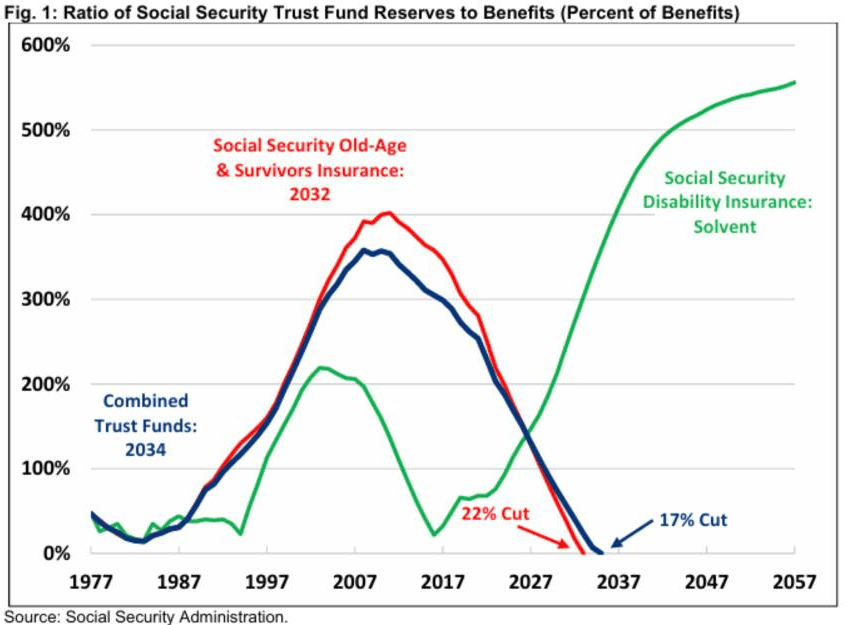
Social Security’s retirement trust fund is less than six years from running dry, which would trigger an automatic benefit cut of about 22%. Senate Budget Committee Chairman Ron Johnson has a plan to stop it: Let the Treasury borrow the difference.
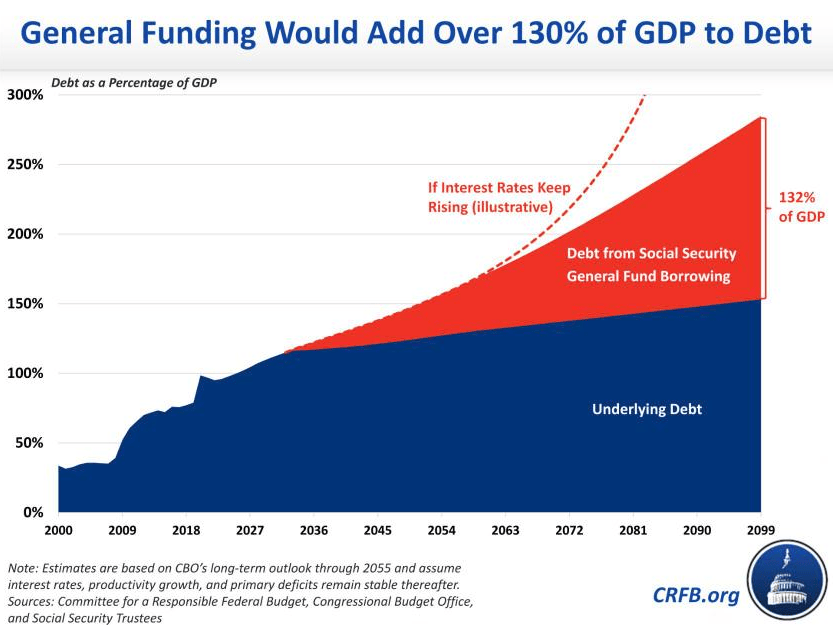
On Nov. 18, the Wisconsin Republican put forward a proposal, which the Committee for a Responsible Federal Budget calls the Stop Scaring Seniors Act. It would let the Treasury Secretary move money from the government’s general fund into the retirement trust fund once its reserves are gone, so beneficiaries would keep getting full checks. CRFB estimates that would add $190 trillion to the national debt over 75 years in inflation-adjusted terms, or 165% of GDP.
For the roughly 70 million people collecting benefits, the cut it would avoid is real money: about $500 a month for the average beneficiary, according to CRFB. The question is who pays instead.
“We usually say that inaction is the worst option when it comes to Social Security, but now we found something even worse,” CRFB president Maya MacGuineas said in a statement. She said it was hard to see the bill as anything other than “a cynical pander that ducks all the real decisions we need to confront.”
The bill goes to the bond market
CRFB, a nonpartisan deficit-hawk group, argues the bigger danger isn’t 75 years out.
“Even simply passing the legislation could spook the bond market enough to spark financial turmoil,” MacGuineas said, adding the borrowing “would almost certainly spark a crisis.”
The group has run the numbers on this kind of fix before. In an analysis last November, CRFB estimated funding Social Security from general revenue would push interest rates up by about 2.6 percentage points compared with keeping the trust fund intact. That would take the 10-year Treasury yield from 4% to 6.6% and 30-year mortgage rates from 6.3% to 8.9%. The trust fund would stop being a budget rule and become, in CRFB’s words, “more like any other government program.”
Social Security has paid benefits out of payroll taxes since the 1930s. By law, it can only pay what its trust fund holds, which is why benefits drop automatically when the fund runs out. Johnson’s plan would remove that limit and send the bill to the Treasury, which already borrows to cover a deficit.
Johnson’s case
Johnson argues Americans have been misled about how Social Security is funded. A Senate Budget Committee report he released the same day, titled “Social Security: The Reality… a Legal Ponzi Scheme,” projects a shortfall of about $511 billion by 2032.
“Your money was spent to pay current beneficiaries or fund other government programs,” Johnson said, according to the National News Desk, and future benefits will be paid with money from “your sons and daughters working at that time,” plus borrowing.
MacGuineas granted part of his point. Johnson says Congress should fix the deficit as a whole instead of carving out Social Security, and she called that “a reasonable position.” But she said a law “that fails to fix Social Security while ballooning the debt” wasn’t the way to get there, and suggested lawmakers work it out, perhaps through a bipartisan commission.
Johnson has lately been aiming at his own side, too. After Republicans’ midterm losses, he said in a Fox News interview on Nov. 7 there was corruption “within government—I’m sad to say, within the Trump administration,” pointing to claims by Calley Means, a former White House health advisor, that top aides catered to special interests.
“Our supporters were expecting us to drain the swamp, but it seems the swamp won,” he said. He later said he meant “deep state actors in every administration,” and he has been pushing to delay Senate GOP leadership elections for what he called “soul-searching discussions.”
Scaring seniors
Johnson has used the bill’s title before. In July 2011, he and 12 other freshman Senate Republicans sent then-President Barack Obama a letter accusing him of trying to “scare seniors” by warning Social Security checks could be at risk if Congress didn’t raise the debt ceiling.
The debt ceiling is coming back. TD Securities expects the current $41.1 trillion limit to start binding in January, with the government running out of room by around September 2027. That’s five years before the trust fund runs out, and Johnson’s bill would put Social Security on the same borrowed money.
Generative AI was used for research assistance and/or transcription of this article. The reporter independently reported and verified the factual claims in this article, and a human editor reviewed it before publication.