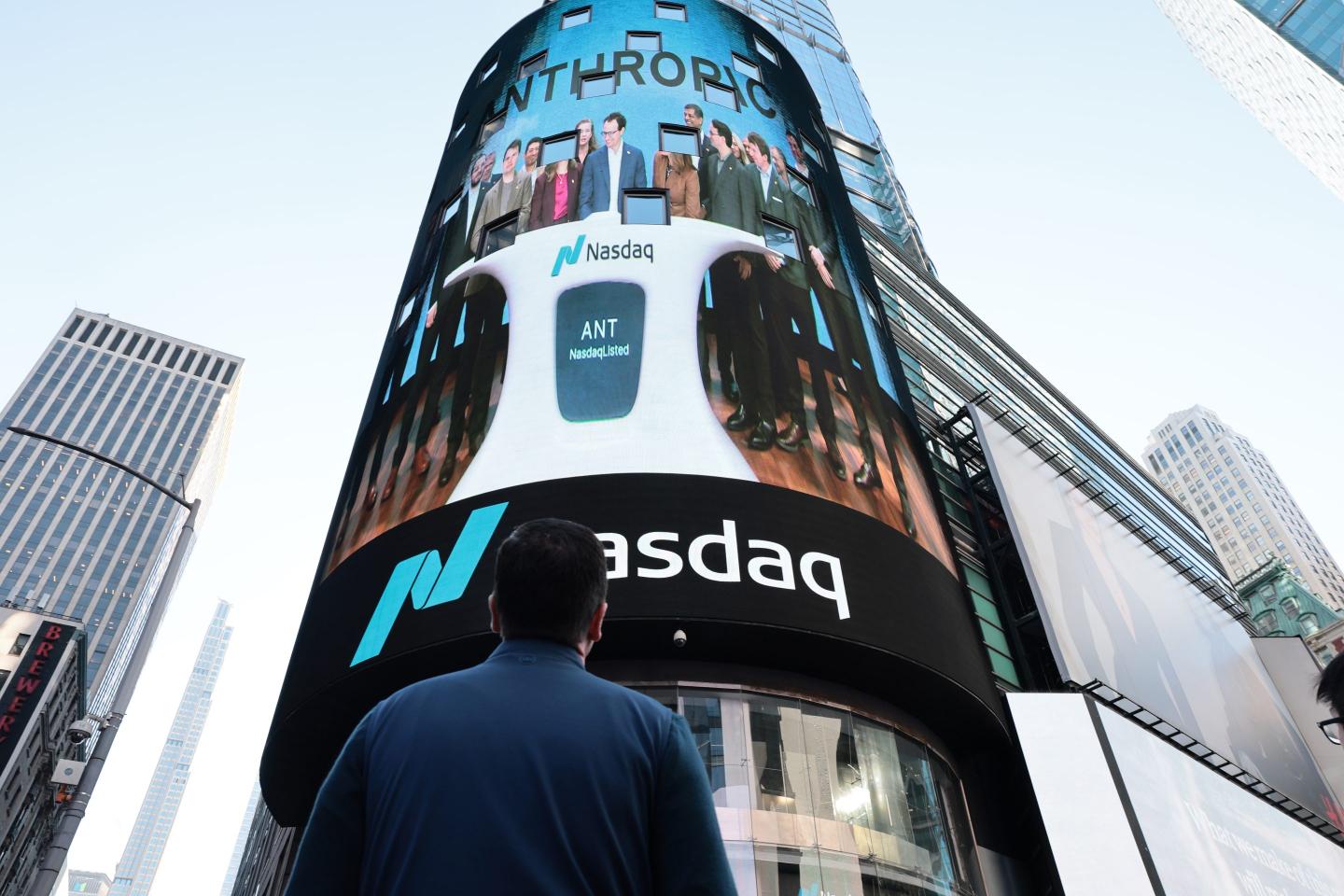
In the lead up to Anthropic’s record-setting Thursday IPO, several crypto platforms announced plans to offer their customers exposure to the offering in the form of tokens tied to its shares. It’s far from clear, however, whether these tokenized stocks—crypto tokens designed to track a stock’s price—will actually provide exposure at Anthropic’s offering price, or at all. The maker of the Claude chatbot opened at $111.50 a share on Nasdaq, about 34% above its $83 IPO price.
Binance Wallet, the wallet tied to the crypto exchange, is already off to a rocky start. Minutes after the stock began trading, the platform said it hadn’t secured enough shares to fill customers’ orders. It said it would refund everyone who put up money and split the available tokens among eligible customers for free, based on how much each had committed.
The announcement came a day after Binanced Wallet opened Anthropic-linked tokens at the company’s eventual IPO price, plus a 5% fee. Within hours, users had committed $500 million, hitting the campaign’s cap and prompting it to close early. Firms like Binance typically offer tokenized stocks by obtaining allocations of shares for themselves, which they hold in custody, and then issue tokens that serve as claims on the stock.
Kraken also let eligible customers request Anthropic-linked tokens at the final IPO price plus 5%, without guaranteeing an allocation. Ondo, a tokenization platform, took a different approach. It said it would launch its token once Anthropic shares began trading on Nasdaq, giving buyers exposure at market prices rather than a shot at the IPO price. Other platforms, including Bitget and bStocks, also joined the rush.
Tokenized stocks have gained momentum over the past year as crypto companies have used them to bring U.S. equities to investors abroad. They let buyers gain exposure to those stocks without owning shares directly and, on some platforms, trade outside regular market hours. That growth is part of a broader push to put traditional assets on blockchains. By September, the total value of tokenized real-world assets had topped $34 billion, according to a report by blockchain analytics platform Dune. Tokenized stocks grew fastest, rising more than 2,000% as the number of active holders surpassed 1 million.
In an IPO, tokenized stocks can give buyers who might otherwise have to wait for public trading a chance to get in at the offering price. That can be a better deal if the stock opens higher, but it depends on whether the token provider secures enough shares to fill their orders.
SpaceX’s IPO in June was an early stress test for tokenized IPO access, and several crypto platforms came up short. The company priced its IPO at $135 a share, with investors requesting more than four times as many shares as were on offer.
The surge in demand left token providers scrambling for shares. Binance Wallet, for example, had taken requests from customers hoping to buy in at the IPO price, but its token provider couldn’t secure enough shares to fill those orders. Binance Wallet canceled the offering and refunded customers, who missed out on the opening jump when SpaceX began trading about 11% above its IPO price.