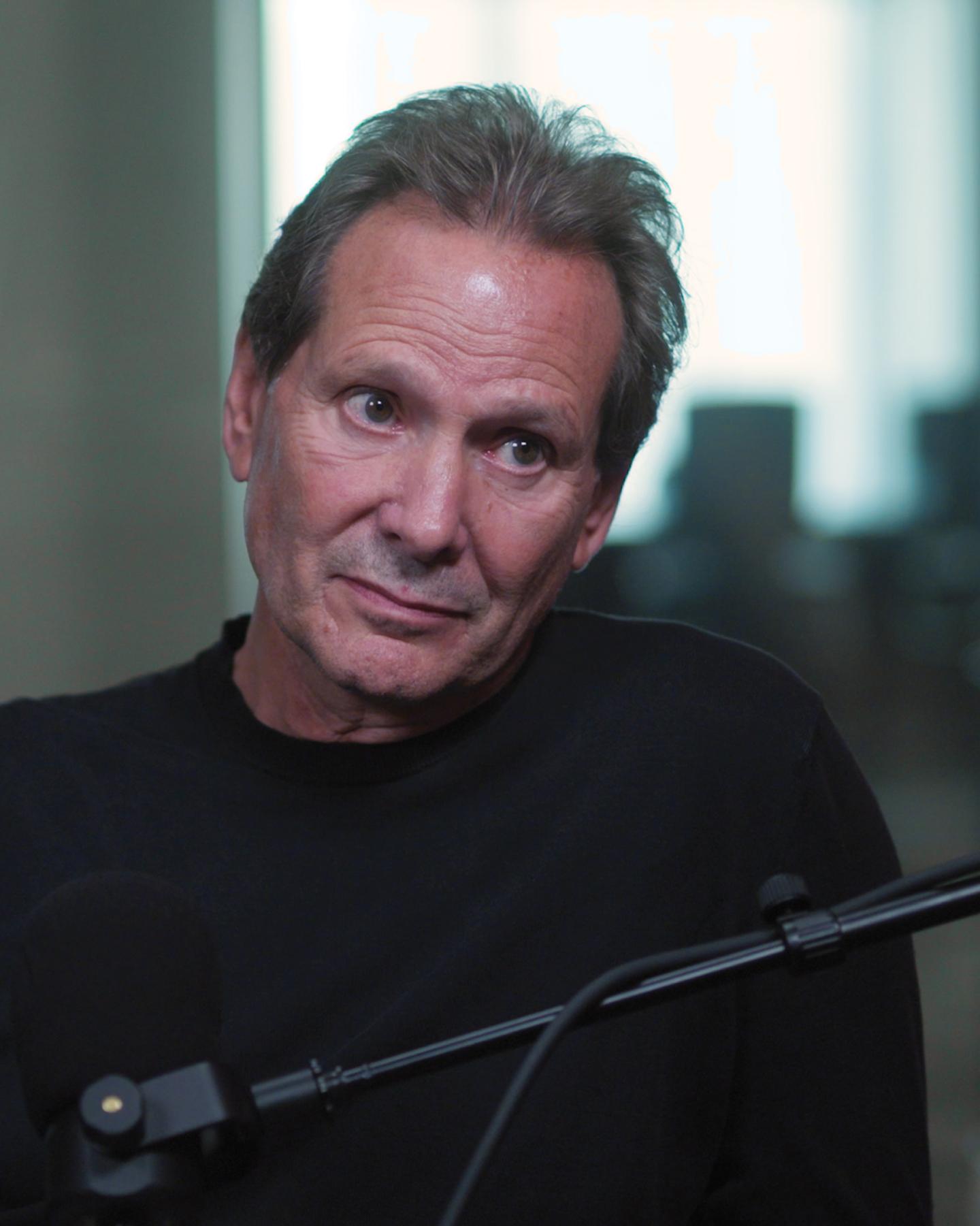

Dan Schulman wasn’t looking for another CEO job. The former PayPal chief was enjoying retirement on his Montana ranch when Verizon’s board asked him to take the reins. After saying no several times, he agreed. Now, a year into a three-year overhaul, he’s trying to turn a company he calls a “big, lumbering giant” into an industry leader.
In a new episode of Fortune 500: Titans and Disruptors of Industry, Fortune’s Editor-in-Chief Alyson Shontell talks to Schulman about his turnaround playbook, how AI is changing customer service and the workforce, and why he’s preparing for Elon Musk to become a bigger competitor.
On transforming Verizon
- Why Schulman came out of retirement to lead Verizon—and why he says the board probably should have acted sooner
On rethinking the wireless business model
- Why Schulman wants to break the link between phone subsidies and wireless plans
- How Verizon increased phone net adds ninefold from a year earlier while cutting acquisition costs by 41%
On putting AI to work
- Where Schulman says AI can serve customers better than humans—and how he’s weighing the consequences for jobs
- How Verizon is positioning its fiber network and facilities to capitalize on the AI infrastructure buildout
On competing with Elon Musk
- Why Schulman is preparing for SpaceX to deliver on its ambitions, and what he thinks a competing network would cost
- Where he sees satellite service as a complement to Verizon’s network rather than a replacement
Read the transcript, which has been lightly edited for length and clarity, below.
Dan, it’s such a pleasure to be with you today. I think the last time we got to sit down like this was when you were at PayPal and I was at Business Insider. We were both in different roles, and I got to talk to you about the early start of your career.
What brings me here today is that you’re going through a massive transformation at Verizon. You’ve been in the CEO seat for about a year. Normally, we talk to leaders after they’ve done a transformation, or we pick it apart after the fact: Did it work? Did it not? I’m curious to hear what your transformation playbook is and how it’s playing out. Thank you for joining me.
Thanks for having me.
You’ve said previously that you expect the next five years to be unlike any years prior. That’s a tough time to be a leader. There are a few forces that make you say that: the onset of artificial general intelligence, quantum computing, and robotics. How are you thinking about that environment as a CEO and personally?
It’s a difficult time to be a leader with all the change going on. When we spoke a year ago or so in Davos, we were talking about the change that was happening, and it’s accelerated since then.
I thought AGI was going to happen in three, four, or five years. Now I think most experts think it is as soon as a year away, and even those who are most skeptical are three years away. Just think about that. That’s machines being able to do pretty much everything we can do better than we can do it. That’s a disconcerting thought, and it’s happening quickly.
On top of that, I think quantum hits commercially probably in 2028 or 2029. That’s maybe two or three years away. The way I think about quantum is that it’s everything times 1,000. It’s that much more incremental compute added on top of AGI. Then you’ve got humanoid robotics that will be pretty darn good, happening sometime by 2035 at the latest.
You add all of that together, and the speed of change—new models are coming out now. When we spoke, they were coming out every three or four months, which was crazy. People talk about recursive self-improvement. Models today, 85% of them are done through recursive self-improvement.
That’s the point at which AI is building the next model of itself.
Exactly. We as leaders need to be thoughtful about what the future looks like. We need to be very humble about that, too, because it’s changing so quickly.
It’s hard to stand in front of your employees and say, “Here’s exactly where the future is,” because we don’t know. People want us to know, but we don’t know. We have to prepare different scenarios: What direction might it go? Be prepared, and be confident and authentic enough to say, “We don’t know, but here’s what we’re preparing for.”
It’s a lot of change in all of our personal lives. It will change the face of business, the nature of business, and we need to be prepared to lead in those times.
Leaving the ranch for Verizon
That’s a tough situation for anyone to lead in, and you certainly didn’t have to take this job. I believe you resisted it and said no a few times before becoming CEO of Verizon. You were the lead independent director of the board before.
What made you leave retirement? You were on this beautiful ranch in Montana—which, by the way, I’m first to go there if it all goes wrong with AI. You’re fairly newlywed. Retirement was great. You have 900 head of cattle.
What made you say yes? And what made you think Verizon had the potential to make it through a tumultuous period, like every company is about to go through?
I really didn’t want to come back into the CEO job. These jobs are all-consuming. You’re putting in 10 to 14 hours a day. It’s constant.
My wife and I have a beautiful life together. We’re massively in love with each other, and we bought this ranch that we’re in love with as well. I fell in love with the cowboy work ethic and that cowboy lifestyle.
You’ve been wearing cowboy boots since eighth grade.
Finally, I’ve grown into my cowboy boots because I have a ranch. Life was good. I was very happy. I didn’t miss the job.
But as you mentioned, I was the lead director of Verizon. We clearly needed to make a change. We had been losing market share for five years or so. We had gone from being first in market capitalization in our industry to last. We had the lowest P/E, which is what the Street thinks of our future growth potential.
I had a lot of telco background. I knew the management team. I knew the board. Verizon is an iconic American company. It’s got great assets, the largest customer base—I think we have 150 million lines—and great assets to leverage.
I felt an obligation. The board asked me several times, and I did say no several times, but my wife convinced me that it was the right thing to do, that I could make a difference. So I dove into the job.
I came in with a little bit of a bad attitude, but here we are a year later, and I’m absolutely loving it and pretty hopeful about our future.
We’re speaking on the heels of your earnings yesterday, which are starting to show real results for the transformation you’re doing here. I want to get into that, but first I want to talk about the Verizon you found.
A five-year slide is a long time. Do you think the board should have acted sooner in retrospect?
Yes, we probably should have. We thought about it and came up with a game plan that we thought would get us to the right place. We were clearly not asleep at the wheel.
But sometimes you make plans—as my dad always said, “People plan, God laughs.” We had a plan. It didn’t work out, so we had to go to Plan B, which was me, not Plan A. Here I am.
From playing “not to lose” to “playing to win”
What was the culture you found? Companies with hundreds of thousands of people that have historically been No. 1 in their category can be bureaucratic—not that innovative, startup feeling a lot of companies are trying to chase in these AI times.
What was the culture you inherited, and what’s the culture you want to build?
Culture is the single most important thing in any transformation. It is what holds you back or can propel you forward.
We were a big, lumbering giant that had fallen behind. We were playing not to lose as opposed to playing to win. We had engineering at the center of the culture as opposed to putting the customer at the center.
It was very bureaucratic, very hierarchical, almost like the military, and very siloed. Not really one team. Slow to make decisions. We had processes where you needed something like 35 signatures before you could move forward. That was one of the first things we blew up. Surely we don’t need more than three or four people to sign something for it to move forward.
And risk-averse—afraid of failing. In a rapidly moving environment like we were talking about, you’re going to fail a lot. You have to try a lot of things. But if the culture is such that you’re afraid of that, and if you fail, something bad will happen to your career, you have to break through that.
As I told the company, in some places I’m a one: the integrity of our financial results, our cybersecurity, our compliance. I have no tolerance for risk in those things. But trying new things, I’m an eight or a nine. That means we’re going to fail.
Innovation is always a two-edged sword. You’re not innovating if you’re just extrapolating from what was. Innovating is thinking about what could be and what you need to do to get there. That, by definition, means you’re going to screw up every once in a while.
At my first all-employee meeting, I was a little worried because I was going to lay out the truth of what I saw: Why was I here? It was difficult for people to hear, but we were losing. As I told everybody, nobody wants to be part of a losing team. I know all of you don’t want that.
This is your first all-hands? No slides, no notes?
First all-hands. I never have slides or notes. Just lay out the reality of what’s going on.
I also laid out the reality that we were likely to have layoffs, that we needed to invest back into the business and spend billions of dollars to do that.
I got thousands of emails afterward saying, “We’re so glad you’re laying out the truth. Sometimes we don’t like hearing it, but we’re glad you’re laying it out for us.”
The culture needed to be redefined. We’re making progress, but there’s still a long way to go. My operating philosophy right now is: How do we play to win? Not just incrementally improve, but play to win. How do we shape the market, not react to the market? How do we envision what can be, not what was?
That’s a lot for people to go through and internalize. That’s why I say it’s going to be a three-year transformation. We made a lot of progress in year one, but we’ve got another couple of years before I’ll feel like the company is truly a different company going forward.
I was going to ask about the timeline. Your contract just got extended as CEO through December 2028, so that ranch will have to wait.
These transformations take time. To your point on transparency, it can be daunting as a leader, knowing you have to make drastic change. You made 13,000 employee cuts, the largest in Verizon’s history. But being transparent, even about negative news, creates a sense of trust with your employees—hence the thousands of emails you received.
You had a few months when you knew you were going to be the next CEO, massive change would have to happen, and you had a three-year time frame in mind. How did you map out the transformation playbook? How did you decide the priorities, how long it would take, and the path to implementing it?
One benefit I had coming in was that I had been on the board for a while. We had been contemplating a change, and I knew people were looking to me as a possibility. I was the hit-by-the-bus scenario. If anything had happened to Hans, I would go in temporarily.
I had a game plan in my head already, which is why we made the changes as rapidly as we did. It’s a huge number, but I felt like I needed to find $5 billion in OpEx savings. I needed to radically rethink our capex spending as well. We cut about $4 billion from that run rate because we needed to invest a tremendous amount back into the business.
I felt our largest single competitive advantage would be redefining the end-to-end customer experience. I really felt the mobile network operator, or MNO, industry model was broken.
The way we convinced customers to make a change was to give them a free phone or a free line. It was a massive transfer of value from the MNO industry to the handset industry. It confused customers because there’s really no such thing as a free phone. There’s complicated promotional pricing. You would raise their wireless service plan pricing. Churn was going up as a result.
I had a game plan in my mind. It was going to involve some painful—and some would say bold—decisions. But to really jump-start us onto the right path, we needed to show we were serious.
Cutting 2,000 or 3,000 people, putting out a voluntary offer—Verizon had done that every year. I needed to show this was different, that I was very serious about the change that was going to happen.
Playing to win is not just a slogan for me or a nice marketing thing. It is what I feel intensely inside, and I wanted that to translate for everybody.
I want to be honest and authentic as a leader. Nobody wants to get up in front of people and say there are going to be layoffs. There’s not a single leader who wants to do that, and count me in on that as well. I’d much prefer to say, “Everything’s great. We’re doing fine. Keep on keeping on.” But that was not the situation we found ourselves in.
Making those hard decisions upfront was part of the plan. I knew what I wanted to do. I knew I wanted to do it fast, and then I wanted to get on with the transformation itself.
The early decisions, I came in with those. It was more of a directive from me than a bottom-up, “Here’s what we should do.”
How did you orient the team around that? It’s one thing to lay out the state of affairs, but how did you communicate your top priorities so there was total alignment? What were your key performance metrics?
I had some philosophies first that I wanted everybody to align around. The first was that we were going to put the customer front and center, which is easy to say but not easy to do. You need to make sacrifices.
We had been about putting the network front and center. Everything was around the network. This is a careful balancing act because our network is foundational to everything we do. Without a great network—what I would argue is the country’s best wireless network—we can’t do the things we want to do.
But it can’t be about the network. It has to be about the customer. What do you want from a wireless carrier, Alyson? What are your particular needs? That was No. 1.
Then we came up with a very comprehensive set of transformation workstreams. We have 10 workstreams. One was called “internal revolution”: How do we stop all the toxic processes that have built up over the years? Thirty-five signatures needed here. Little things, like when somebody’s phone breaks, we would force them to send it back before we would send them a new phone because we were worried about fraud. That’s not customer-centric. That’s internally centric.
We have a thing now that I’m really proud of. The acronym is HEART, and it’s for when one of our customers dies: How do we treat their family? Before, it was, “Let’s make sure we know this has happened.” But the most important thing we can do is act with empathy at that moment.
How do we protect all their memories? Make sure their voicemails don’t disappear? That is the most important thing we can do at that second. That’s customer-centric as opposed to an internal process. Those things really matter.
We had workstreams from segmentation to AI. I wanted to take full advantage of the technological revolution going on. If we were going to be a next-generation company, part of the critical infrastructure of the United States going forward, we needed to embrace the tools and create our own AI tech stack.
There had been a project inside Verizon to create an AI tech stack. It was called Vegas, and it was going to happen in five years. I was like, “Five years today? Everything will be different in five years.” We did a full tech stack in seven or eight months. It is great, and the things we’re able to do with it are mind-boggling.
Under those 10 workstreams, we’ve got about 2,000 micro-initiatives. I review every one of those workstreams every month because I want to know where we are in each one and let everyone know how important that transformation is.
We measure them from beginning to end: what their business case is, when our metrics are going to hit. I appreciate people working hard and process, but what I really want to see is results. I want to understand when I’m going to see those results.
I don’t want a 45-minute presentation—which I got a lot of when I first started—on all the things we’re doing. I say, “Great. What does it result in, and when? And is that playing to win?”
I’ll give you an example. If we have a close ratio of 25% and somebody comes up and says, “I’m going to improve that to 30%,” you might say, “That’s great. It’s a 10% improvement.” I’m like, “But 70% of the time, people are saying no to us. Is that really playing to win, or should it be at least 50% or better?”
We want to win. That is the difference between playing not to lose, incrementally getting better, and what it really means to win going forward.
Every one of those initiatives has goals and objectives that we may not meet this year. We may miss. I tell everyone, “I don’t want to see green on all this stuff because that means we’re not stretching. We’re not going to really try to change the way things are. We should have yellow and red all over this chart.” That’s perfectly cool with me. In fact, I prefer to see it.
To miss the goals?
Yes, because we’re aiming high. I want to be ambitious in what we do.
Our next all-employee meeting is all about our transformation workstreams. We’ll go through every one with the entire company.
When we first started, we said, “We want to hear your ideas.” We got about 8,000 or 9,000 ideas, and we’ve incorporated almost all of those into our workstreams. It’s not 8,000 or 9,000 things we’re doing—there was a lot of overlap—but employees can see we’re trying hard to make a real difference.
If there are pain points internally or externally, we are going to drive them out. Come hell or high water, we are going to drive them out. We’re making progress on all of them.
Of those 2,000-plus micro-initiatives, 41% are now substantially complete. We still have about 60% to go, but that’s exciting to me because we’re going to continue to make more improvement as we go forward.
It’s a very organized set of priorities and processes to ensure we’re not just talking about a transformation, but measuring it day in and day out.
Breaking the free-phone business model
On your earnings yesterday, I heard you talk about what I would call a leapfrog culture. You’ve said 10% improvement in normal times is great, but these aren’t normal times. You want 10x. You want to be industry-leading and innovative, not reactive.
One result that stood out—and forgive me if my phone lingo isn’t quite right—was phone net adds going from 44,000 a year ago to 406,000 this quarter. You said none were given away for free, and the board thought it was a typo.
That is the kind of result you’re talking about. Can you give me a peek behind the scenes of how you achieved it? If I’m an employee and you’re telling me I can’t give it away for free, you want crazy growth, and you want it to be sustainable, I’m telling you that’s not possible.
I did hear that from pretty much everybody, as well as a lot of shareholders who thought it was going to be really difficult.
What I say inside the company is that our business model is complex. It’s a multivariable equation. We were solving for single variables. As you mentioned, a KPI could be net adds. But my mom is 92 and three-quarters years old, and I could bring her in here and she could get net adds if that was all she was focused on. She would take the cost of getting those net adds way up, and she would give away everything for free.
That’s who she is, and she’s beautiful like that, but that’s not sufficient. To get a producing net add, it needs to have revenue associated with it. A free line is not really a net add from my perspective. And I want to see the cost associated with that come down.
The thing I was most proud of in those results yesterday was that our net adds were up nine times—not quite 10—from a year ago, but our cost to acquire them was down 41%. Every line was a quality line.
That was going after all the dogma and sacred cows inside the company: “The only way a customer is going to come to us is if we incent them with a free phone or give it away.”
I was like, “No. It needs to be based on our value proposition, the strength of our network, the strength of our value proposition—which we redid—and the strength of every touchpoint.” What does our brand stand for? What is the customer experience like? You can differentiate on that.
Let’s not force customers to get a new phone when they don’t want one. A lot of people are fine holding on to it.
My big breakthrough was: Let’s break the linkage between subsidies and phone plans. Have the way a customer pays for their phone be distinct and separate from the amount they have to pay for their plan. We can take the price of that wireless plan down and not have to bear the burden of that subsidy in our financials.
As you saw, the bottom of our income statement improved dramatically. Our adjusted EPS was up 8%. Our free cash flow was up 12%. Over the last five years, to give you a contrast, the compounded growth of our adjusted EPS and free cash flow was negative 1%.
We’ve been able to redefine the model of what it means to compete in the wireless industry and do so in a fiscally responsible manner.
Our stock dropped when I first came in because we had one sentence in the press release announcing me where I said something like, “We’re not going to continue to lose share. We’re going to gain share.” It seems like a reasonable goal.
Everybody freaked out because they felt Verizon was not playing its role in the industry, which was to gently cede market share so others could grow and the whole system worked.
Everybody was worried we would set off a price war because they couldn’t imagine a different way of competing. I said we would do it in a fiscally responsible manner, but we would no longer be prey. That was not going to be acceptable for me.
We’ve been able to do that, but only because we challenged the very assumptions that had been part and parcel of our business model for years.
Putting AI to work—and fighting AI with AI
As a longtime Verizon customer, it does seem like the pricing has gotten less complicated and clearer. But there’s also technology you’ve been putting into the company, and some of it is doing work historically done by humans.
Customer service employs a ton of people, but AI is here, and it can do a good job. My dad is also a Verizon customer, and he was telling me at dinner the other night, “I had the best customer experience I’ve ever had. It was with Verizon.” I don’t even think he knew I was interviewing you.
He was trying to go international. He had a five-minute call. It turned out it was AI. It started joking with him, and he told it to stop: “I just want to get down to business.” It got down to business and got him on and off the phone in five minutes.
I’ve heard you talk about AI in customer service providing a 1,200-basis-point or more improvement in the customer experience over a human. How are you weighing how to implement AI and that human cost? It is real and significant, but we can’t deny there are times when AI is a better solution.
If it’s better for a customer, I think we need to implement whatever that technology is.
Somebody once asked me, “How much customer trade-off would you make to cut costs?” The answer for me is none. The customer is No. 1. That is what our entire philosophy is centered around.
If I can serve them better by implementing technology, we should do that because, over the long run, it will make us a better company. We’ll start to grow again, and when we grow, we’ll be a lot more stable. Shrinking companies are not stable. There’s a lot of change that happens. My goal is to make sure we start to grow again. This past quarter, that happened.
When it comes to customer service, AI can be tremendously beneficial because most customer service is rote. It’s the same questions coming in all the time: “I forgot my password.” “I’m traveling overseas. How do I change my settings to make sure I can roam?” “Is there a better price plan?”
What we found is that AI agents, which are extremely good now, are better at handling those things. They don’t make the mistakes. They have infinite patience. They can call up tremendous amounts of detail.
With AI, we’re calling up about 300 different data elements about an individual customer. What kind of phone do you have? Have you had any other issues? Have you traveled somewhere before? Are you on a family plan? Who are you connected to? It’s impossible for a human to connect all of that and create the perfect response.
Most of our customer service is outsourced to the Philippines or other places, and a lot of that will be automated. We’re likely to insource jobs to the U.S. that handle the most complex calls because they’re going to be very difficult to automate. We want humans to handle those because they’re the more difficult customer calls.
With our network, it used to be that we would look at Manhattan and it would basically be green. We’d be like, “Yay, we’re serving Manhattan extremely well.”
Now, with AI, not only do we look building by building, but floor by floor and parts of the floor. What kind of coverage do we have there? Why are we not having the right signal or speed? What do we need to do in the network, before somebody even complains, to fix it autonomously?
It’s unbelievable what we can do with AI to improve the customer experience.
Another example we’re implementing is an initiative called Amplify. It’s marketing. When I first came in, one of the things we talked about was that every customer has a name. You’re Alyson. You have certain needs and different pain points.
Eventually, I want to have segments of one, where I can give a specific offer to you based on who you are, your connections, how your husband uses it—all those things.
When I came in, we had basically 10 macro segments. Anytime we wanted to do a go-to-market program with those segments, it would take four to six weeks, and there would be about 30 people involved in the back-and-forth. It would take a long time to figure out the promotional offer, the value proposition, the messaging.
With Amplify, by the end of this year, we’ll have 500 micro segments. At the end of 2027, we’ll have 10,000 micro segments.
Instead of four to six weeks to do a program, it’ll be two days. Instead of having 30 people involved, there’ll be predominantly one person, maybe two.
That is what you can start to do with the power of a great AI tech stack, with data and information formatted the right way. Our ability to serve customers is doing a step-function improvement because of a lot of the foundational work we’ve done.
Personalized marketing, especially in a field like this where it is hand-to-hand combat for customers, is so powerful. I’m sure a lot of companies will be trying to move in that direction.
You really want to. It’s very hard. You need a lot of data, and it has to be really good.
I’ve had people try to personalize marketing to me who go, “Dear David.” I’m like, “You lost me. You got the D right and the A, but you lost me after that.”
It’s got to be perfect and extremely well done. But if it is, it’s hard to beat.
That’s why I keep telling everybody it is all of the little things we have to do. There’s no silver bullet to winning in this marketplace. It’s a very competitive marketplace. But if you take all the sub-initiatives, all the little things, and make them a lot better, the cumulative effect is profound.
The AI moment changes all the time, but the focus right now seems to be on cyber. It feels like a state of emergency for cybersecurity.
I believe you and Verizon were part of the testing when Anthropic was preparing Mythos. It was the first model that wouldn’t be released publicly until lots of testing because it was so powerful, and that is now the norm.
How do you think about cybersecurity with some of the most powerful networks in the United States and around the world? How are you thinking about this cyber moment as an executive?
I’ve been part of the cyber industry for over 20 years. I was chairman of the board of Symantec, which at the time was the largest cybersecurity software company in the U.S. I’ve been involved with the government on that for a long time.
I’m acutely aware of all the cyber risks that exist. Before Mythos and before AI, a consumer identity was stolen every two seconds. This was before these new tools. It was rampant—tons of fraudulent activity.
But with AI—Mythos being one example, OpenAI’s advanced models, a lot of the open-weight models—they are extremely sophisticated in how they can exploit vulnerabilities inside a company.
This is a place where we need to be extraordinarily on our game. We provide a ton of the critical infrastructure for the United States government. We take that role with the diligence you might expect and hope we would have.
We use all the AI tools inside our company. We were part of Glasswing. We are part of all the advanced AI toolsets that are released. We usually get them before others because of our role.
We’ve had to change everything inside the company. This cannot be done with humans. Humans need to have accountability and oversight, but you have to battle AI with AI. You’re not fast enough otherwise.
We’re part of the Alliance for Critical Infrastructure for the United States, the top industries that provide critical infrastructure to the government. We share data and information. We work with all the intelligence agencies to look at threat actors, what they might be thinking, and what they might be doing.
This is one of the single biggest concerns I have, not just for Verizon but for all of us. We need to be quite thoughtful. With my mom, I’m like, “Do not open anything. Just do not open anything. Make sure I see it. I’ll let you know if it’s OK.”
Inside Verizon, as I said, in some places I have a lot more capacity for risk. On cyber, I have no capacity for risk. None.
We need to invest whatever we need to invest. We need to create the right processes. We need to make sure everything is remotely patchable in our network. We have to be on it every second, and it’s a big part of my job.
Do you feel like it is patchable? With AI fighting AI, will we come to a resolution? Even when I talk to industry leaders, they say, “Eventually, but the next six months might be bumpy.”
I don’t know why they say the next six months will be bumpy as opposed to the next six years.
In Gates’s case, 20 years.
I think it will constantly be a battle. Our adversaries are very motivated. We are equally, if not way more, motivated to protect.
It’s going to be a constant battle back and forth. I think we’re ready for it. I feel really good about the defenses we have in place, but never complacent. Never not eyes wide open.
We need to constantly be prepared for a shifting landscape, and that shifting landscape goes out as far as I can see.
Capitalizing on AI infrastructure and preparing for Elon Musk
The other AI moment we’re in is the infrastructure buildout. A lot of money is going into it, and you’re a beneficiary.
You’ve set up AI Connect, which I believe was created by your predecessor, but it feels like you’re stepping on the gas this year. You expect to see it impacting your bottom line in 2027.
Some big deals have been announced: partnerships with Google and AWS. You announced yesterday a $2 billion lifetime partnership, I believe, in deal size.
How is Verizon positioning itself to capitalize on the AI infrastructure buildout? And what are your bigger thoughts on whether it will all go to plan? There’s a lot of money in it.
There is. In some ways, we’re fortunate. I guess the more you practice, the luckier you get, but luck plays a part in some things.
We have a fiber network. We know how to build fiber backbones. We’re really good at it. We’ve got a great reputation.
All our central offices where we’ve been taking out copper and decommissioning—we were ready to sell that real estate. Now, all of a sudden, they’re permitted, power-ready, basically data centers ready to do edge computing.
That is exactly what the world needs in the exploding world of agents, which need to be done at the edge, need less power, and can move from GPUs to CPUs.
We are in a perfect place to have a new TAM, a new addressable market, over and above our traditional one.
In the six months we’ve focused on this, we already have about $4 billion of signed revenues in edge computing as well as dark and lit fiber, and deals, as you mentioned, with Amazon and Google—two really great partners—with a tremendous amount of demand. The demand is overwhelming.
Part of what I think about when I think about the future—where is Verizon going?—is that we have 8 billion, maybe growing to 8.5 billion people in the world. But in the next couple of years, it would not shock me if we have 100 billion agents.
That is going to cause an explosion in data traffic and needs. Our network will all of a sudden become a very scarce resource that will become very valuable.
Did you say 100 billion agents, like AI agents?
Yes. That’s like 10 for every one person. I think that’s easy to see. It could be more.
I have four or five of them working overnight on different things for me. It’s easy to see people having a ton of agents working for them.
It’s a huge opportunity for us to create a lot of value. We’re in the right place at the right time. The assets we have are assets that are needed.
There has to be interconnect between data centers for compute power. There has to be edge computing for low-latency applications like robotics and agents. We have a lot of demand.
I remember the first time we were talking about it, the team came to me very proud because they had sold out one location in 24 hours. I was like, “You priced it wrong. You should not be proud that it sold out in 24 hours.”
What is the value relative to the price we’re offering? What does that look like? We’re still trying to work through exactly how large that TAM could be.
If it’s about $4 billion today, what do you think it could be?
The TAM itself—not to say that we get this TAM—will be multiple hundreds of billions of dollars in just the place we play.
Even with how fast AI is changing, and the infrastructure might change over the next few years, right now it’s a large addressable market in which you’re well positioned to play.
One of the other things coming is Elon. He made a recent announcement that they bought spectrum that could, in theory, put Starlink inside homes. That was my read of it, and all the telecom stocks dropped significantly that day.
It sounds like your tone on how big a competitor Starlink may be has changed, even from September, when I heard you say, “Long term, I don’t even know if it’s that big a competitor,” to yesterday’s earnings, when you said, “I’m going to take Elon seriously. I’m going to assume he’s going to do everything he says, expertly and flawlessly.”
Why the tone change, and how are you preparing for Elon coming for the same scope of business?
I thought it was important to outline how I’m thinking about it so everyone knows. I don’t want there to be any surprise. I want everyone inside the company to know I’m thinking about it as well.
The right thing is to believe everything SpaceX says they’re going to do, they do—and they do it with excellence. There’s no downside to thinking that and preparing for it. The downside is when you’re complacent or say, “It probably won’t happen. Let’s not worry about it right now.”
You want to be eyes wide open and ready. As I mentioned yesterday, there’s the potential that he creates a mobile and broadband network. I think it will take four to six years. I think it will cost $300 billion-plus of capital.
At the end of the day, he might have a network that is pretty much exactly like our network today. There’s no secret sauce, no magic wand, no structural cost advantage that will come out. He’ll have a network, and in four, five, or six years, he’ll be the sixth entrant into the market.
It’s already a very competitive market. We have five players: the two cable companies and the three mobile network operators.
What I basically said is that we’re not standing still. We’re assuming that what he says is what he’s going to do. I have a huge amount of respect for SpaceX and what he’s been able to accomplish in all his businesses. We need to be ready and prepared.
We’re going to get better and better. We are going to have a radically different look and feel three or four years from now. We’re going to be two or three generations better than we are today.
We’ll move into a 6G world. We’ll have high-speed broadband across the country. We’ll have an AI fabric across our network. We’ll be able to create safe sandboxes for agents and robotics to be part of our network.
It’s hard to punch against something that doesn’t exist. But when they do come into the market—and I assume they will; we’ll see, it’s the future—we’ll be more than ready to compete.
Have you and Elon spoken recently?
No.
I assume he’s going to go shopping, or try to go shopping.
I don’t know. He’s got a lot of opportunities. SpaceX’s cup runneth over with opportunity. They’ve got a ton of AI things they can invest in, data centers in space, a whole host of high-ROI potential returns.
Whether he decides this is one of them, I don’t know. How he decides to go about it is unclear to me as well.
What is clear is that any scenario or possibility, we are thinking about it and getting prepared. That is what I tell the company: Let’s be ready, no matter the scenario. Be prepared and shape the market, not react to it.
The other point I heard you make on earnings is that almost all Verizon’s business is urban and suburban. Starlink works great on an airplane and in rural areas. It’s a different beast when you’re coming in floor by floor, as you were talking about earlier.
Satellite itself can’t compete in suburban or urban areas, where 98% of our revenues are. I made that point. They just can’t. We’re 100 to 1,000 times more efficient and a better service.
If he builds a full terrestrial network like we have, which is a very difficult proposition, or buys one—it won’t be from us, and I was pretty clear on that yesterday—then you can compete. But that’s a very difficult proposition.
I’m prepared for it, but from a satellite perspective, it’s complementary. They’re extremely good in very rural areas, on airplanes, or on boats. We don’t have a network there, and we never will build one.
We’re extremely good where most people are, in suburban and urban areas. You could connect the two and create a value proposition where, if you’re walking in a national forest and have Verizon service, you’ll never be out of coverage.
That’s a really good value proposition we can work with the satellite companies on.
The scorecard for success
You’re going through this transformation. AI is here. You’re implementing it and making lots of changes. You’re starting to get meaningful results: The business is getting healthier, and margins are getting better. There’s stiff competition and new entrants.
When you look out at your three-year horizon, hand it off to a successor, and go back to your Montana ranch, what does the scorecard look like? How do you know you’ve done a successful job as Verizon CEO?
First and foremost would be the measure of trust our customers afford us. How do they think about the Verizon brand? Do they trust their connectivity to us?
We’ll go well beyond connectivity. When we start looking at adjacent services, we’ll be a fundamentally different company in two to three years. You won’t just be coming to us for connectivity, but for how you manage a digital life and use our network, our platform, to do that.
First and foremost will be the trust of our customers. We’ll see that through metrics like churn, customer satisfaction, attach rates. Are we growing or not?
One of the other metrics I hope I’ll be proud of is the pride inside the company because we’ve been able to do something that, a year ago, people thought there was no way Verizon could do. It’s too big, too bureaucratic.
We’re surprising a lot of people right now, and it feels good when that happens. It feels good inside the company. Customers can feel it.
I hope that combination of trust on one side and pride on the other can be handed off to my successor. They can run with that and create a really great, iconic company that not only has a great history but a great future as well.
In your personal leadership, you’ve been such an advocate and a meaningful voice for stakeholder capitalism: the idea that capitalism can be a force for good, not just for shareholders but for communities and employees.
Can stakeholder capitalism still hold in these times of drastic change with AI, when you have to look at your employees and say, “We’re going to go through the biggest layoffs we’ve ever done. We’re going to make hard changes that will make us better in the end, but there’s going to be pain”?
How can you be true to that value set you had as a leader in the before times, in today’s times?
I think you have to be. Some people misinterpret stakeholder capitalism. To me, it’s a holistic system that works together.
Capitalism depends on a demand-driven economy. People need to have the means to take care of themselves, spend in the economy, and feel part of the system so we have a strong democratic system and a strong economy. That’s really good for business as well.
It’s not a progressive thing or a conservative thing. It’s right for our economy, our country, and business.
Today, the most important thing business leaders can do is make sure not just their employees but their communities are ready for the technological revolution that is upon us. It’s not about to happen. It’s upon us.
We just announced a $70 million initiative to help train our communities. We’re working with local entities that do job training so people know how to use the tools of our day.
As I’ve said inside the company, you can’t be scared of these tools. This is our way of life. We need to know how to use them. We need to know how to make ourselves the most productive we can be in our jobs and our lives.
I’m putting a lot of money inside the company, and now outside it, to ensure United States citizens, our population, and our employees are as prepared for this future as they possibly can be.
That is how I’m thinking about doing my part. I don’t know if you would call it stakeholder capitalism or what you would call it exactly, but it’s ensuring we’re ready for the next change and making sure we’re proactive.
Dan, thank you so much for giving us insight into how you’re approaching the change at Verizon. I look forward to following up in the future and seeing how your KPIs change and the company morphs. I wish you all the success.
Thank you so much, Alyson.