On Nov. 6, the U.S. Defense Logistics Agency announced up to $2 billion to buy strategic and critical materials for the National Defense Stockpile. DLA aims to create targeted demand signals to enable domestic production. In fact, the United States produces a small fraction of many of the critical minerals it uses, including less than 1% of the most common type of rare-earth magnet it uses. In other words, these products are among America’s “Achilles’ Heels.”
The global market for solving these vulnerabilities is huge. More than $4 trillion of global imports, nearly a quarter of the total, sit in what our new research calls the Achilles’ heel of global trade: products that face at least two of three vulnerabilities. They are critical to economic activity, they come from a handful of suppliers, or they come from geopolitically distant partners. For business, they can also be a map of where the next growth opportunities lie.
Companies are moving, for example by finding ways to have alternative sources of rare earths outside of China and by pooling purchasing commitments for generic drugs. Software companies now sell visibility into suppliers several tiers upstream.
The next era of globalization is not about retreat; it is about reconfiguration. In 2025, U.S.–China goods trade fell nearly 30%, yet total U.S. imports and Chinese exports reached new highs, and trade is now traveling shorter geopolitical distances as economies shift toward more closely aligned partners. So businesses need to understand where that reconfiguration is most likely to happen, and much of it could center on the Achilles’ heel.
Where the $4 trillion sits
The Achilles’ heel runs through the foundations of the global economy, from crude oil to critical minerals. It also includes the value chains of the future. Electronics carries the largest share: 43% of electronics imports face two or more vulnerabilities, and five of the sector’s products make up about a fifth of the global imports, including smartphones, high-bandwidth memory chips that power AI and lithium-ion batteries.
Other products fly under the radar: not just rare earths but rare gases; not just batteries for electric vehicles but marine engines for large ships; not just laptops but also the transformers and copper cables that deliver electrons to them.
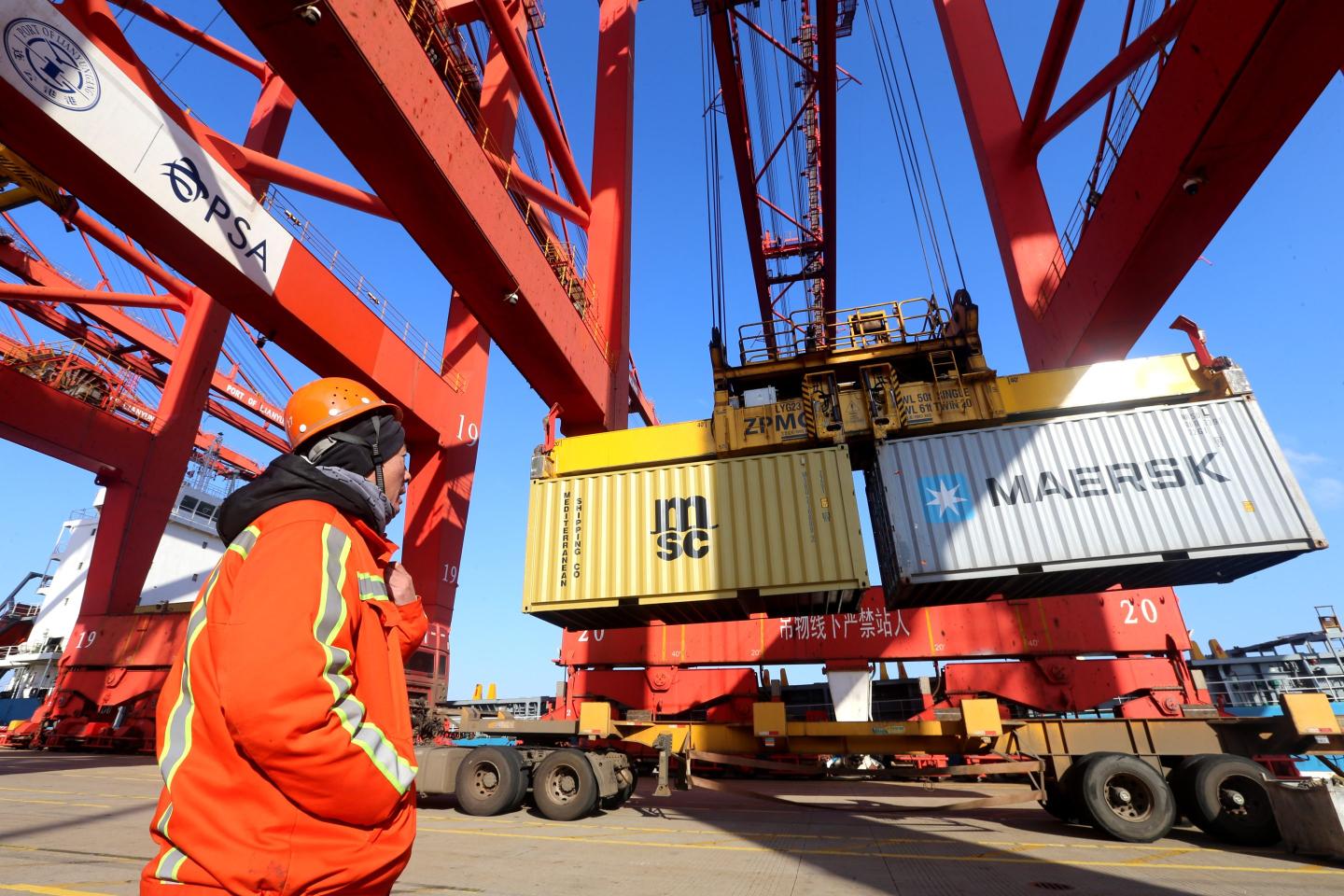
The routes that deliver products matter, too. Roughly 80% of maritime trade, [around $10 trillion], passes through at least one chokepoint, and a single blockage is costly. The 2021 Suez blockage held up an estimated $10 billion of trade a day. This year, Strait of Hormuz closures cut transits by as much as 95% at their peak, and prices of commodities from oil to urea spiked.
This is where the action is
Chips, batteries, and energy, all central to the Achilles’ heel, are where companies and governments are moving. Since 2022, three-quarters of cross-border investment announcements have gone to industries such as semiconductors and batteries, AI infrastructure, and energy and mining, up from about half before 2020. Our McKinsey Global Institute analysis of greenfield foreign direct investment announcements through June 2026 found that, since 2017, their average geopolitical distance had contracted roughly twice as fast as that of trade. When compared to pre-pandemic averages, advanced economies’ investment in China fell from 10% to 2% of total FDI announcements by value, while flows among advanced economies rose from 35% to 50%.
Industrial policy is putting money behind these moves and could speed them up. Japan’s support for TSMC’s first Kumamoto plant later unlocked more than $20 billion of investment in its semiconductor ecosystem. Efforts to diversify rare-earth magnet supply are drawing public and private capital through direct investment, long-term offtake, and price guarantees. The money is targeting the Achilles’ Heels.
This does not mean a quarter of trade will relocate, but it shows where customers and governments may place greater value on alternatives.
Turning Achilles’ heels into business opportunities
The first opportunity is new production capacity that builds resilience for companies and their customers. Long-term purchasing commitments can make that capacity investable.
More broadly, alternative capacity could create demand for equipment, infrastructure, logistics, financing, and insurance. A company does not have to own a semiconductor factory to benefit from the ecosystem around it. Opportunities often lie upstream: 38% of smartphones’ first- and second-tier upstream inputs are exposed to the Achilles’ heel. The question for a supplier is not just where to build the next assembly plant but what that plant, and its customers, will still struggle to source.
The second opportunity lies in product design. In a more geopolitically contested era, economic security needs to shape what companies make. Suppliers can offer automakers electric-vehicle motors that eliminate heavy rare earths such as dysprosium and terbium. Resilience doesn’t just call for alternative supply, but also for alternative technologies.
Resilience has to make competitive sense
A vulnerability is not automatically a business opportunity.
By our estimates, producing advanced semiconductors in Germany or the United States costs about 40% to 50% more than in Taiwan or mainland China. Businesses need to know whether productivity, execution, customer access, or targeted policy support can narrow that gap.
That argues for selectivity: looking first for opportunities close to existing capabilities, rather than assuming every vulnerable product can be made, and distinguishing lasting demand for resilience from a temporary response to disruption.
For management teams, that means examining customers’ vulnerabilities alongside their own, such as which dependencies could interrupt their business, which they could help others resolve, and where their technologies, skills, or supplier relationships give them an edge.
Seen this way, resilience belongs on the growth as well as the risk agenda. With more than $4 trillion of imports at stake, the next opportunity may begin with a question companies too rarely ask: Whose Achilles’ heel could we help solve?
The opinions expressed in Fortune.com commentary pieces are solely the views of their authors and do not necessarily reflect the opinions and beliefs of Fortune.