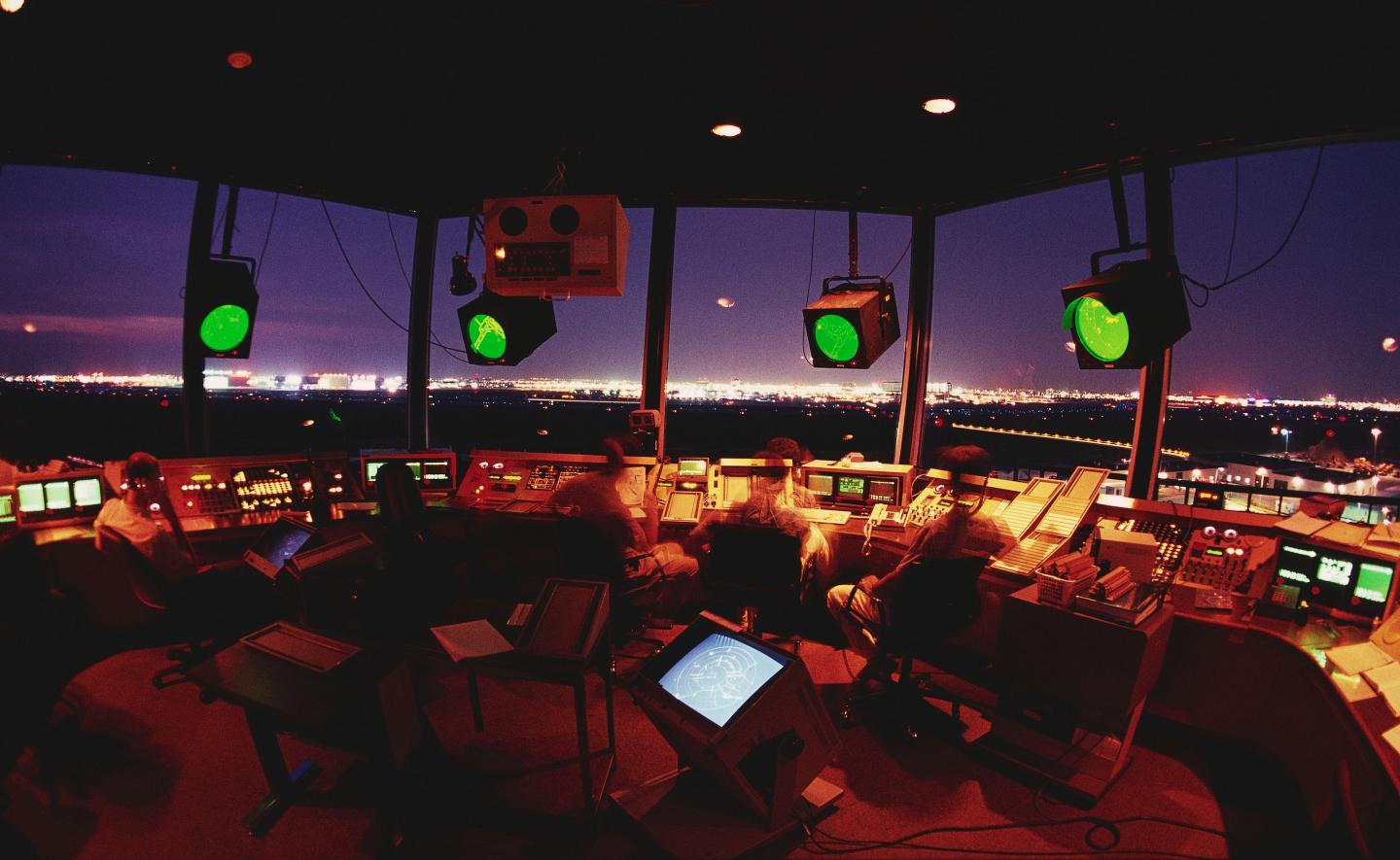
The U.S. has about 6% fewer air traffic controllers than it did a decade ago, even as the number of flights relying on the air traffic control system has grown 10%, according to a January analysis from the U.S. Government Accountability Office. The shortage isn’t confined to American airspace.
Countries from Australia to Qatar now compete for the same small pool of certified controllers, recruiting across borders with work visas and pay pegged to experience. Aviation training company CAE projects that 71,000 new air traffic controllers will be needed worldwide by 2034, or roughly 7,000 a year.
The U.S. can’t join that bidding war. Every FAA controller must be an American citizen, leaving the agency dependent on a domestic pipeline that turns away the vast majority of applicants.
For airlines, that pipeline sets the pace of the whole system. Delta CEO Ed Bastian told Fortune in April that the biggest opportunity for AI in aviation is in air traffic control, not inside the plane, because it would “do more in terms of helping our customers have quicker travel, more efficient travel.”
Why controllers are so hard to keep
The GAO traces much of the decline to disruptions in training. Government shutdowns in 2013 and in 2018 and 2019 froze hiring and training, and the COVID-19 pandemic halted training for four months, then held it at reduced capacity for nearly two years. High attrition from 2019 through 2024 made it harder to catch up.
The 2025 shutdown made things worse: by November of that year, the FAA said nearly half of major air traffic control facilities were short-staffed as controllers worked without pay.
The deeper problem may be the job itself. “It’s one of the highest stress occupations out there,” says Tiffany Bisbey, an assistant professor of industrial/organizational psychology at George Washington University. When controllers show up in academic research, she says, it’s usually as the subjects of studies on stress.
The federal government says as much. The Bureau of Labor Statistics describes the work environment this way: “Their work can be stressful because maximum concentration is required at all times. Night, weekend, and rotating shifts are common.”
The pay isn’t the problem
Money is not what keeps people away. The median American air traffic controller earned $148,080 a year, or $71.19 an hour, as of May 2025, according to the BLS, and the top 10% earned more than $215,610.
The bar to apply is also lower than many people assume. The FAA requires a bachelor’s degree, one year of progressively responsible work experience, or a combination of the two, and new hires then spend more than a year training on the job. When the FAA pitched the job to Gen Z video gamers this spring, it advertised pay of at least $155,000 after three years.
A global scramble for controllers
Other countries are short too, and some are filling the gap by hiring controllers trained elsewhere. In September, Airservices Australia posted a call for experienced international controllers, offering a work visa with eligibility to transition to permanent residency and promising “the perfect balance between work and leisure.”
Australia needs the help. That same month, unplanned absences left eight of Sydney Airport’s 49 controllers unavailable and delayed roughly a third of inbound flights one morning.
The competition cuts both ways. Qatar has been recruiting Airservices Australia controllers, Canada’s NAV CANADA used an outside firm to recruit eight foreign controllers, and South Africa lost 28 controllers in eight months, Reuters reported this month. The country that trains a controller usually bears the full cost of that training, even if the controller later leaves, a spokesperson for the industry group CANSO told the news service.
Why the U.S. can’t hire its way out quickly
The FAA’s qualification rules narrow the pool well before training begins. Applicants must be U.S. citizens under 31 and pass pre-employment tests, a medical exam, and a security investigation. “Less than 10% of all applicants meet these requirements and are accepted into the training program,” the FAA says.
Even fewer finish. About 2% of applicants qualify for and complete the full training process, the GAO found.
The agency is hiring faster than it has in years. The FAA hired 2,235 controller trainees in fiscal 2026, the most in its history, and its 2026-2028 workforce plan puts the certified workforce at about 11,000 as of April, against a target of 12,563.
That target is new. In May, the FAA lowered its staffing goal by about 2,000 controllers, citing forecast demand and changes to scheduling and training. The National Air Traffic Controllers Association said it was not involved in drafting the plan.
Bisbey sees no safe shortcut. Fast-tracking applicants or compressing training, she says, is not a viable fix, and she suspects the people who designed controller training “probably thought they needed to do even more, not less.” As she puts it: “It’s such a high-risk organization, and the training is so arduous for a reason.”
The FAA has experimented at the margins, including a 2024 pilot program that let graduates of two Oklahoma schools skip additional FAA Academy training and go straight to facility training. But certifying a controller still takes years, and until the pipeline catches up, travelers should expect more delays.
Bisbey thinks most will take them in stride, since few would trade a delay for a less safe flight. “As annoying as it is, it’s not going to make people stop traveling.”