• Home
  • Latest
  • Fortune 500
  • Finance
  • Tech
  • Leadership
  • Lifestyle
  • Rankings
  • Multimedia

Trendingnow

1

Airbnb CEO Brian Chesky says ‘founder mode’ cost him almost his entire executive team: ‘They left or they didn’t want to work for me’

2

Appeals court tosses lawsuit over Mamdani’s pied-à-terre tax rollout, ruling homeowners can’t sue over notices

3

Current price of oil as of November 5, 2026

1

Airbnb CEO Brian Chesky says ‘founder mode’ cost him almost his entire executive team: ‘They left or they didn’t want to work for me’

2

Appeals court tosses lawsuit over Mamdani’s pied-à-terre tax rollout, ruling homeowners can’t sue over notices

3

Current price of oil as of November 5, 2026
AsiaSoutheast Asia 500 Summit
Asia

Southeast Asia shouldn’t copy the U.S. healthcare model, says Walgreens Boots Alliance’s APAC head: ‘It saves your life, but it’s not very healthy’

Angelica Ang
By
Angelica Ang
Angelica Ang
Writer
Down Arrow Button Icon
Angelica Ang
By
Angelica Ang
Angelica Ang
Writer
Down Arrow Button Icon
November 6, 2026, 3:23 AM ET
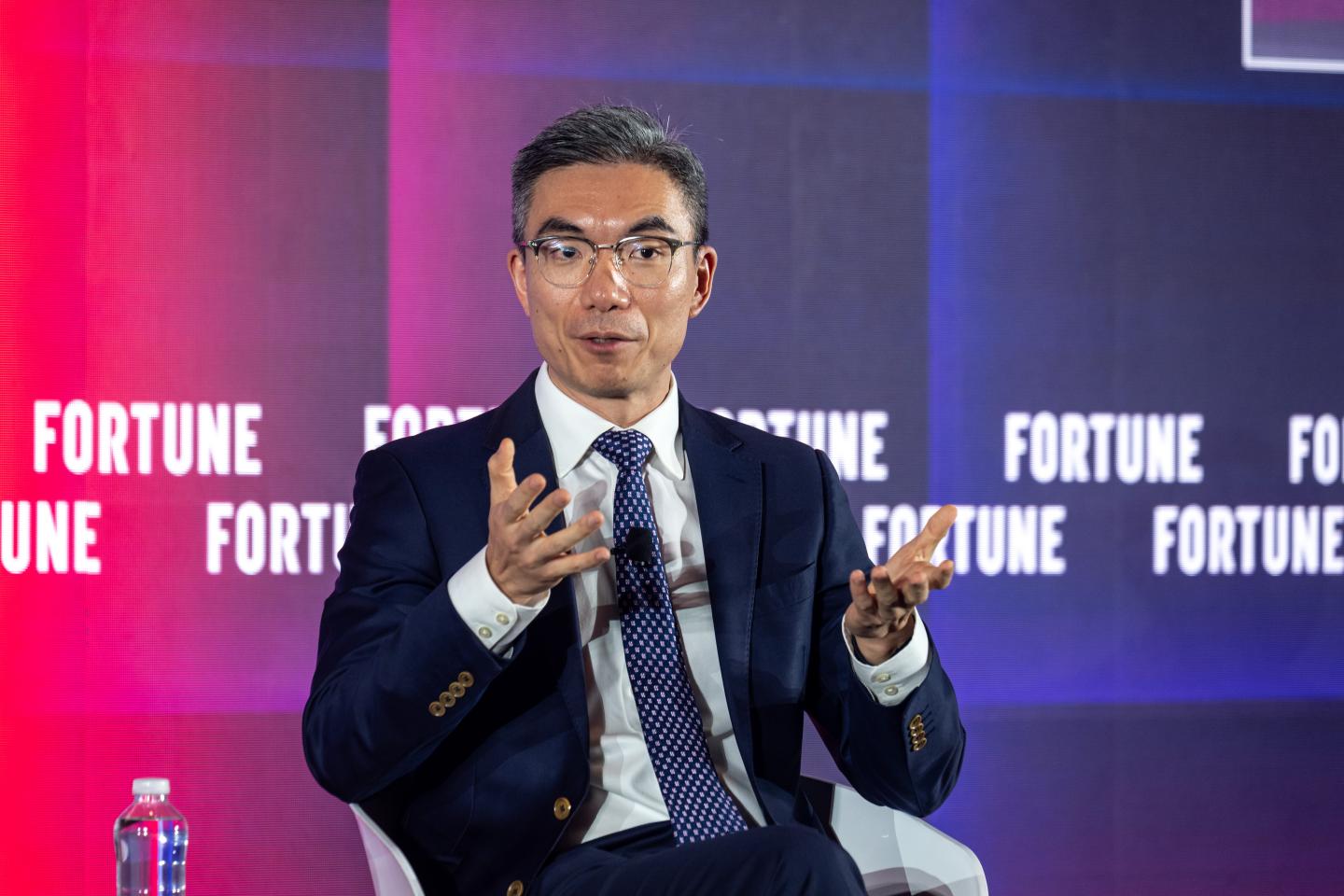
“Everyone loves to reference the U.S., since it has been able to come up with the most advanced therapies to extend life,” Li Zhong, the APAC president of the Walgreens Boots Alliance (WBA), said at Fortune’s Southeast Asia 500 Summit in Vietnam’s Ho Chi Minh City on Nov. 3. “It saves your life, but it's not very healthy. That’s not what I would suggest for Southeast Asia.”
“Everyone loves to reference the U.S., since it has been able to come up with the most advanced therapies to extend life,” Li Zhong, the APAC president of the Walgreens Boots Alliance (WBA), said at Fortune’s Southeast Asia 500 Summit in Vietnam’s Ho Chi Minh City on Nov. 3. “It saves your life, but it's not very healthy. That’s not what I would suggest for Southeast Asia.”LUCAS SCHIFRES VIA GETTY IMAGES
Google source logo
Add Fortune on Google for similar content.

The U.S. is the world’s largest healthcare spender, pouring roughly 17% of its GDP—or $5.6 trillion—into treatments and care. Yet, according to Li Zhong, the APAC president of the Walgreens Boots Alliance (WBA), while Americans generally have a long lifespan, they have a shorter healthspan than their counterparts in Vietnam, despite the latter devoting just 4.6% of its GDP to health spending.

Recommended Video

“Everyone loves to reference the U.S., since it has been able to come up with the most advanced therapies to extend life,” Li said at Fortune’s Southeast Asia 500 Summit in Vietnam’s Ho Chi Minh City on Nov. 3. “It saves your life, but it’s not very healthy. That’s not what I would suggest for Southeast Asia.”

Li’s comments come as Southeast Asia builds out its systems of care amid rising healthcare costs and a shortage of specialist doctors. “Every country is different and has to find its own route,” he explained. “What’s not right is to automatically reference the U.S. model.”

Many Southeast Asian countries, like Thailand, Malaysia, Singapore and Indonesia, are also rapidly greying. And with that demographic trend comes a rise in chronic disease incidence.

“The scarcity of specialists is becoming a burden,” admits David Utama, the president director of Indonesia’s largest private hospital chain, Siloam Hospitals. “In Indonesia, the ratio of specialists is about 0.2 per 1,000 people. Neighboring Malaysia and Thailand are about 0.5, while Singapore sits at 1.2 [specialists per 1,000 people].”

More patient-centric

To serve patient needs, Asia’s healthcare operators are increasingly looking to community-based care. Singapore and Malaysia-headquartered IHH Healthcare, for instance, operates over fifty primary care clinics under their Parkway Shenton network, while offering ambulatory care, diagnostic and rehabilitative care facilities within residential neighborhoods. 

Siloam Hospitals, too, is building more community health facilities in Indonesia. “We have about 41 hospitals across Indonesia, but we’re now building an ecosystem of primary care clinics.” (The firm’s website shows that it currently has 25 clinics, spread across the cities of Palembang, Jakarta, Bali and Surabaya.)

Pharmacies can also play a larger role, Li argued. He points to the UK’s NHS Pharmacy First scheme, which allows patients in England to walk into participating Boots pharmacies for clinical assessments and treatment for seven common conditions, without needing a GP appointment.

“It’s more cost-efficient to utilize community healthcare centers and pharmacies to help with everyday healthcare,” Li explained. “But that’s on the condition that we have to get our [pharmacists] well-trained.”

Ultimately, both experts agreed that public-private partnerships and emerging technology like AI are countries’ best bets at enabling affordable, high-quality healthcare for its populace.

“Patient-centric healthcare requires a collaboration between governments and the private sector,” said Utama. “Who has access, who has scale, [it’s] obviously the government… but the private sector helps to build capability, innovation and speed.”

Since late-2025, Utama and Siloam Hospitals have also been investing in enterprise AI. He says the team will finish building the foundational layer of its AI platform by this year, and is now looking to build digital twins for its patients, doctors and hospitals.

“For us to leapfrog, we need to adopt technology,” Utama concluded. “Today, in our ICUs, because of the data analysis we do, we can predict 30 minutes before a patient drops. Previously, we could only react 30 minutes after a patient dropped.”

Fortune Daily breaks the traditional barrier between audience and newsroom. The show transforms Fortune’s trusted reporting into actionable, conversational, and entertaining insights for an emerging class of business leaders. Watch here.
About the Author
Angelica Ang
By Angelica AngWriter

Angelica Ang is a Singapore-based journalist who covers the Asia-Pacific region.

See full bioRight Arrow Button Icon
Google source logo
Add Fortune on Google for similar content.

Latest in Asia


Most Popular

Fortune Secondary Logo
Rankings
  • 100 Best Companies
  • Fortune 500
  • Global 500
  • Fortune 500 Europe
  • Most Powerful Women
  • World's Most Admired Companies
  • See All Rankings
  • Lists Calendar
Sections
  • Finance
  • Fortune Crypto
  • Features
  • Leadership
  • Health
  • Commentary
  • Success
  • Retail
  • Mpw
  • Tech
  • Lifestyle
  • CEO Initiative
  • Asia
  • Politics
  • Conferences
  • Europe
  • Newsletters
  • Personal Finance
  • Environment
  • Magazine
  • Education
Customer Support
  • Frequently Asked Questions
  • Customer Service Portal
  • Privacy Policy
  • Terms Of Use
  • Single Issues For Purchase
  • International Print
Commercial Services
  • Advertising
  • Fortune Brand Studio
  • Fortune Analytics
  • Fortune Conferences
  • Business Development
  • Group Subscriptions
About Us
  • About Us
  • Press Center
  • Work At Fortune
  • Terms And Conditions
  • Site Map
  • About Us
  • Press Center
  • Work At Fortune
  • Terms And Conditions
  • Site Map
  • Facebook icon
  • Twitter icon
  • LinkedIn icon
  • Instagram icon
  • TikTok icon
  • YouTube icon

    Recommended For You

    © 2026 Fortune Media IP Limited. All Rights Reserved. Use of this site constitutes acceptance of our Terms of Use and Privacy Policy | CA Notice at Collection and Privacy Notice | Do Not Sell/Share My Personal Information
    FORTUNE is a trademark of Fortune Media IP Limited, registered in the U.S. and other countries. FORTUNE may receive compensation for some links to products and services on this website. Offers may be subject to change without notice.