
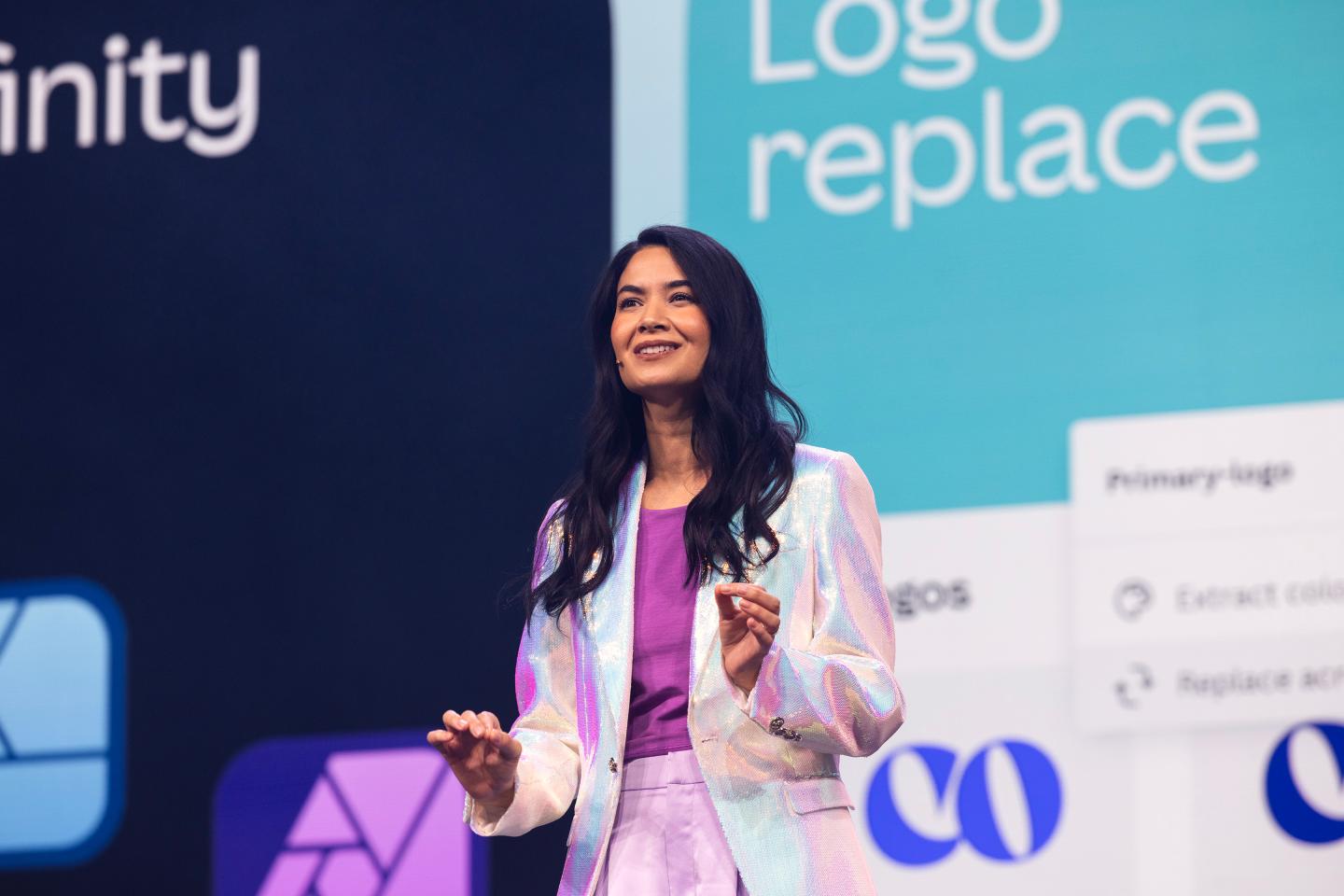
For more than a decade, Canva has been on a near-unstoppable growth trajectory. The startup found product-market fit as a democratizer of design that put previously hard-to-learn tools in the hands of the masses—just as the advent of social media and video demanded it. Its user growth soared. Even as a high-growth startup, it started turning a profit five years in. Under cofounder and CEO Melanie Perkins, Canva became the highest-valued female-founded and -led startup in the world.
But the past year has been a test of Canva’s once-guaranteed success. AI has been battering software businesses and Canva has had to slash its growth forecast. Its been hit by a double-whammy—the cost of providing AI features that users now demand, and users’ ability to use other AI tools to create visual assets they once turned to Canva for.
Earlier this week, Canva laid off or asked to relocate 22% of its workforce, or about 1,200 people. In a long, wrenching note to staff, Perkins called it “without doubt the hardest moment in our 13-year history.” While layoffs seem par for the course at most tech firms these days, Canva had so far avoided a reduction in force of this scale.
Perkins has been earning praise across LinkedIn for the candor of her note and Canva’s offerings to departing employees. Six months of severance, career search resources, and—most unusually—a program providing $10,000 grants to laid-off workers who want to start their own ventures. Perkins was turned down by more than 100 investors before starting Canva.
Having profiled Perkins for the cover of Fortune in 2022 and kept up with her since, I can confidently say the emotional tenor of her message is real. She is a deliberate thinker who doesn’t make rash moves. And Canva’s culture has been a huge part of its story. Perkins and her co-founder and husband built the company in Sydney, essentially starting a tech ecosystem where there was none before. In Australia, Canva’s impact on the industry and its workforce can’t be overstated.
Perkins plans not by quarters, but by decades drilled down into actionable steps. Her and her cofounder/husband Cliff Obrecht’s two-step plan for Canva is to build the world’s most valuable company, and then give away their wealth to do the most good possible in the world. Stalled growth and a complete overhaul of Canva’s workforce certainly wasn’t a step on that plan.
Perkins’ note to Canva’s workforce is notable not only as an example of “humane” layoffs, but for her outline of where the company went off course. “I came to the conclusion that small changes won’t be enough,” Perkins wrote, going into detail about changes that lie ahead. She’s planning to “refound” Canva and reclaim some of the agility and scrappiness of a younger startup. More companies should be so honest when things go off track.
Emma Hinchliffe
emma.hinchliffe@fortune.com
The Most Powerful Women Daily newsletter is Fortune’s daily briefing for and about the women leading the business world.
ALSO IN THE HEADLINES
Where voters stand on abortion. In Nevada, Missouri, and Virginia voters chose to pass or strengthen protections for reproductive rights. In Idaho, voters decided not to appeal the state's abortion ban.
Russell Brand was convicted of rape and sexual assault. The comedian who more recently has become a "conspiracy-minded YouTuber" was found guilty in London on one count of rape and three counts of sexual assault that occurred between 1999 and 2009. (He was found not guilty on two additional counts of rape and one count of attempted indecent assault.) The judge said he would sentence Brand to "significant custodial time."
Helena Foulkes gets started in Rhode Island. The former CVS exec and CEO of Hudson's Bay Company just won her race for governor. She was a mainstay on the Fortune Most Powerful Women list for years and made her first attempt at the Democratic primary in 2022. My colleague Preston Fore dives into her path to elected office, and how failure and bad bosses in corporate America helped make her a better leader.
Caitlin Clark x Dick's Sporting Goods. The WNBA star is the first individual athlete—man or woman—to sign a deal with Dick's and Foot Locker.
ON MY RADAR
The skilled trades are making more room for women WSJ
How Melania Trump became a dark horse diplomat on Ukraine NYT
The women cracking corporate America's most exclusive boys' club Marie Claire
PARTING WORDS
"All the Genies have been big, tall Black men, and Robin Williams. I thought, ‘Sherri, what did you do?’"
—Sherri Shepherd, who is playing the first female Genie in Aladdin on Broadway