
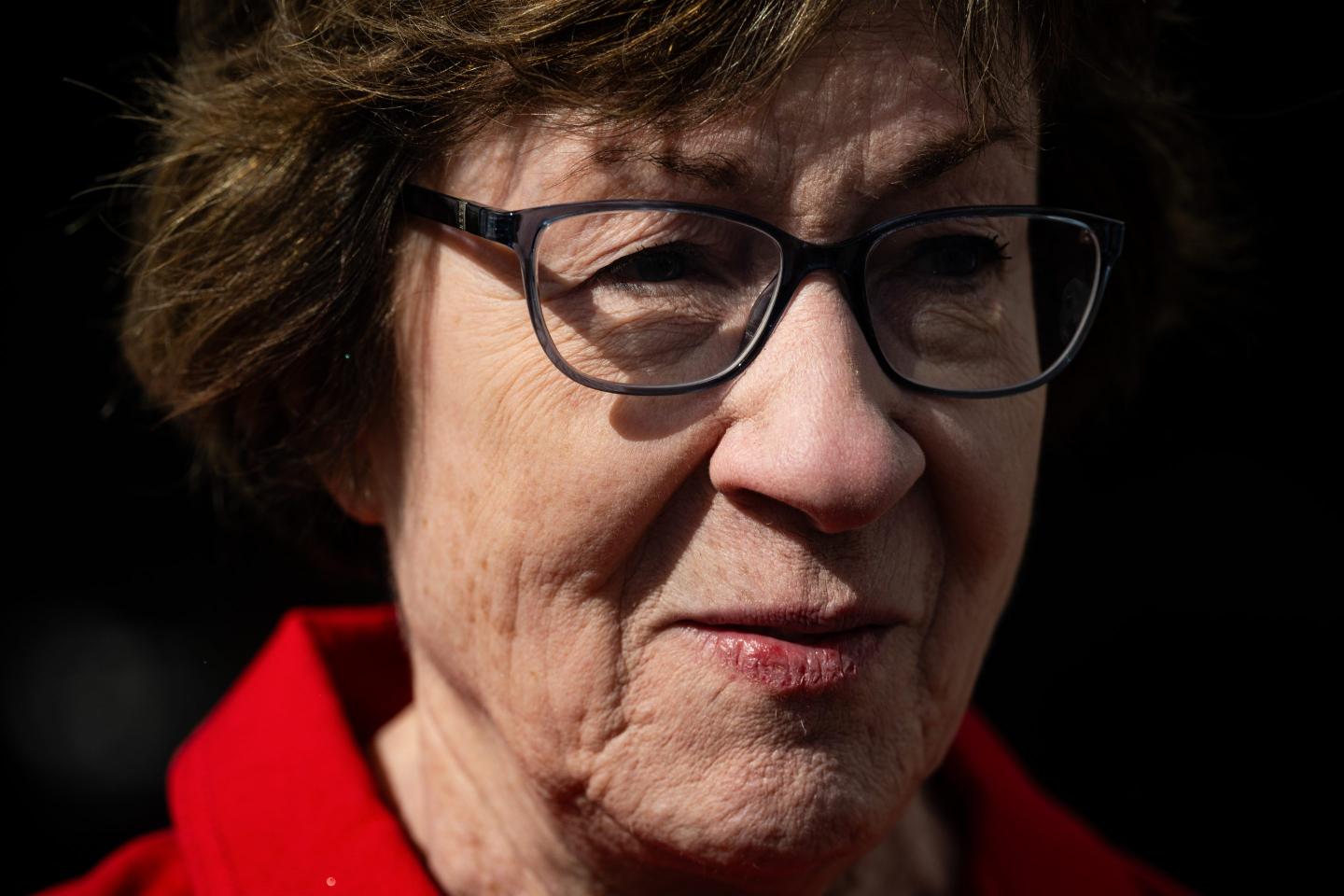
Democrats won control of both the House and the Senate on Tuesday night, and it was only the third time in the last 50 years that control of both chambers changed in the same election. Republican incumbents took the losses, from a six-term senator in Maine to a three-term governor in Texas.
Nearly half of voters said they saw the election as a chance to rebuke President Donald Trump, and the share with a negative view of the Republican Party rose from 52% in 2022 to 59%, according to NBC News’s exit poll.
Sen. Susan Collins, who has held her Maine seat since 1997, conceded to Democrat Troy Jackson, NBC News reported. Texas Gov. Greg Abbott lost his bid for a record fourth term to Democrat Gina Hinojosa, the AP called. In Ohio and South Carolina, two Republicans appointed to the Senate in the last two years, Jon Husted and Darline Graham, lost their first elections for the seats. Graham’s loss handed Democrats a seat that had been in Republican hands since Strom Thurmond switched parties in 1964.
The losses reached governors’ offices too. Republicans entered Tuesday with a 26-24 edge in governorships, and Democrats flipped four: Texas, Georgia, Ohio and Iowa.
Why incumbents lost
The clearest factor was the president. Just 38% of voters approved of Trump’s performance and 62% disapproved, according to NBC’s exit poll. The same poll found Republicans had lost their advantage on the economy, the issue the party had leaned on for two years. Voters named the cost of living and government corruption as their top two issues in AP exit polls.
Rising costs gave challengers an opening even in Republican strongholds. In Ohio, the AP reported, Trump’s tariffs, the trade war with Canada and the Iran war that sent fuel prices soaring gave Democrat Sherrod Brown an opening with rural and working-class voters.
Ties to Trump hurt Republicans who held office. Collins faced a Trump stigma, CNBC reported, over her perceived allegiance to him. Trump also put himself at the center of several races and picked candidates himself, which an NBC analyst described as backfiring on the candidates involved. He pushed Graham for her Senate appointment and rallied for her and Husted repeatedly in the final weeks.
History also worked against them. Before Tuesday, the House and Senate had flipped from one party to the other in the same midterm only three times since World War II: 1946, 1994 and 2006. When it happens, PBS noted, the common thread is an electorate clamoring for change.
Turnout added to the pressure. In Texas, early voting reached 40.5% of registered voters, the highest midterm early-turnout rate on record in modern Texas. In North Carolina, early ballots were up 31% from 2022.
A contrast with 2022
The losses stand out against the last midterm. In 2022, despite high inflation and widespread voter frustration, only six House Democrats lost reelection out of more than 365 districts with an incumbent on the ballot, the New York Times reported at the time, and no Senate incumbent had lost when that report was published.
Collins was the only Republican defending a Senate seat in a state Kamala Harris won in 2024, which Harris carried by 7 points. Democrats hadn’t won a Senate race in Maine since 1988. Collins chairs the Appropriations Committee and had beaten every Democratic challenger she faced, including in 2020, when polls showed her losing. She pointed to that record on Election Day. “Six years ago, all the polls were wrong,” she told CBS News. Jackson led 52.4% to 47.5% in NBC’s count.
Abbott’s loss ended a run of Republican governors in Texas dating to 1995. A CNBC voter poll found 52% of respondents had an unfavorable view of him.
Trump had endorsed Abbott. After the loss, he turned on him. Abbott wouldn’t have lost, Trump wrote on Truth Social, if he “hadn’t become a RINO in the last six months of his Political Life.” RINO stands for “Republican in name only.” Trump added that he would “become a political pundit” on why his favored candidates lost.
The newly appointed
Husted and Graham both reached the Senate by appointment, not election. Husted was appointed in January 2025 to replace JD Vance after Vance became vice president. He lost to Democrat Sherrod Brown, a former three-term senator, whom Husted had tried to cast as the out-of-touch incumbent. Graham was appointed in July after the death of her brother, Sen. Lindsey Graham, and lost to Democrat Annie Andrews in a state Trump won by 18 points.
So far, 11 House incumbents have lost in the general election, seven Republicans and four Democrats, according to Ballotpedia. In New Jersey, Rep. Tom Kean Jr. lost to Democrat Rebecca Bennett. In Virginia, Rep. Jen Kiggans lost to former Rep. Elaine Luria, who lost the same seat to Kiggans in 2022. In Colorado, Democrat Manny Rutinel flipped the seat held by Rep. Gabe Evans.
The pressure on incumbents showed up months earlier, in the primaries. The primary season ended with record departures and defeats, NPR reported: 13 senators and 60 House members retired or ran for other offices, and 13 incumbents lost their primaries. In March, Rep. Dan Crenshaw lost his Texas primary to a challenger who accused him of being insufficiently loyal to Trump’s agenda.
The backlash hit Republican incumbents hardest, but it didn’t spare every Democrat. Four House Democrats lost in the general election, according to Ballotpedia’s count. In the Senate, though, Democratic incumbents held. Sen. Jon Ossoff, long considered the most vulnerable Democratic senator, won reelection in Georgia, and his Republican opponent, Rep. Mike Collins, conceded. In Florida, Democratic Reps. including Kathy Castor held seats Republicans had redrawn to flip.