
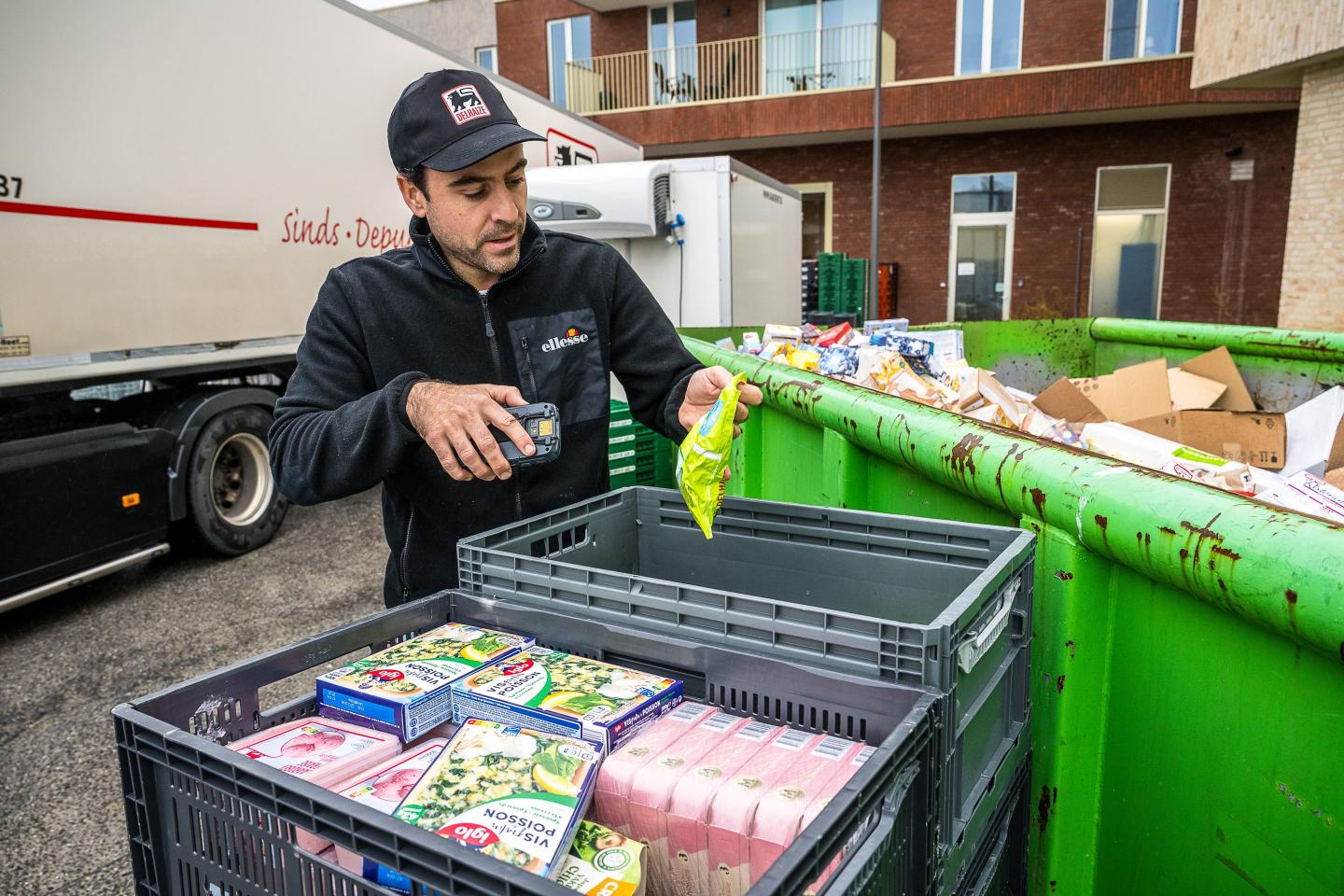
Lightning may not strike the same place twice, but hackers appear to be targeting the same systems, as refrigeration becomes the next frontier for cyberattacks.
About 20 refrigerator systems in supermarkets Delhaize, Carrefour and Spar experienced outages late Sunday night into Monday morning, Stephan Moelans, CEO of refrigeration installer Sabcobel, told Belgium’s Belga News Agency on Monday. Swedish daily newspaper Aftonbladet reported similar outages in Swedish chains ICA and Coop, with outages also reported in Luxembourg and Estonia.
“We began mobilizing technicians at 1 a.m. to get the situation under control,” Moelans said. “We’ve been working all night and morning to disconnect the affected units from the network.”
He noted this wave of suspected cyberattacks mirrored the hacking of hundreds of French supermarkets last month, when the temperature of grocery stores’ refrigerators and freezers was raised, spoiling food and causing small fires. Those supermarkets included 80 Carrefour locations, about 24 Monoprix locations, and 150 Intermarche locations.
Hackers left the same calling card in the latest attacks. One location of a Swedish grocery store, ICA Kvantum Sjöbo, said in a Facebook post that its refrigerators and freezers were hacked overnight, and the temperature of the devices were set to 50 degrees Celsius, or 122 degrees Fahrenheit. As a result of the rising temperatures, the location has to throw away the stored food.
“We are extremely sorry to have to throw out all this food, but we see no other way,” the store wrote. “Now we are focusing on getting everything back on track.”
ICA told Fortune the outages were in a limited number of stores using an external supplier with networks outside of ICA’s main network, but the company’s central systems were unaffected.
The European Commission did not immediately respond to Fortune’s request for comment but said in a statement that the incident shows how much cyberattacks can “disrupt services, affect businesses and directly affect citizens’ daily lives.”
In August, half a dozen U.S. military commissaries experienced a similar refrigeration system outage, and the Pentagon is now investigating both the French supermarket outages as well as the commissary outages as a potential cyberattack.
Why refrigeration systems are hackers’ next big target
Cybersecurity experts said it was only a matter of time before refrigerators and freezers became the target of hackers. As more appliances become internet-connected, they become more accessible to outside agents, and therefore more susceptible to potential network breaches, Nadiya Kostyuk, an assistant professor at the Carnegie Mellon Institute for Strategy and Technology, told Fortune.
“A lot of these devices have a lot of really cool features, but the security is not the first priority for them,” Kostyuk said. “Hopefully future inventions will come with more security in mind when it comes to the design, and the existing ones also will be revisited to incorporate all the potential vectors of the cyberattacks.”
Refrigerators in particular tend to use the same devices across commercial chains, meaning finding a weak point in one can expose vulnerabilities across other systems, according to Christopher Whyte, an associate professor of homeland security and emergency preparedness at Virginia Commonwealth University.
The practical features of refrigerators and freezers also make them a target because outages can result in direct and immediate financial consequences, Whyte said. After the cyberattacks in France, two supermarkets, Intermarché and E.Leclerc, reported about €270,000, or $300,000, in combined damages, according to local news outlet Sud Ouest.
“You can’t unspoil food or other products from these freezers. It’s just euros and dollars down the drain,” Whyte told Fortune.
While there’s no official proof these outages are connected, Whyte noted the proximity of the French and U.S. outages to one another as well as the similarities in the systems impacted.
“You’d be silly not to be suspicious,” he said.