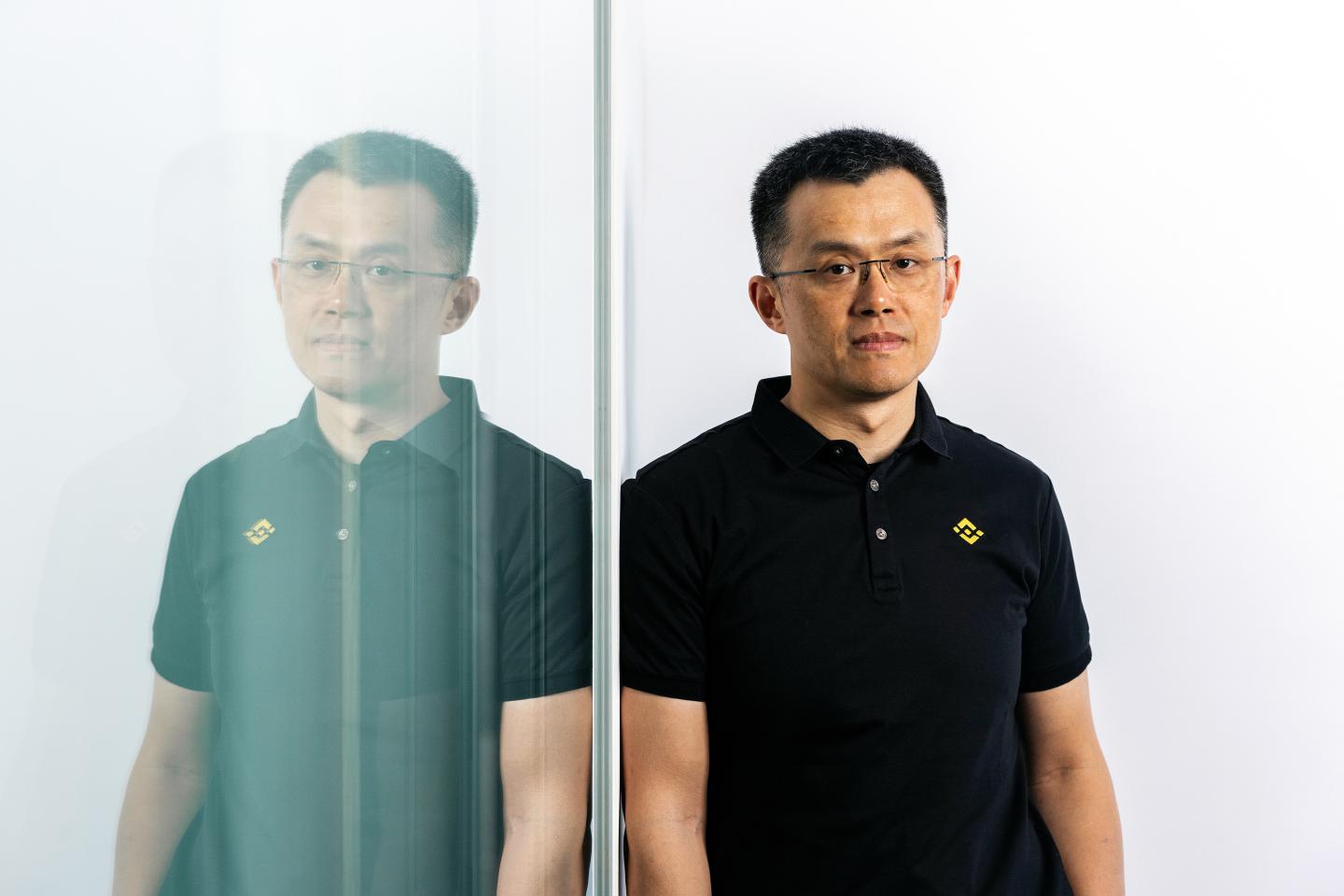
On Thursday, a hacker drained an estimated $6.3 billion from the crypto exchange Binance. What may turn out to be the biggest crypto heist in history appears to have been carried out via a single compromised laptop, as Fortune’s editor of finance and crypto, Jeff John Roberts, explains in his account of what we know so far.
The full extent of the damage is still emerging, but the incident shows a staggering vulnerability at the world’s largest digital currency platform—and could shake investors’ confidence in the sector.
In 2022, Fortune’s Vivienne Walt met Binance’s cofounder, Changpeng “CZ” Zhao, for breakfast in London. His wealth had recently been estimated at $74 billion, making him one of the richest people in the world, but she found him consigned to a neglected corner of the hotel restaurant, wearing a roughly $300 suit and an Apple Watch.
“For his part, Zhao seems bemused by the idea that his wealth should impress anyone,” Walt wrote. “‘If they think I am worth that much, that is what they think,’ he tells me. ‘It’s fictitious pricing.’”
Binance handles massive sums—$34 trillion in trades in 2025. But there’s a major difference between Binance and traditional trading platforms, as Walt pointed out: “What Binance doesn’t have is the safeguards and checks and balances that the public generally expects of its financial tools.” Zhao reassured her that customers had nothing to worry about, explaining, “We’re communicating with all the regulators right now.”
A year later, another Fortune profile by Roberts and Yvonne Lau examined Zhao’s formative years, tracing how a soft-spoken Canadian came to build an empire by outmaneuvering rivals and regulators. The writers recounted how a 12-year-old Zhao had arrived in Vancouver with his family in 1989, months after the Tiananmen Square massacre in Beijing.
While his mother worked sewing jobs and his father drove a “decrepit Datsun,” Roberts and Lau wrote, Zhao’s father spent “$7,000 Canadian dollars—a staggering sum at the time—for an IBM-compatible 286 computer” upon which he taught his son how to code. The popular self-help book Rich Dad Poor Dad helped turn the younger Zhao toward entrepreneurship.
Later, Binance’s breakneck growth brought accusations that it was sidestepping financial safeguards: U.S. regulators alleged that the exchange served American customers without the required registration and helped them evade its compliance controls.
Zhao pleaded guilty in 2023 to failing to maintain an effective anti-money-laundering regime, stepped down as CEO, and served four months in prison in 2024. President Donald Trump pardoned him in October 2025. Now, he and Binance’s cofounder, Yi He—who serves as the exchange’s co-CEO and is Zhao’s life partner—are on the frontlines of the current crisis.
The regulatory concerns and this week’s hack are very different problems. But the question running through those Fortune profiles remains: Has Binance’s capacity to protect its customers kept pace with its ability to attract them?