On Nov. 3, U.S. voters elect a new Congress. In an AP-NORC poll taken in mid-October, 84% of voters named the cost of living among their most important issues. The worry was about ordinary bills; in a KFF poll in September, 52% of voters worried about affording food and 51% about utilities. That worry has spurred talk of a crisis in the press, with Bloomberg filing its coverage under “US Cost-of-Living Crisis” and CNBC writing of “the affordability crisis”.
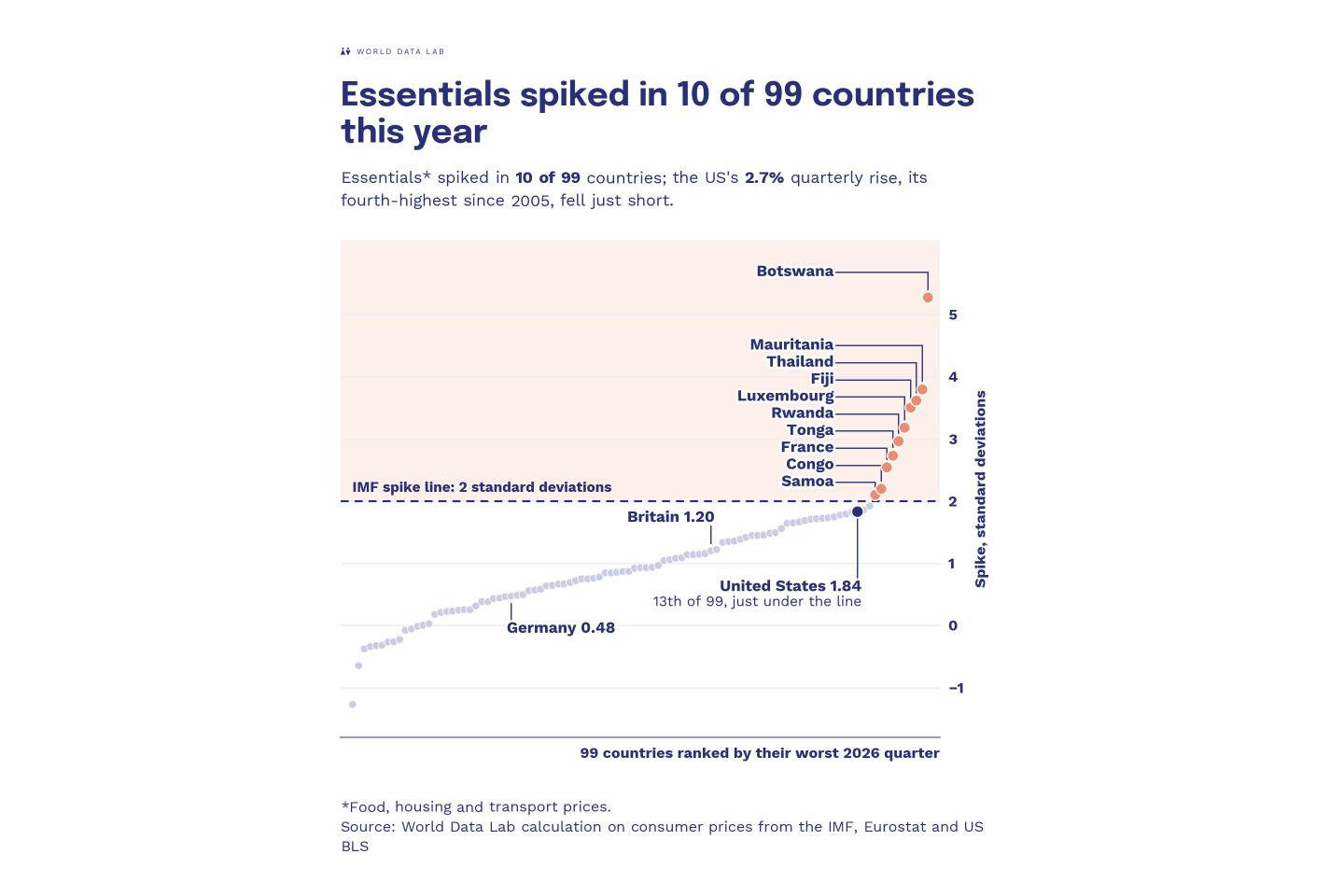
However, this year’s price rises fall short of a cost-of-living crisis in most countries, the U.S. included, as a test based on the International Monetary Fund’s definition shows. The test looks for a spike in essential prices, which happens when the rise in food, housing and transport costs in one quarter beats the country’s usual rise by more than twice its normal swing. By that test, essentials spiked in 10 of 99 selected countries this year. In 2022, the same test caught 62 of them, the U.S., Britain and Germany among them.
The U.S. fell only just short of a spike. U.S. essentials rose 2.7% in the second quarter, the fourth-highest since 2005. None of the three higher quarters was a good time for the U.S. economy, coming in the recession of 2008 and the worst inflation in four decades in 2021 and 2022.
The U.S. therefore appears to stand at the edge of a cost-of-living crisis. So far, however, the country is under financial pressure rather than in crisis, because people still buy more extras, such as clothes, furniture, leisure and meals out. The average person in the U.S. buys about 1.4% more of those extras this year, after inflation. Meals out are the brightest sign, with spending per person in U.S. restaurants higher than in any year since at least 2018. A crisis begins only when people start to buy less, not just when essential costs rise.
Why does it still feel like a crisis?
Even without people buying less, it still feels like a crisis because higher prices are slowing how much more people can buy. People in the U.S. spend about 48% more per person than in 2019, yet once rising prices are taken out, the average person buys about 16% more. This year, about 63% of each extra dollar goes on higher prices.
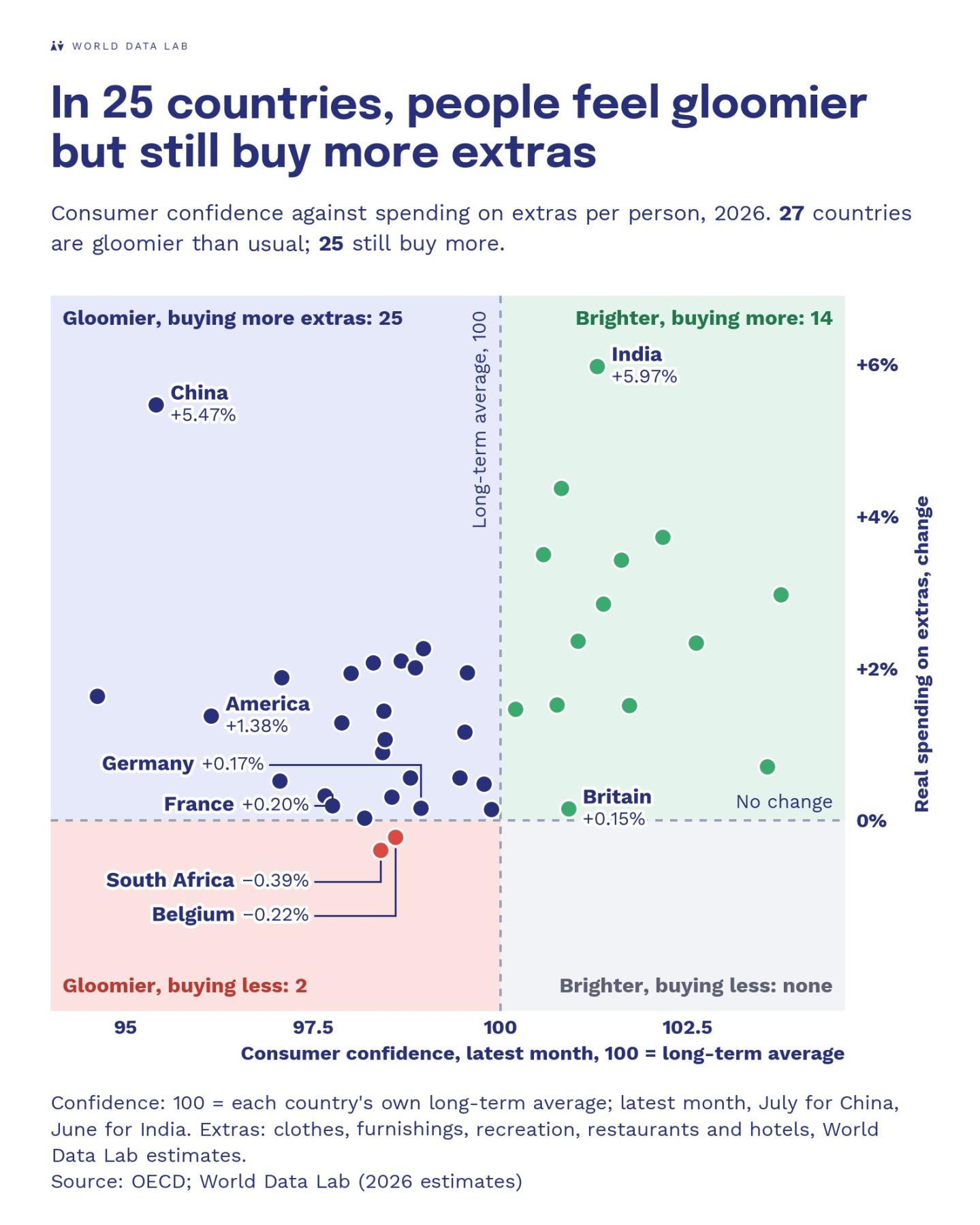
Many other countries share this mix of gloom and spending. Consumer confidence, the OECD’s monthly gauge of how people feel about their finances, sits below its long-term average in most of the 41 countries it covers, yet in all but two of them (South Africa and Belgium) people still buy more extras. Chinese consumers feel even gloomier than U.S. consumers but buy about 5% more extras, and Germans, also gloomy, buy slightly more. In most of these countries, then, people feel gloomier about their money but have not yet started to buy less.
Are people buying less where US prices spiked?
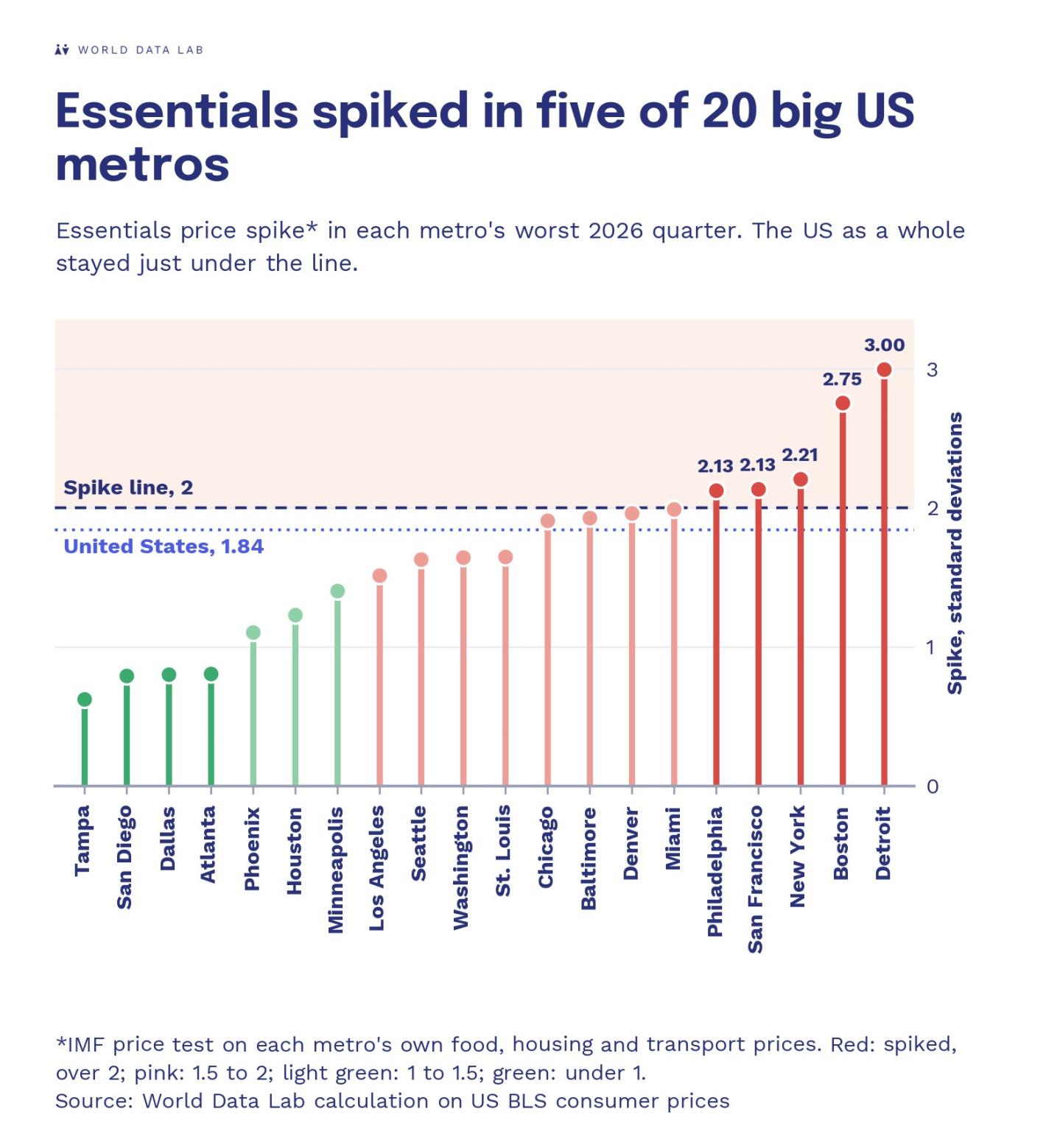
Not yet, even though Bureau of Labor Statistics data shows prices have spiked in five U.S. metro areas. In Detroit, Boston, New York, San Francisco and Philadelphia, essential prices rose fast enough to count as a spike, which the national figure did not. Those five cities thus meet the first part of the IMF’s definition of a cost-of-living crisis.
Detroit spiked furthest, but spending per person on extras there still rises by 1.03%, against 1.45% in the typical calm metro area. People in all five cities still buy more extras, thus stopping short of the crisis the IMF describes, in which costlier essentials leave households less to spend on everything else.
Where has a real crisis begun?
Not in the ten countries where essentials spiked. Spending on extras there grows about as fast as in the countries where prices stayed calm. The spike fell mostly on transport, which carries the cost of fuel. Without transport, eight of the ten would not have spiked, France and Thailand among them.
Signs of a real crisis have instead appeared in 18 other countries, mostly in Africa and the Middle East, from South Africa to Kuwait and Qatar, where more people are falling into the poorest spending group. In those 18, 13 million more people have joined that group this year. On average, people in those 18 buy less food and fewer extras than a year ago.
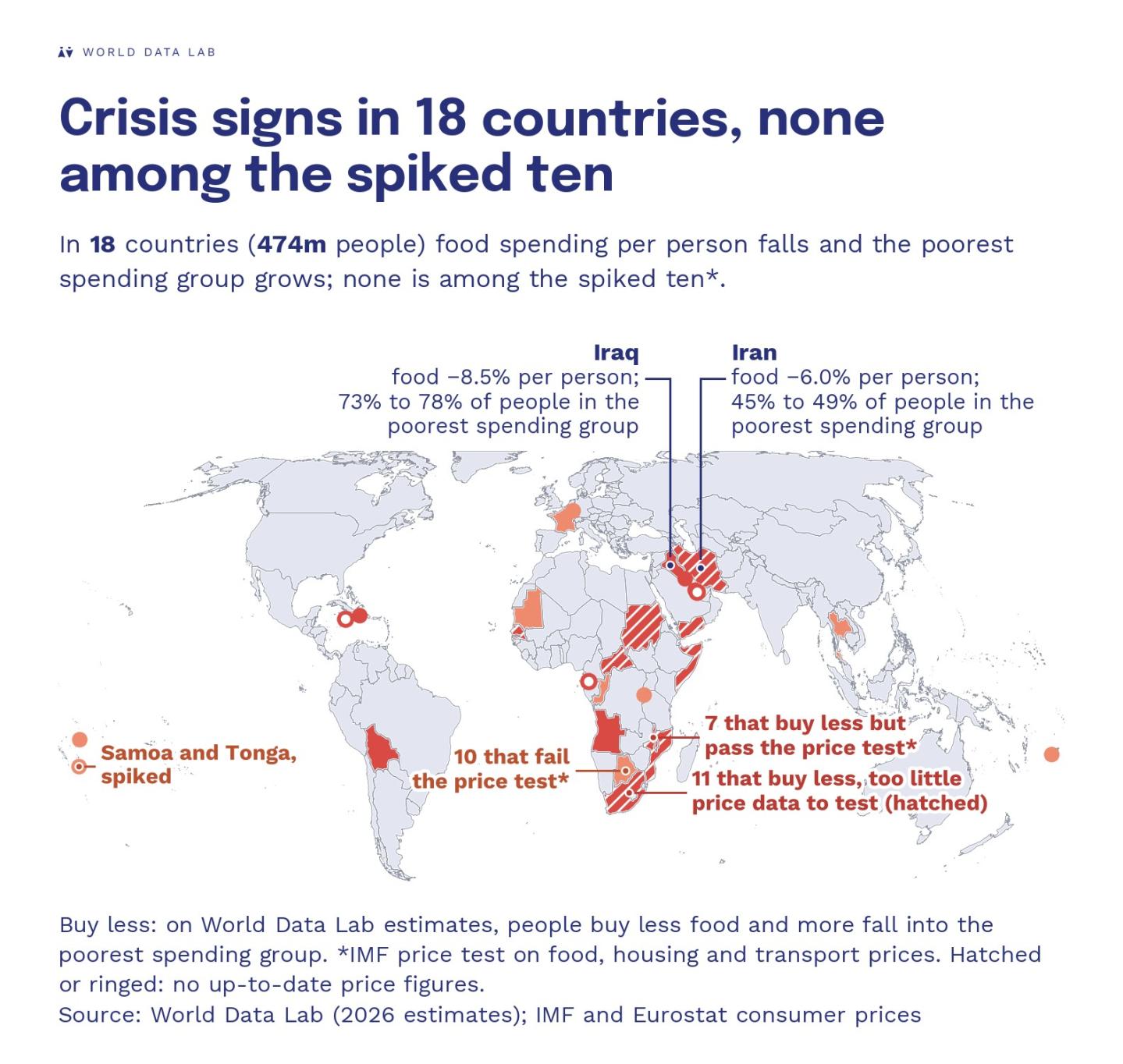
Iran and Iraq, the two of the 18 that add the most people to that group, were hit by this year’s war in the Middle East. Iraq’s spending per person on extras falls by about a tenth this year but is forecast to recover most of that loss in 2027. Together, the 18 hold 5.8% of the world’s people but buy only 1.3% of its extras, so their cuts take little from world spending on extras.
Ultimately, the cost of living that dominates the midterms has brought financial pressure rather than a crisis, since people pay more but still buy more. World Data Lab expects the same in 2027, with spending on extras rising in the U.S. and the ten and most of the 18 recovering. The word crisis therefore overstates what most households face this year. Three big risks remain. The war has lifted oil 68% since February, mortgage rates have climbed to 7.3%, and an AI share slump would hit the richest tenth, who own 88% of U.S. shares. Whoever wins on Nov. 3, support for households would thus work best if it followed how much people still buy, not only the prices they pay.
The opinions expressed in Fortune.com commentary pieces are solely the views of their authors and do not necessarily reflect the opinions and beliefs of Fortune.