

Good morning. I caught up with ServiceNow CEO Bill McDermott yesterday, who put me into the minds of his thousands of enterprise customers (and about 85% of the Fortune 500) as they each make themselves over in an age of AI.
“They have to get to ROI now,” he told me, describing companies who have been “whacked over the head” with tokenmaxxing, proof-of-concepts, DIY projects, and countless independent tools. “It is across the board, whether it’s a private or public sector entity. There’s tremendous pressure to deliver value now.”
I first met McDermott when he was the newly appointed co-CEO of SAP. Back then, it was all about the rise of cloud computing. Much of that revolution rhymes with what’s going on today—but not everything.
“The cloud economics really came together with users. The more users you had, the more the cloud economics scaled,” he said. “The agentic economics scale with action. How are you helping me derive value from the system?”
I asked him how the recent rash of headlines about AI agents breaking out of their sandboxes was influencing his business. ServiceNow announced this week that it would expand its OpenAI partnership to, among other things, “address security issues using AI.”
McDermott talked up the company’s $7.75 billion April acquisition of Armis (he called it “the world’s fastest-growing enterprise security company”), its integration with Nvidia’s agent-governing OpenShell architecture, and its “kill switch” feature that revokes credentials for runaway agents.
Still: “The security attacks are not gonna stop,” McDermott said. Oh, good!
Today’s tech news, including ServiceNow’s latest earnings report, follows. —Andrew Nusca
P.S. Ever the basketball fan—his grandfather is in the Naismith Basketball Hall of Fame—McDermott shared his predictions for this year’s NBA season. I asked: His Knicks or my Sixers to go all the way? “I hate to say it,” he replied, “but the Thunder and the Spurs.” Boo.
Thoughts? Suggestions? Hot tip? Drop me a line.
THE BIG STORY
Alphabet’s Google Cloud revenue doubles to $31 billion as cash flow stays deep red

Alphabet’s Google Cloud more than doubled its revenue to $30.7 billion in the third quarter, helping to soften some of the more tepid growth from Google Search and YouTube.
But for investors, it wasn’t enough.
Despite the strong showing from its cloud business, investors sold off and Alphabet’s after-hours stock price dropped more than 11% following the release of its quarterly results. The drop wiped out more than $280 billion in market value.
Aptus Capital Advisors' head of equity and portfolio manager, David Wagner, wrote that Google Cloud did what it was supposed to do this quarter.
“The problem is everything else,” wrote Wagner.
Investors are concerned about sluggish growth in Google’s search business, amid fears it might be swallowed up by “AI cannibalizing the franchise,” Wagner wrote. Google Search rose 12% to $63.4 billion, a marked slowdown from 17% growth in the second quarter and 19% in the first. Analysts were expecting the search business to grow 15%.
Tech analyst Dan Ives remained characteristically bullish in a first-take note from his Yorkville Ives equity research. “This is the Cloud print we have been waiting for, and in our view it matters more than a lighter Search number the bears will lean on tonight,” wrote Ives.
Alphabet reported third-quarter revenue of $127.6 billion, up 25% from $102.3 billion a year earlier, roughly in line with the $127.9 billion analysts were expecting, according to consensus estimates from S&P Global Visible Alpha.
Earnings tumbled to $2.12 a share from $2.87. The drop is due to an $8.7 billion paper loss on Alphabet’s equity investments, which trimmed its earnings by 55 cents per share.
“We had a strong quarter and are now on a half-trillion dollar revenue run rate,” said Alphabet CEO Sundar Pichai in a statement. “Our deep full-stack approach is driving momentum across the business, with Alphabet revenues growing 25% year-over year.”
As for capital spending, Alphabet reported that capex was $51.4 billion in the third quarter, compared to $24 billion a year ago. The company confirmed its full-year capital spending forecast and capex is expected to reach $200 billion in 2026, and then rise to $300 billion in 2027.
Independent tech analyst Luke Lango wrote in a note immediately after Alphabet announced its results that investors were dumping stock for the wrong reason, namely that the paper loss reflects Alphabet’s stake in SpaceX. Lango called it “accounting noise,” rather than a core problem with the business.
“Alphabet is now funding the AI buildout with shareholders’ money instead of its own cash,” wrote Lango. “That’s what the market is punishing tonight. But make no mistake: This is a ‘how do we pay for it’ problem, not a ‘nobody wants it’ problem.” —Amanda Gerut
THE BLIND BOX
“These are going to be some of the most important drugs we’ve ever actually seen come to market.”
THE RUNDOWN
—Another new Apple MacBook Pro arrives, this time with a punchy new touchscreen.
—Amazon takes on tokenmaxxing: “An engineer who can explain where AI does not yet help their work is demonstrating the judgement we are asking for.”
—Marvell may buy Lumentum. The data center optics maker is worth $83 billion.
—ServiceNow shares plunge 18% on “SaaSpocalypse” fears as Q3 revenue beats Wall Street expectations but Q4 contracted revenue growth comes up short.
—Did Nvidia’s Hugging Face acquisition adversely affect AI competition?
—Microsoft tops Q1 revenue and profit expectations as it offers buyouts to more than a quarter of its employees.
—Malaysia intercepts a shipment of AI servers that may violate export controls.
—South Korea fines Apple and Google for forcing local developers to use their app payment systems.
THE PARTING SHOT
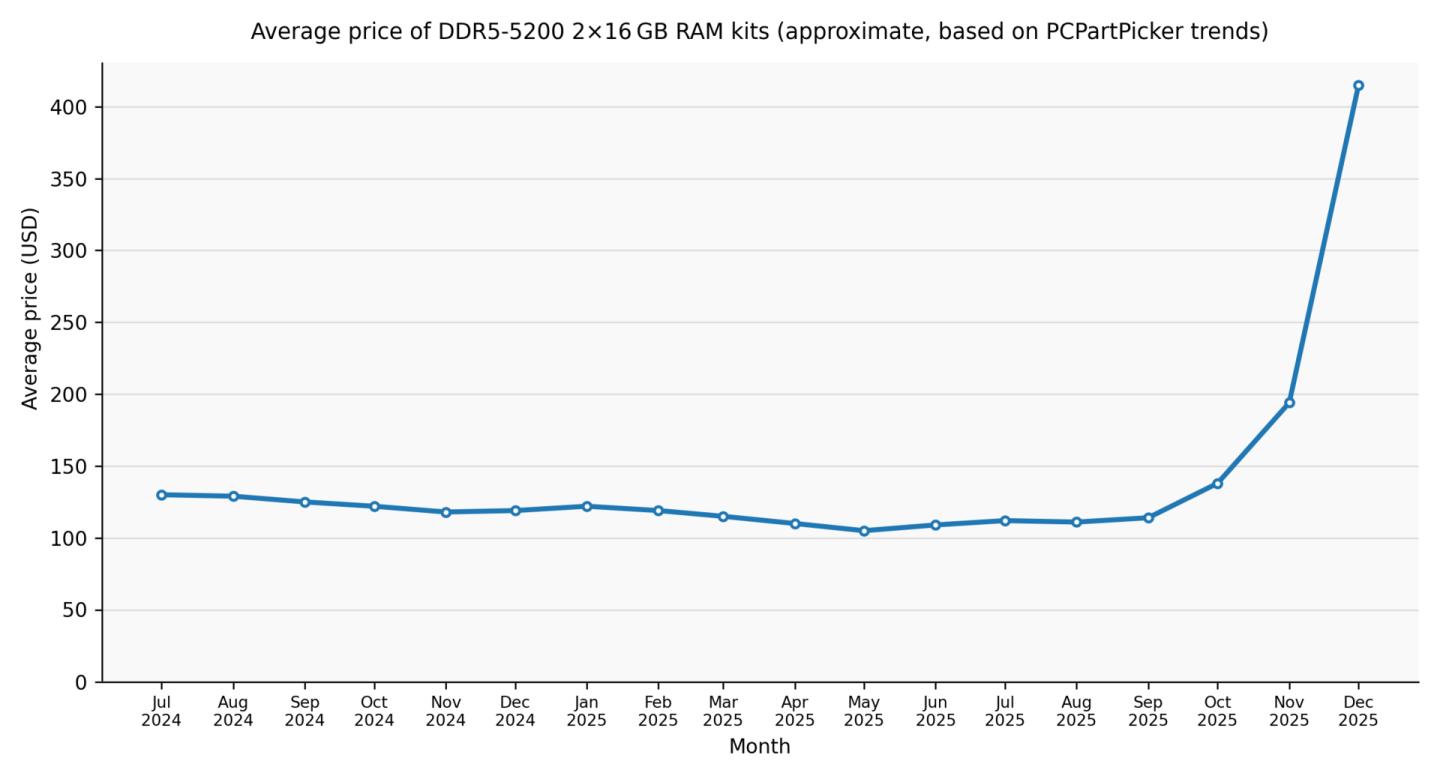

According to new estimates from SK Hynix, the world’s second-largest memory chipmaker behind Samsung, the global memory shortage driving up the prices of electronic goods will now last through…2030. Ah, well.