
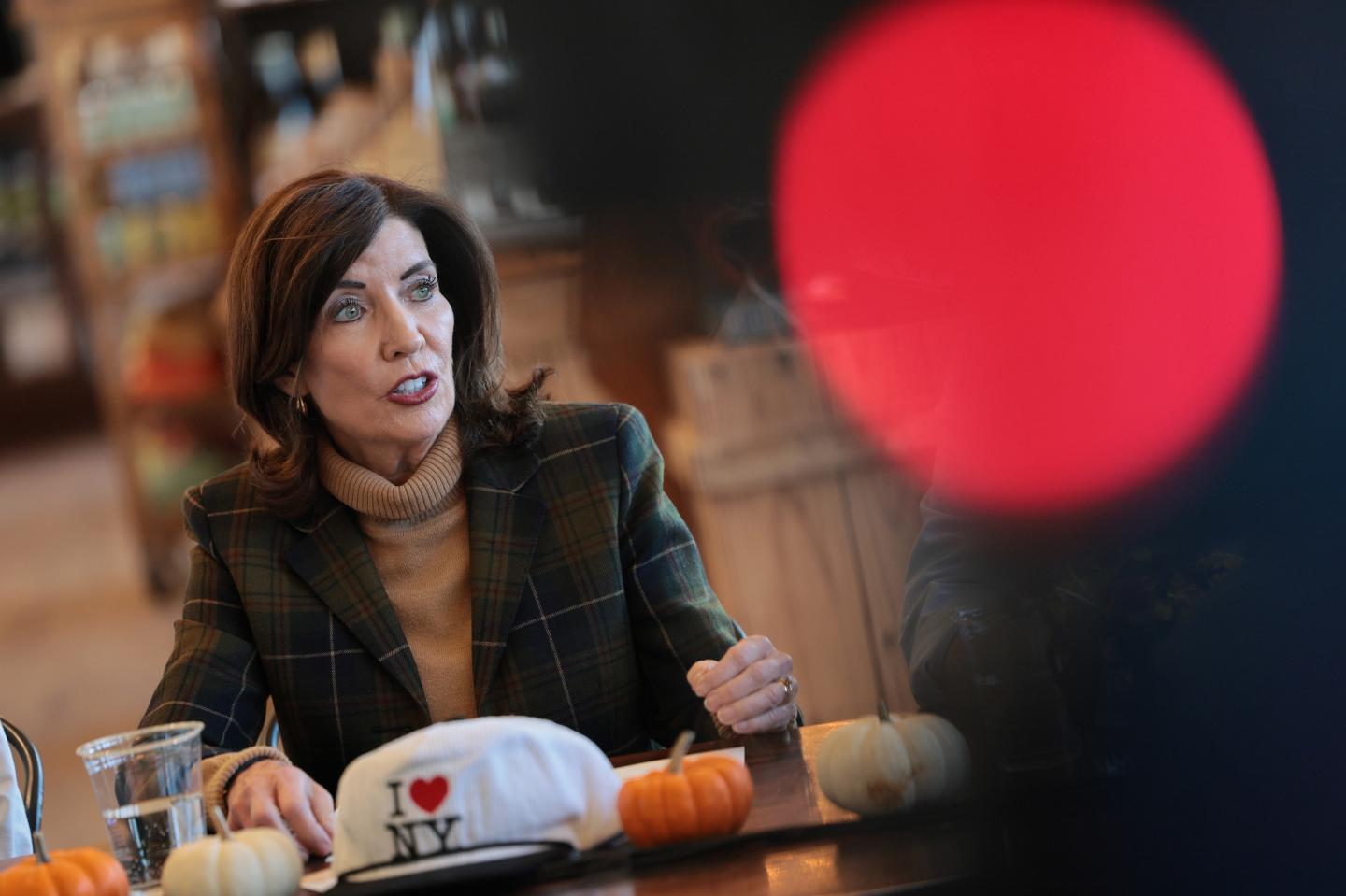
Are baby monitors a political issue? Yesterday, New York Gov. Kathy Hochul signed two pieces of legislation—one, new restrictions how AI chatbots can engage with minors, and the other, consumer protections for smart baby monitors. Baby monitors sold in the state must now include security features that block strangers from watching or listening in and a clear warning label.
“No new parent should have to worry that predatory hackers are spying on their new family through their baby monitors,” the Democratic governor said in a statement. “New York is sending a clear message: if you want to do business in our state, you need to put the safety of our kids first.”
I thought it was interesting that these two bills were paired together. How tech companies addict and harm children and teens is one of today’s most pressing issues, from Meta’s many lawsuits and recent $18 billion settlement to growing concerns about AI’s effect on young people. But baby monitors? Not quite on the top of the recent legislative priority list.
I called up Anushka Salinas, the CEO of the smart baby monitor company Nanit, to get some more context around this new law. She told me that concerns around vulnerabilities in baby monitors started more than a decade ago, with a 2015 study cited by lawmakers. Many of the concerns revolved around “low-cost white-label monitors” sold on Amazon. And Salinas thinks the legislation could drive some of those products off the market.
Nanit reports more than $100 million in revenue and at least 1 million daily users. Its monitor costs about $300, plus a subscription. But Salinas argues that cost is worth it—as is yesterday’s new law.
“People are appropriately extra cautious about anything that relates to kids,” she told me. Altogether, the two bills add up to an appearance of cracking down on tech exploitation of kids from all angles.
Even though Nanit is viewed by consumers as one of the most secure, trusted options on the market (just check out Reddit threads of security-conscious parents evaluating all the pros and cons), there are still concerns. A NYT story on Nanit earlier this year was cheekily headlined, “Aw, It’s Baby’s First AI Surveillance System.”
Salinas has been focused on building a “parenting intelligence system” that goes beyond infants to childhood development and broader health. And we can be sure lawmakers will be paying attention.
Emma Hinchliffe
emma.hinchliffe@fortune.com
The Most Powerful Women Daily newsletter is Fortune’s daily briefing for and about the women leading the business world.
ALSO IN THE HEADLINES
Kalshi is valued at $40 billion. After raising a $1 billion funding round. Cofounder Luana Lopes Lara was already the world's youngest female self-made billionaire—now the value of her stake has almost doubled.
And a new female-founded unicorn. Eugenia Kuyda was the founder of Replika, an AI chatbot designed as a friend and companion. Her new company is Wabi (not to be confused with the robotaxi company Waabi). Wabi is a personal AI assistant designed for groups—like adding to group chats to help plan trips or coordinate schedules. It just raised $55 million at a $1.25 billion valuation.
Rest in peace. Dolores Huerta died on Wednesday at 96. A hero of the labor movement, Huerta fought for migrant laborers. It was only earlier this year that she spoke for the first time about being assaulted by César Chavez, helping to ignite a reckoning over his legacy.
Christine Lagarde resigns from the ECB. The president of the European Central Bank will step down in February. Her term was scheduled to finish in October of next year, but there has been speculation over her future for months. She's stepping down before elections in France, where far-right politician Marine Le Pen is expected to win.
ON MY RADAR
There's a career tax on being smart at work—but only if you're a woman Fast Company
Etsy's new CEO cracks down on AI listings—and buyers start to return Fortune
Cornell investigation puts Letitia James back in the hot seat WSJ
PARTING WORDS
"It’s really great to be in a place today where we can collaborate on things, but also just hang out and spend time together."
—Demi Lovato on collaborating with Selena Gomez on a Rare Beauty campaign. The launch of Rare's "Delena Soft Pinch Blush Bundle" mined nostalgia for the two 2000s Disney stars.