

Good morning. The latest Fortune Cyber 60 list is out.
If you’re unfamiliar, our annual list recognizes the most vital venture-backed cybersecurity startups that haven’t yet made an exit of some kind—be it IPO, DL, merger, acquisition, etc.
Regular readers of this newsletter will find some familiar names (such as Adaptive and Vanta) and some new ones, too.
Take a gander here, then find more tech news below. —Andrew Nusca
Thoughts? Suggestions? Hot tip? Drop me a line.
THE BIG STORY
Smart glasses need privacy rules, Newsom agrees, just not the ones California lawmakers wrote

A phone pointed at a stranger is hard to miss. A camera tucked into a pair of glasses is another story—and lawmakers are trying to decide how much warning the person on the other side of the lenses should get.
In California, that warning won’t be coming anytime soon. Last month, California Gov. Gavin Newsom vetoed a bill that would have required prominent recording indicators on wearable devices sold in the state beginning in 2028. It would also have prohibited disabling those indicators and made it a misdemeanor to record people without explicit consent in physical places of business, like offices and retail stores where they reasonably expect privacy.
California is home to several companies betting on smart glasses, but those companies, including Meta and Snap, are also raising privacy questions for people who never chose to wear them. Lawmakers want stronger protections against unnoticed recording, while Newsom argues that the proposed rules would reach too far into other everyday technology.
Newsom acknowledged that reports of invasive uses of the technology “demand a legislative response.” But in his veto message, he argued that the bill could sweep in smartwatches and other everyday devices, while duplicating existing privacy protections.
Meanwhile, tech companies are working to make smart glasses a familiar sight.
So what exactly did Newsom reject? The bill would have required a light, sound, or other indicator prominent enough to alert a reasonable person nearby when a wearable device was capturing sound or video. It also targeted technology designed to disable those safeguards.
Violating the recording or indicator-disabling provisions could have brought up to a year in county jail, a fine of up to $1,500, or both. Knowing violations of the device-sale requirements could have triggered civil penalties of up to $2,500. The bill also included exemptions for certain uses of assistive technology by people with disabilities.
Newsom’s objection centered on how those rules were written. Including certain smartwatches and other commonly worn devices capable of recording, he wrote, could create “significant confusion and unintended consequences.”
The governor also pointed to existing laws criminalizing recording people in places where they reasonably expect privacy and recording confidential communications without consent. Those protections remain in place despite the veto.
For now, the main warning a bystander gets is a small white light on the frames. On Meta’s glasses, it flashes whenever the wearer captures a photo or video for their gallery, and there’s no off switch. Second-generation models also shut off the camera if they detect that the light is blocked.
Should these safeguards be required by law? And which devices should be covered? Those are the legislative questions.
As Thorin Klosowski, a security and privacy activist at the Electronic Frontier Foundation, told Fortune: “I hope that there is not just a general giving up toward the inevitability of everyone having a camera strapped on their face all the time.” —Tatiana Sataua
THE BLIND BOX
“The expenses are locked in while the sales are far less certain.”
THE RUNDOWN
—Google launches Genie 4, a world model for generating interactive AI simulations.
—Nvidia and Meta expand their Muse partnership. Nvidia will invest $3 billion, Meta will deploy more Vera Rubin chips.
—A new Apple MacBook Pro. The 14-inch model has an M6 chip and “up to 24 hours of battery life.”
—Discord will make some conversations in its public servers searchable and easier to find on the web.
—Anduril and Qualcomm roll out BlueChip, a line of U.S.-made laptops for defense and government use.
—Broadcom CEO Hock Tan reportedly pressed banks to participate in the $63 billion Anthropic debt deal.
—Robinhood shares sink 5% as Q3 crypto revenue drops 55% to $120 million and profit falls 14% to $476 million.
—China’s first AI-generated film to get a theatrical release flops at the box office
THE PARTING SHOT
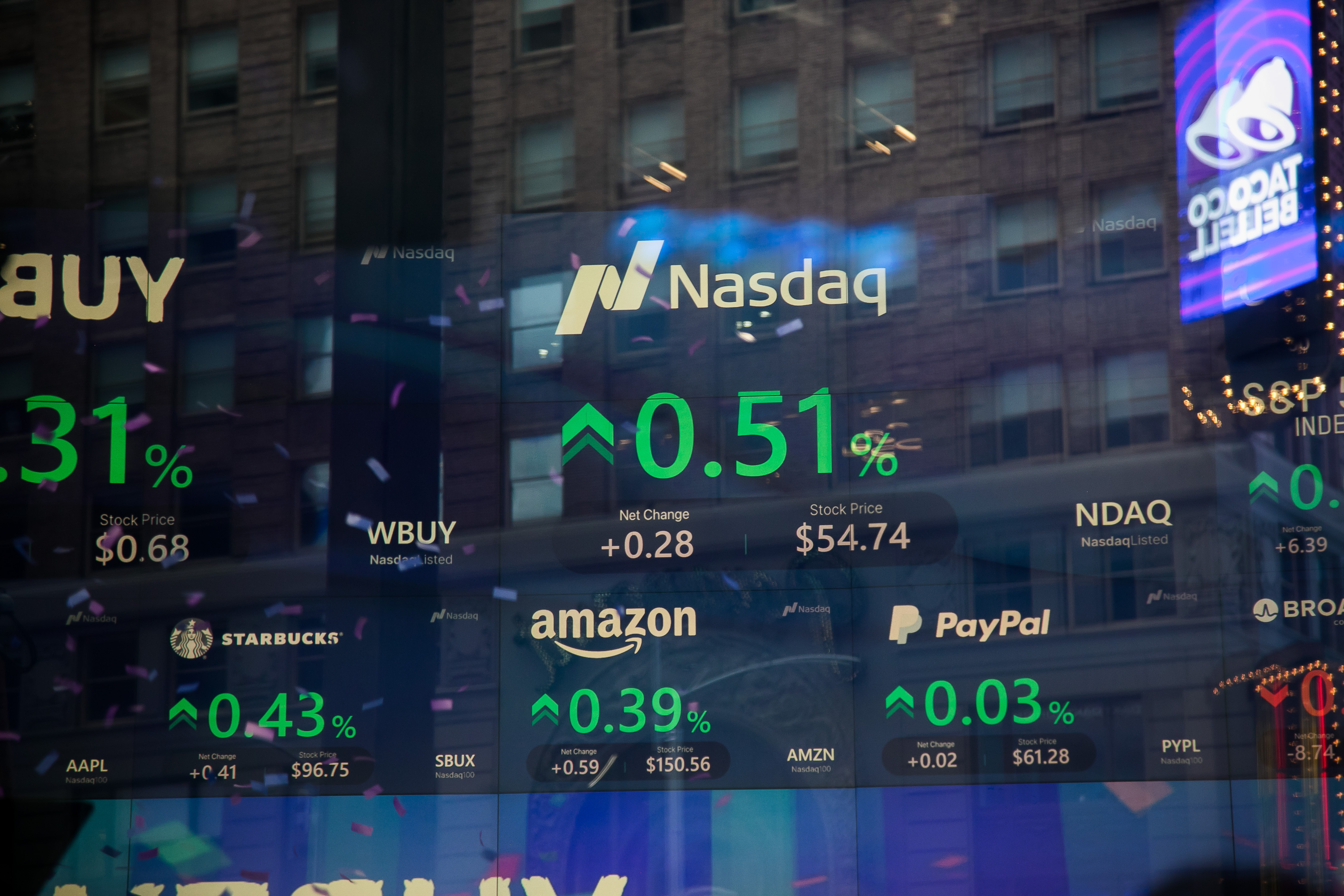
U.S. automaker General Motors is leaving the New York Stock Exchange for the tech-heavy Nasdaq in a sort of reversal of the decade-ago trend of IPO-bound tech companies choosing NYSE to convey that they’d made it in the broader economy.
A carrot for the largest automaker in the U.S.: Inclusion in the Nasdaq-100 index, which presently includes Alphabet, Amazon, Apple, Broadcom, Meta, Micron, Microsoft, Nvidia, Tesla, and SpaceX. (And imminently, Anthropic.)
Who’s left at the NYSE? Plenty. Alibaba, AT&T, Dell, Ford, HPE, IBM, Mastercard, Pinterest, Reddit, ServiceNow, Snap, Spotify, TSMC, Uber, Verizon, and Visa all call it home alongside giants like JPMorgan and ExxonMobil.
And who’s made the switch? DoorDash, Palantir, Hilton, and Walmart have jumped from NYSE to the Nasdaq; meanwhile Etsy, Garmin, and Oracle have done the reverse. Last one out’s a value stock!