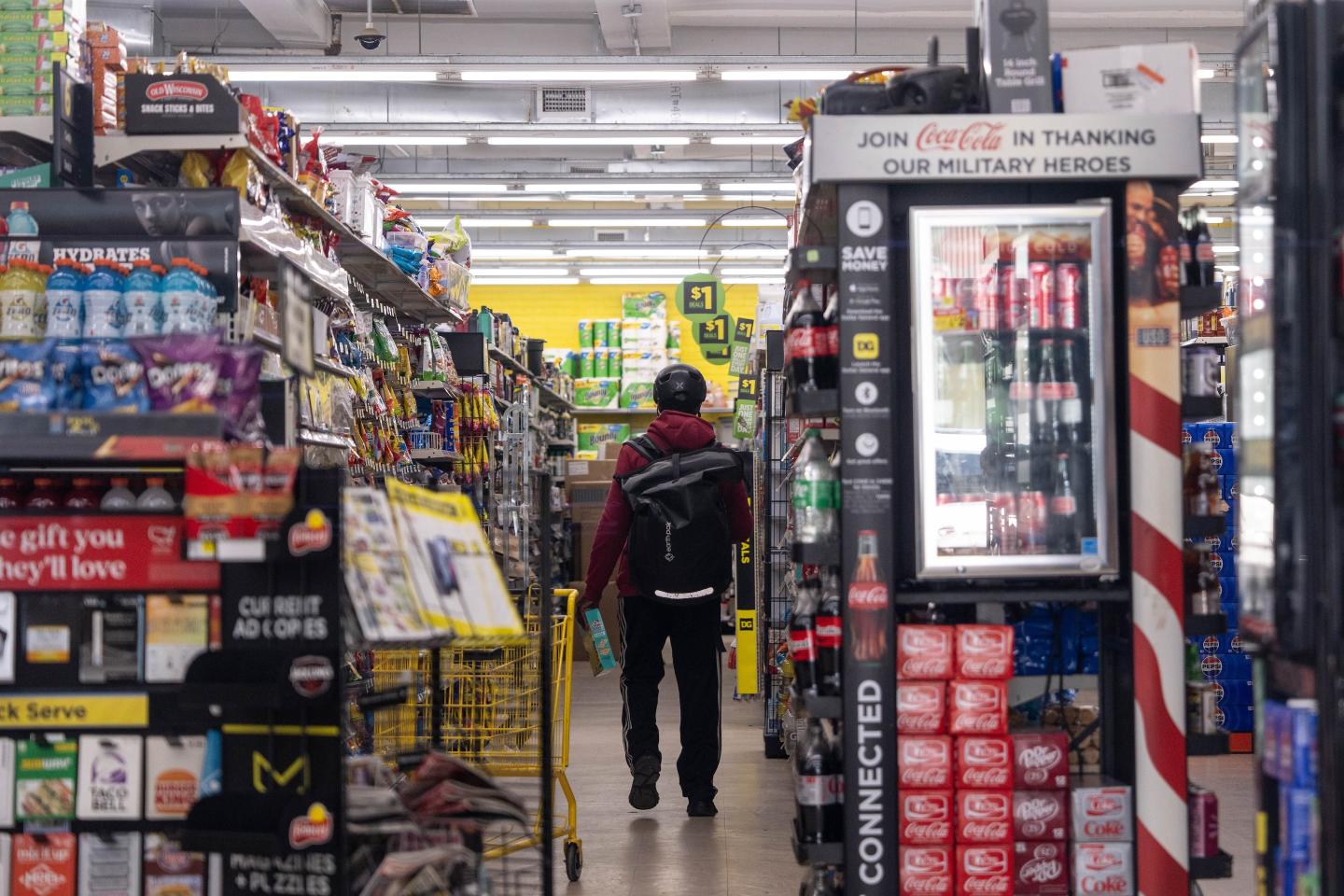
The Federal Trade Commission and 20 states sued Dollar General on Monday, alleging the discount chain has spent years charging customers more at the register than the prices shown on its shelves, price tags, and advertisements.
The complaint, filed in the U.S. District Court for the Middle District of Tennessee, accuses the company of “long-running deceptive pricing practices.” Customers pick out items at one price, then get hit with a higher bill at checkout. Thousands of Dollar General stores have “taken advantage of vulnerable shoppers by extracting millions of dollars in unlawful overcharges,” the complaint states. Between 2019 and March 2026, the pricing discrepancies generated nearly 30,000 consumer complaints to the company, according to the lawsuit.
“Dollar General has betrayed the trust of millions of American consumers and imposed significant financial harm on communities and consumers who are already struggling to make their paychecks last,” Christopher Mufarrige, director of the FTC’s Bureau of Consumer Protection, said in a statement.
The states joining the suit are Alabama, Arizona, Arkansas, California, Connecticut, Florida, Illinois, Iowa, Kansas, Louisiana, Michigan, Mississippi, Nebraska, New Jersey, North Carolina, Ohio, Oklahoma, Tennessee, Utah, and Wisconsin. Dollar General shares fell about 4% after the FTC announced the lawsuit.
Dollar General disputes the claims. “The lawsuit filed today by the Federal Trade Commission and several states suggests that we have abandoned our mission and willfully disregarded the affordability needs of our customers. Nothing could be further from the truth,” the company said in a statement.
“Our goal is 100% accuracy between shelf and register prices in every store,” the statement continued. It added that “occasional price discrepancies can occur,” and that when they do, store employees are expected to make things right for the customer. The company said it had cooperated with the FTC’s investigation since early February and called the agency’s settlement demand far out of proportion to any realistic estimate of overcharges. It said it would “defend this litigation vigorously.”
A problem regulators have flagged for years
The FTC also alleges that company leaders knew how widespread the problem was but failed to fix it. Between 2019 and 2026, Dollar General entered into seven settlements in six states over inaccurate pricing and paid about $6 million in penalties, according to the complaint.
Ohio Attorney General Dave Yost sued the chain in November 2022 after county auditors found shelf prices that didn’t match the register, and he later secured a $1 million settlement. New Jersey reached a $1.2 million settlement in 2023. Wisconsin, Vermont, and Colorado have also settled with the company, and Pennsylvania reached a $1.55 million settlement last December after finding Dollar General stores failed more than 40% of the state’s price-accuracy inspections between 2019 and 2023.
Marc Dann, a former Ohio attorney general whose law firm has filed multiple class action lawsuits against the company over mislabeled prices, tells Fortune he’s seen a “consistent pattern” of overcharging.
“There was a consistent pattern in those records of a 20% to 25% fail rate for Dollar General stores when inspectors came out to verify whether the shelf pricing matched the pricing at the register,” Dann said. “It was essentially a crime committed, 25 cents at a time.”
Dann said he found discrepancies across stores in all six states involved in his class action suits after reviewing thousands of public records from local weights and measures officials.
A 2025 Guardian investigation found that Dollar General stores failed more than 4,300 government price-accuracy inspections in 23 states between January 2022 and late 2025. One of the worst cases was a 76% error rate at a Dollar General in Hamilton, Ohio, in October 2022.
Company policy requires employees to update shelf labels when prices change. The Guardian concluded that the overcharges often stemmed from the industry’s minimal staffing, which leaves too few workers to keep thousands of physical price tags current. Two years after Dollar General agreed to pay Wisconsin about $850,000 to settle price-accuracy violations, its stores in the state failed 31% of price inspections, the Guardian found.
Squeezed shoppers pay the price
The lawsuit lands as shoppers are still absorbing years of higher food costs. Grocery prices rose 1.8% in the 12 months ending in September, according to the Bureau of Labor Statistics. That increase comes on top of a steep run-up since the pandemic, which has left grocery prices roughly a third higher than in 2019. The energy shock from the war in Iran has added pressure by pushing up fuel and fertilizer costs throughout the food supply chain.
Dollar General’s customer base is especially exposed. The company said in 2024 that its core customers, who account for about 60% of sales, come mostly from households earning less than $35,000 a year. Inflation has also pushed more middle- and higher-income shoppers into dollar stores in search of bargains, though low-income households have long been the backbone of the business.
Dann says that small price differences add up for low-income customers who depend on Dollar General for essentials on “limited budgets.” He describes the practice as “stealing a little bit at a time from a lot of people.”
“I’m hoping some of these reforms will take hold because you know the biggest problem with Dollar General is that they serve some of the poorest people in the country,” Dann says.