
Good morning. I had a lovely chat last week about the future of the gaming industry with Mihir Viadya, chief strategy officer for Electronic Arts.
We talked about artificial intelligence, of course, as well as what it was like to have Andrej Karpathy and Ilya Sutskever as TAs at the University of Toronto. (Unusually for a CSO, Vaidya’s degree is in actuarial science and mathematics.) But he said something that stuck with me when I asked him about what the gaming business becomes in an Age of Intelligence. Is it a scramble for IP? Data? Talent?
“You want to avoid the word ‘scramble,’” he replied. “The world will compel you to scramble. You don’t want to be following the weather. The forecast is accurate for a day or two but rarely predictive over weeks or months. You want to be a student of climate.”
Well put. Today’s tech news follows. Have a productive day. —Andrew Nusca
Thoughts? Suggestions? Hot tip? Drop me a line.
THE BIG STORY
The U.S. military and NASA have power problems. Nuclear microreactors might solve both
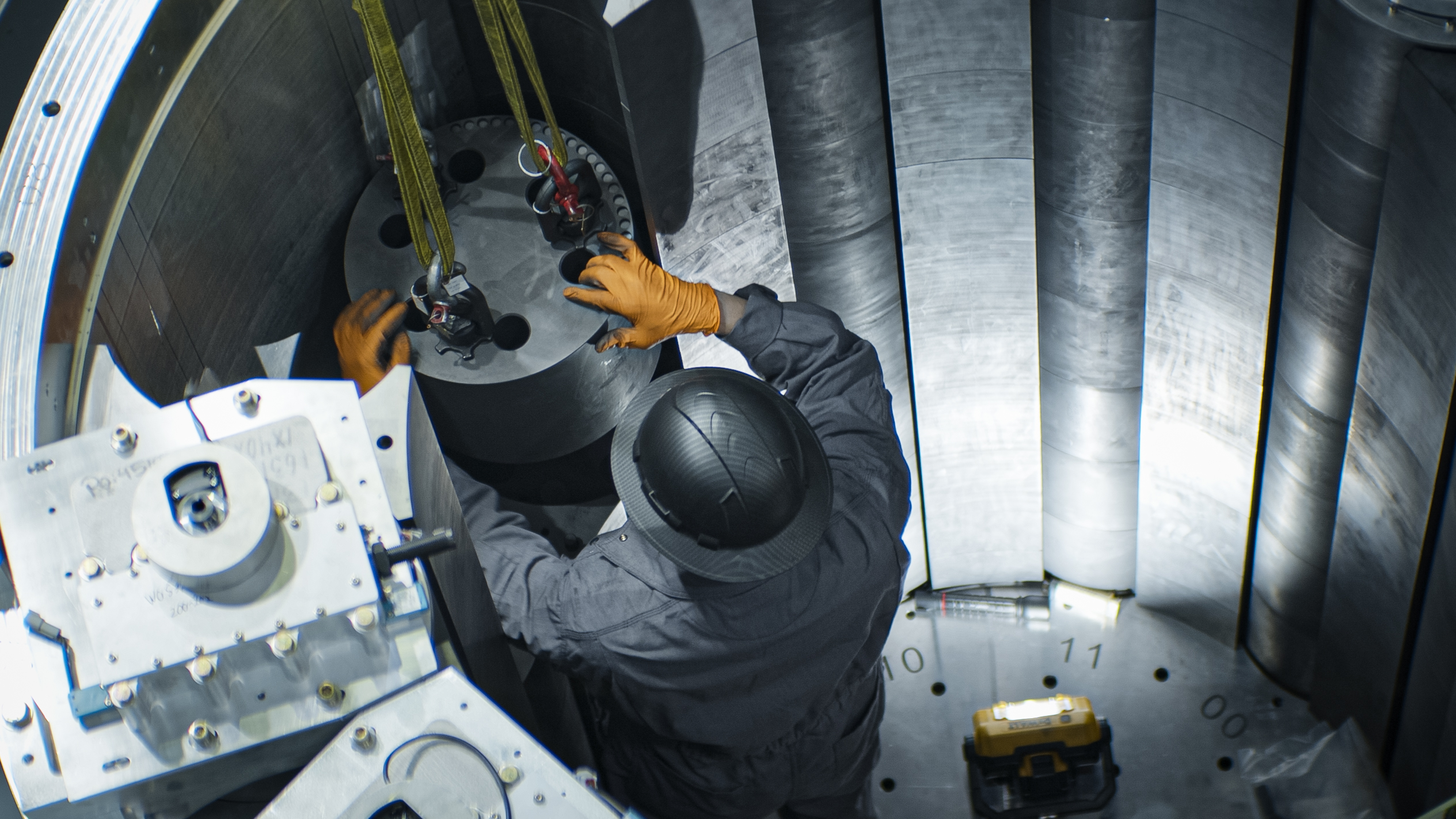
The push for a new nuclear age to power the AI boom with next-generation reactors remains feasible, but it’s the U.S. military and NASA that are stepping in to expedite the development of even smaller nuclear—so-called microreactors—to power remote bases, revolutionize combat, and fuel deep-space exploration.
In June, nuclear startup Antares successfully flipped the switch on its Mark-0 microreactor, first to the finish line in the Trump administration’s pilot program race for the next generation of reactors to achieve criticality.
Next, Antares aims to install its 1-megwatt R1 reactor at the U.S. Army’s Fort Bragg in North Carolina by September 2028. Even more ambitious, founder and CEO Jordan Bramble aims to install an R1-S (the S is for “space”) on the moon as soon as 2030.
“We’ll need fission power on the dark side of the moon,” Bramble told Fortune. “Fission is going to be our best path to doing very high-powered things in orbit. If we’re going to send landers to Europa and Enceladus and Triton (moons of Jupiter, Saturn, and Neptune) and try to find microbial life under the ice, we’re probably going to need fission power to do that.”
The idea is to provide nimble and reliable baseload power that’s clean, meltdown-proof, and relatively agile for limited power uses. Of course, the technology still needs to be proven in the field commercially and not just in testing labs.
In the near term, the U.S. Army is working with Antares, Radiant, General Atomics, and more to install microreactors on its biggest Lower 48 bases to prove their reliability and to protect critical defense infrastructure from any grid failures. This is Project Janus, which announced $2.2 billion in awards in August.
The biggest recipient of the Janus awards is microreactor startup Radiant, which specializes in a transportable, 1-megawatt reactor—enough to power about 750 homes—that only takes up the space of “three parking spaces.”
But Radiant has designs for its 1-megawatt Kaleidos system extending far beyond the Lower 48 and its first projects on Fort Benning in Georgia and Buckley Space Force Base in Colorado, said chief operating officer and president Tori Shivanandan.
“If you’re moving your troops around and you want defense systems to protect those troops as they’re deployed overseas,” Shivanandan told Fortune, “you also need to make sure that you have the power available to defend your troops.”
She added: “A diesel generator needs to be refueled every one to two days. In previous conflicts in the Middle East, those were our largest targets for our adversaries because fuel convoys create repeatable paths. Our unit doesn’t need to be refueled for three years.” —Jordan Blum
THE BLIND BOX
“AI companies are delivering a one-two punch to families, forcing Americans to subsidize their data centers with your tax dollars and higher utility bills.”
THE RUNDOWN
—Silicon Valley: A political liability for both parties ahead of the U.S. midterm elections.
—Instacart may sell itself and has reportedly held talks with DoorDash and Uber.
—Google is ordered to halt work on Finnish data centers after clearing 250,000 trees before an environmental review was done.
—Elon Musk on neoclouds: Prepare for “guppy-level death and consolidation.”
—Data center tenants now reportedly demand millions of dollars per day in late-delivery fees.
—London Stock Exchange will buy credit platform Octus from Permira for $3.5 billion.
—Meta’s Instagram launches an Apple TV app for Reels, live shows, and longer videos.
—Washington’s curbs on foreign robots could reduce U.S. humanoid robotics revenue by 58%.
THE PARTING SHOT

An imagined Apple logo for the iPhone Duo “Crackgate” era.