
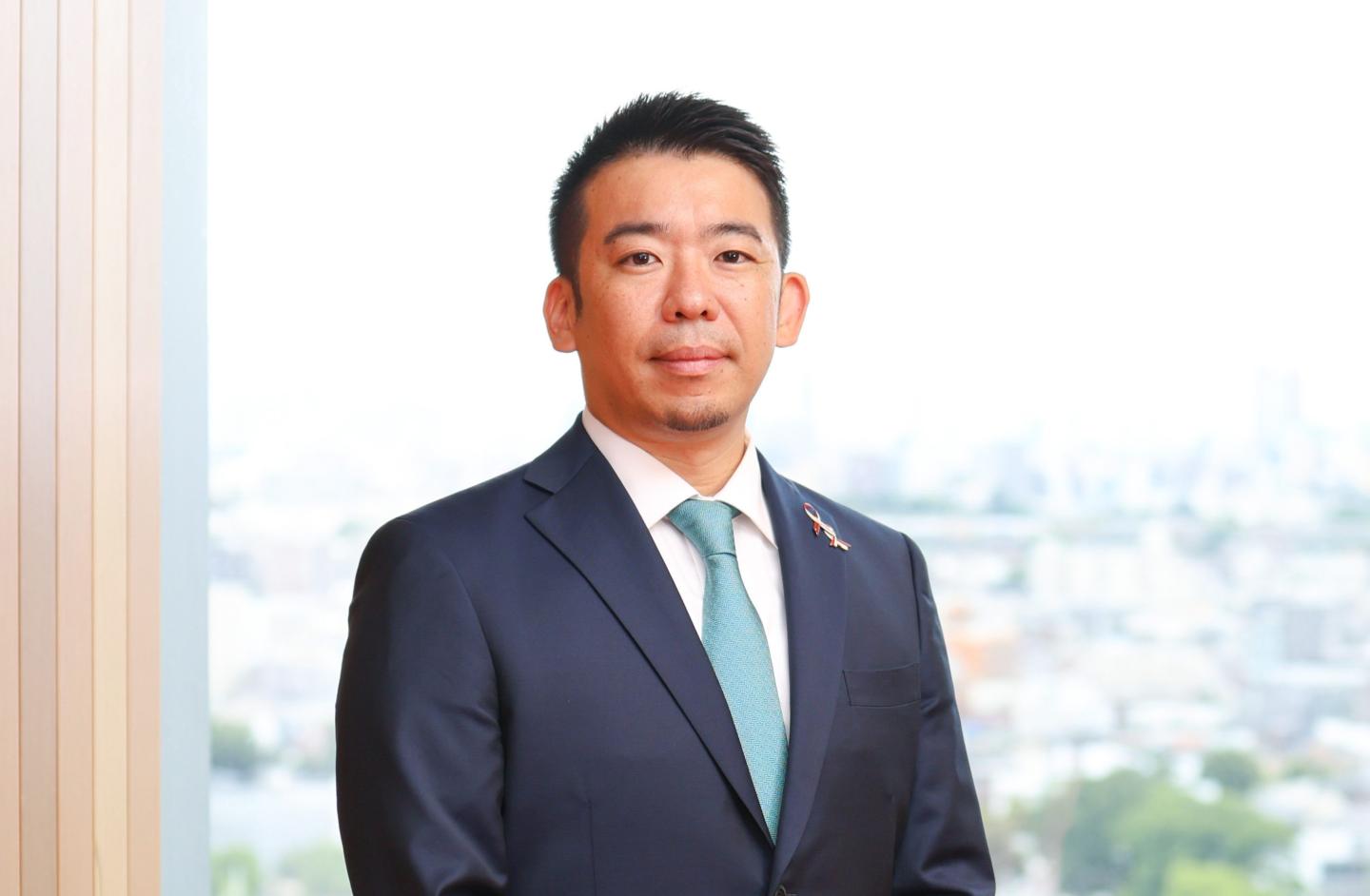
Minami Maeda, CEO of Rakuten Medical, hopes he can get doctors to stop using their scalpels and try something more science-fiction instead.
“We’re essentially asking surgeons to put down their knives, and pick up this lightsaber,” he tells Fortune, referring to the company’s new technology that uses light as a way to treat cancer.
Rakuten Medical, the biotech offshoot of Japanese tech conglomerate Rakuten, is putting about 95% of the company’s resources into cracking the U.S. market. The San Diego-headquartered firm is already using its signature photoimmunotherapy treatment to treat head and neck cancers in Japan; it’s now running Phase 3 clinical trials in the U.S. and gunning for a 2028 FDA submission.
“The U.S. is the world’s biggest market, and it’s also where a lot of capital is deployed,” Maeda tells Fortune. “We want to be able to treat all solid tumors, rather than stop at just head and neck cancers—that means we need significant capital to be invested into R&D.”
An accidental discovery
Rakuten Medical’s core technology has both Japanese and U.S. ties. In 2011, Japanese scientist Hisataka Kobayashi and his team at the U.S. National Cancer Institute accidentally discovered the therapeutic potential of the new technology. “Kobayashi was trying to use photoimmunotherapy to visualize cancer cells… it wasn’t for treatment,” Maeda explains. “But when they were doing an experiment, they realized that cancers were disappearing, and eventually attempted to use it for therapeutic reasons.”
Today, Rakuten Medical produces both a proprietary cancer drug (Akalux) and a technology platform (Alluminox) used to administer photoimmunotherapy. Their clinical pitch is specificity: the Akalux drug binds to the epidermal growth factor receptor on cancer cells, and tags it with light-activated dye. Red light is then applied to selectively exterminate the tagged cancer cells.
In Maeda’s telling, this helps to treat the disease in a minimally invasive way, while preserving patients’ quality of life. “In 10 years’ time, I hope everybody believes that this technology could be the fifth pillar of cancer treatment, aside from surgery, radiation, chemotherapy and immunotherapy.”
The razors-and-blades model, but for drugs
Doctors didn’t embrace the drug-device combination right away. “It’s not a refusal; it’s a challenge for the doctors to understand: why am I not going to do surgery?” Maeda says. The firm treated just 30 patients in its first year in Japan. Now it treats about 700 to 800 a year, across some 200 hospitals.
To combat inertia, the team installs the Alluminox platform in hospitals free of charge, and charge them only a minimal fee per use. The firm’s profits, Maeda explains, come mostly from sales of the Akalux drug.
It’s a common business strategy: Offer the platform for free or at low margins, then sell consumables at a higher margin. Think razor blades or printer ink. “If your company sells both printers and ink, you can’t sell both at very high prices, since the printer is an enabler,” Maeda says.
Maeda said that Rakuten Medical’s Japan branch is profitable, though the global entity operates at a loss due to high research spending.
A gateway to China
In the short-term, Maeda is looking to enter markets close to home—including Taiwan, Macau, Singapore, Hong Kong and Saudi Arabia—which acknowledge Japanese regulatory approval of the Akalux drug. (This means that Rakuten Medical can market their product in these territories, even before getting FDA approval.)
Markets like Macau, too, offer a gateway to larger potential markets like mainland China. “Once we treat a few dozen patients in Macau, it opens up a gateway for the Greater Bay Area,” Maeda explains. “Building Chinese population data will help in discussions with potential partners, and shape how we commercialize our product in China.”
He also wants to take the technology to emerging markets in Southeast Asia. “Technology like ours, which is inexpensive and easy to deploy, could actually really help these populations,” Maeda says.