A pair of True Religion jeans never tried to be subtle. The stitching, the horseshoe on the back pocket, and the price tag all helped announce what someone was wearing. Michael Buckley, who led the brand during its premium-denim heyday, remembers the feeling that came with owning a pair: “Hey, I got my trues.”
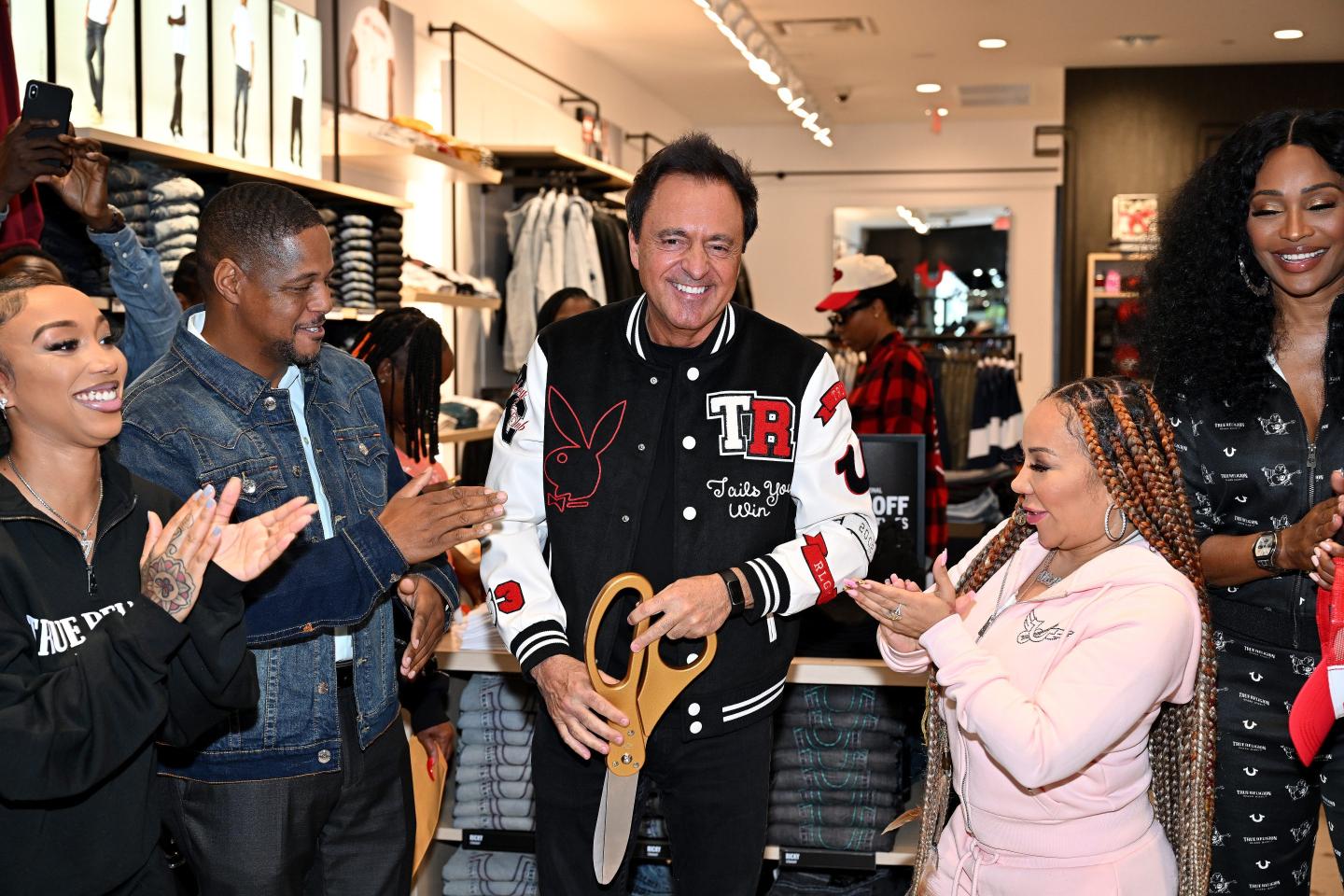
Now that he’s back, he’s finding plenty of customers who still want their clothes to draw a little attention, and right now that often means sparkle. “We can’t have crystals on enough product here,” he told Fortune, listing T-shirts, hoodies, joggers, and jeans. At one store event, shoppers could even bedazzle their initials on the clothes. The appetite for standing out hasn’t changed, but what it costs has.
Today, Buckley is courting Gen Z and millennials with more affordable clothing, music partnerships, and in-store experiences, while letting go of something the brand once prided itself on: setting trends.
“We like to be first to be second,” he said. The idea is to catch a trend once it’s proven rather than start it, and give customers what they want “at the price they want.”
His team follows online conversations and changing styles, from baggy men’s jeans to low-rise women’s denim and crystals across categories. If it spots a trend it missed, he said, the company can make 300 pieces and have them arrive in two or three months.
“Years ago, we created the trend. We’re not creating any trends today. We are following the trends,” he said.
John Talbott, a retail expert with experience in business turnarounds and developing store brands, sees a business logic in letting someone else go first. New styles often start small, at high-end retailers or niche brands, and the volume comes later. For a brand now selling to a mass audience rather than early adopters, waiting for proof can be the safer bet.
Keeping the status, changing the price
True Religion’s original appeal belonged to an era when Paris Hilton and Jessica Simpson wore its conspicuously stitched, expensive jeans. The rise of cheaper fashion and athletic clothing subsequently put pressure on premium denim.
Today, the competition spans those categories: Piper Sandler’s fall 2026 teen survey found shoppers shifting toward nonathletic fashion, with retailers including American Eagle, H&M, Pacsun, Hollister, and Urban Outfitters collectively gaining ground.
For Buckley, adapting to that changing market began with recognizing how much True Religion’s own customer had changed. During his stint as president from 2006 to 2010, the company sold predominantly $200 and $300 jeans to affluent department-store shoppers with household incomes around $250,000.
When he returned in 2019, this time as CEO, research he commissioned within his first three months revealed a different audience: more diverse, mostly ages 15 to 45, with household incomes of roughly $65,000 to $85,000.
“The business was being run as if they were still selling the early adopter customer, and they weren’t,” he recalled.
Buckley began building around what those shoppers wanted to wear, what they would pay, and where they wanted to buy it. Jeans now run $59 to $89, he said, and T-shirts $19 to $39. Denim accounts for 35% to 40% of the business, with hoodies, dresses, joggers, outerwear, and other casual clothing filling out the wardrobe.
“You have to know your customer,” he said. “That’s the biggest learning in this business.”
Making styles affordable required changes customers wouldn’t necessarily see on the rack. Buckley said he reworked the supply chain, testing cheaper alternatives against the expensive Italian fabrics the brand had used in what he called a “Coke-Pepsi test.”
Despite jeans selling for lower prices compared to 20 years ago, Buckley projects revenue of $525 million to $550 million this year, which he said would be the company’s highest ever.
Neil Saunders, managing director of GlobalData Retail, sees lower prices as a way to make the brand more accessible, although affordability alone won’t determine where younger shoppers spend. They have shown a willingness to pay a premium for brands such as Ralph Lauren and Coach when they consider it worthwhile, he said.
Expanding beyond denim borrows from Levi’s lifestyle playbook and gives True Religion more opportunities to win their business, but the brand also needs to distinguish itself from competitors.
Different generations, familiar expectations
For millennials who remember True Religion’s glory days, the horseshoe stitching comes with a sense of familiarity.
Research commissioned by True Religion and shared with Fortune suggests that history can be an advantage. Wired Research surveyed 1,000 U.S. adults ages 18 to 45 who had recently bought apparel, finding that nearly three-quarters of millennials were drawn to brands with a long history or heritage.
The appeal extends to shoppers too young to remember the brand’s first heyday: about two-thirds of Gen Z respondents also favored heritage brands. And both generations overwhelmingly found comfort, style, and cultural relevance appealing. What might get them to try a brand, though, differed.
For Gen Z, that invitation could come through a concert or a collaboration with a favorite cultural figure. Six in 10 said brand-sponsored events, concerts, and festivals would make them more likely to purchase, compared with about half of millennials. Influencer and cultural collaborations also held more sway with the younger group.
Millennials, meanwhile, were more willing to give a familiar brand another spot in their closet: 79% said they prefer buying more of their clothes from fewer brands they trust.
Music is another way Buckley is trying to reach shoppers. Alongside partnerships with Megan Thee Stallion and Zara Larsson, True Religion teamed up with independent music company UnitedMasters on a four-city concert series. The series, which kicked off Sept. 10 in New York with Dess Dior, combines intimate performances and opportunities to meet artists with products, interactive experiences, and playlists in stores.
Making the comeback last
Adapting to shoppers has not always gone smoothly. The company filed for bankruptcy in 2017 and again in 2020. Buckley attributed its financial troubles to excessive debt and the pandemic, arguing that the brand’s appeal survived the business’s difficulties.
“You can manage a business improperly while your brand is still strong,” he said.
He plans to grow revenue to $900 million over the next five years, reaching shoppers through its own stores and website as well as wholesale partners. That includes off-price retailers, where he said some customers are happy to buy last season’s clothes.
But moderately priced denim is a crowded space, according to Talbot, who pointed to American Eagle, Abercrombie & Fitch, Levi’s, and Wrangler. Still, True Religion’s distinctive pocket design gives it something recognizable to work with, and Buckley’s experience leading the brand during its earlier success makes Talbott more optimistic about its long-term prospects.
Asked what he wants the brand to mean to a new customer, Buckley returned to the same feeling he remembered from its expensive-jeans era.
“It means status. It makes you feel good,” he said.