
Good morning. The world’s second-largest economy grew by 4.5% between July and September, thanks in great part to AI.
Yes, that’s China I’m talking about. The latest economic data shows that the nation’s economic activity picked up a bit from the previous quarter’s 4.3%—a three-year low—but fell short of Q1’s 5%.
The good news? Manufacturing and high-tech (read: AI!) exports, of course. The bad? Weak spending at home, a real estate slump, and those pesky global trade tensions we keep hearing about.
China’s economic outlook, by the way, is far from sunny—paradoxically, thanks in part to AI. As in the U.S., China’s investors are concerned that the billions of dollars being spent on AI infrastructure may never achieve its promised ROI.
To paraphrase The Sandlot: “Remember kid, there’s revenues and there’s profits. Revenues get remembered, but profits never die.”
More tech news follows. Have a productive day. —Andrew Nusca
Thoughts? Suggestions? Hot tip? Drop me a line.
THE BIG STORY
Big financial firms add ‘Proof of Human’ badges from Sam Altman’s World to stop fraud and deep fakes
In recent years, the inability to distinguish bots from humans has led to billions of dollars of fraud as AI agents trick companies into providing goods and services.
A solution may now be at hand.
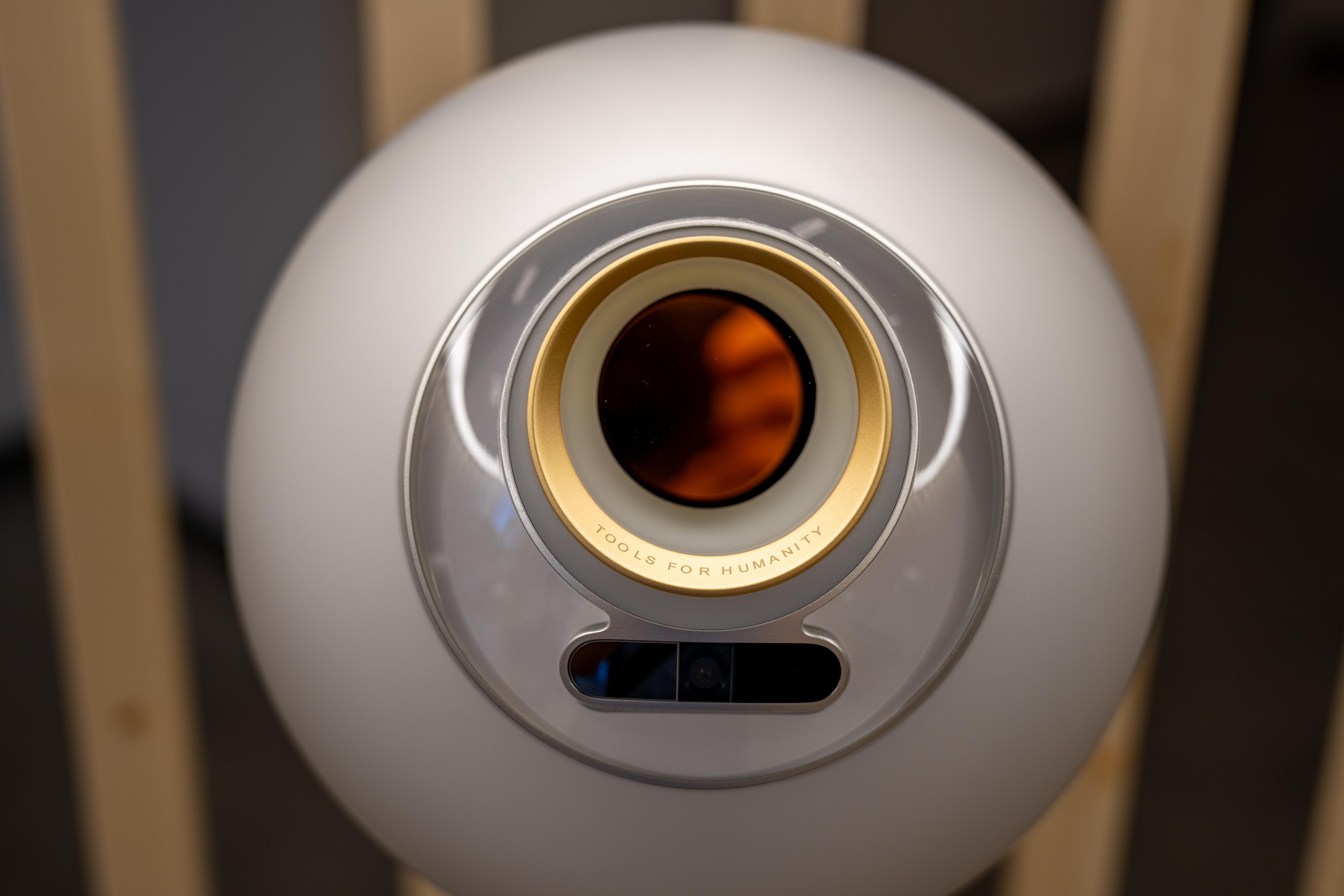
On Sunday, a company called World—which was co-founded by OpenAI CEO Sam Altman and makes an orb device that uses iris scans to create a “proof of humanity“—announced that video conferencing service Zoom, as well as several big financial companies including Bain Capital and VanEck Funds, are adopting its technology to keep out malicious bots.
In the case of Zoom calls, the way it works is that people on the video call who have cleared World ID’s security hurdles will appear on-screen with a little blue badge that signals they are human, and that they are the person who they claim to be.
Companies can, of course, decide when such proof is required, and reserve this level of scrutiny for sensitive calls.
The technology underlying the World ID verification system is controversial, but its advocates say it is effective from both a security and a privacy perspective. It is tied to an orb device that captures an image of people’s irises—a biometric identifier that is distinct to every individual—and creates a permanent and tamper-proof record of their identity.
World’s orb devices, which are roughly the size of a football, may strike some people as a form of sci-fi dystopia. The devices, however, rely on a type of advanced cryptography that does not create a central database of individuals, but instead encrypts the identity of those it scans in a way that can’t be read by the company.
When it comes time for an individual to verify their identity on Zoom or another platform, they use their phone camera and an app that cross-checks against the encrypted orb record. (The financial firms meanwhile will keep orb devices in their offices in order to sign up employees who have not previously used one to scan their irises.)
According to World’s Chief Product Officer, Tiago Sada, consumer reaction to the orb has been similar to the introduction of past biometric security measures, e.g. Apple’s Touch ID, that took time to gain trust.
“People understand you don’t have to give Sam or any of us your photo,” Sada said. “Everything is open source and auditable.” —Jeff John Roberts
THE BLIND BOX
“We may already be near the point where models systematically bias their alignment advice.”
THE RUNDOWN
—Anthropic commits 5% of its stock to a new “public benefit” fund.
—Only 7 to 10 neoclouds will survive, industry execs say.
—Investors are reportedly pushing back on a $30 billion Nscale IPO valuation.
—Apple’s HomeView was supposed to launch in 2024.
—Wall Street isn’t sure if the latest AI bubble warnings are another head fake or the real thing.
—Disney agreed to hire about 60 staff from Character.AI and pay them approx. $180 million over three years.
—Susan Dell is the one running the Dells’ $10 billion giving operation.
—“Magic state cultivation” works on Google’s Willow quantum processor: “A crucial step towards scaling up quantum computing to practical use.”
THE PARTING SHOT
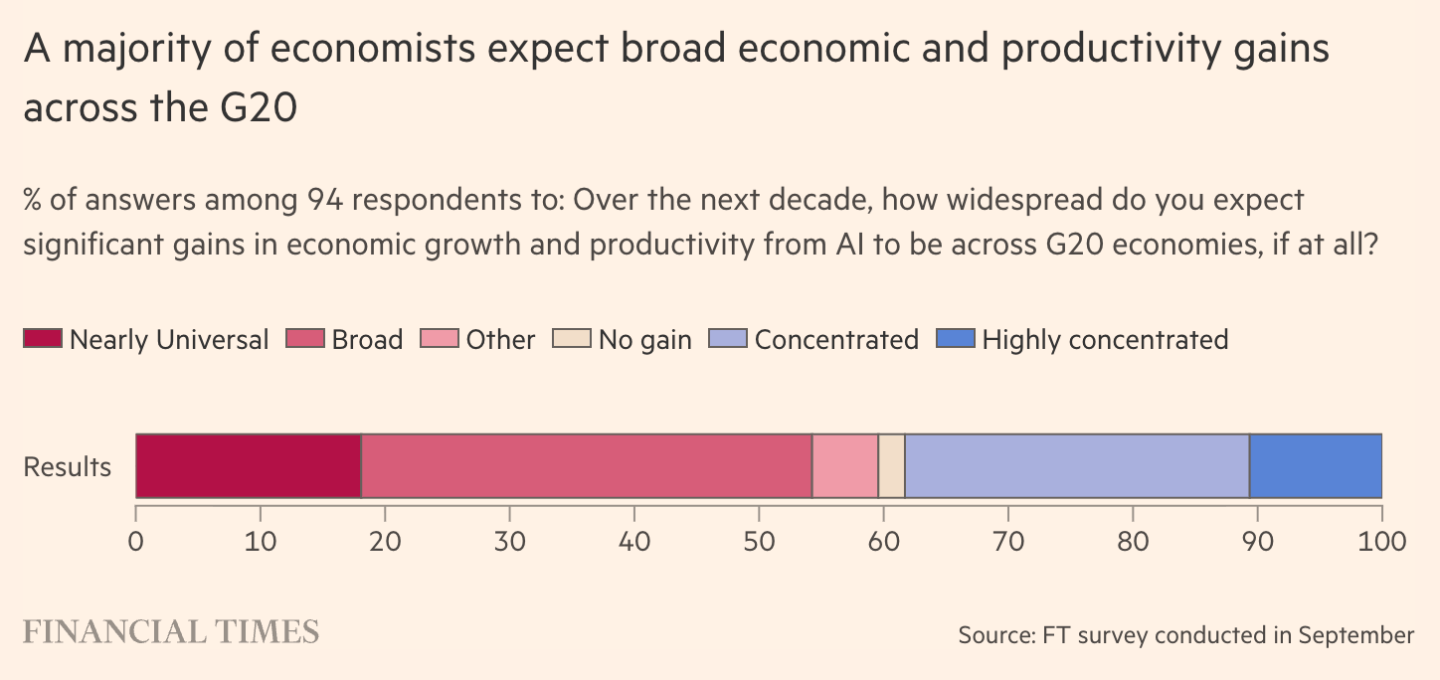
We know how the technologists feel about AI. What say the economists? The Financial Times surveys the scene.