Halloween is two weeks away, but at enterprise software companies, the whole year has been scary because of the so-called “SaaSpocalypse.” That’s the fear that AI agents will make the per-seat software business obsolete.
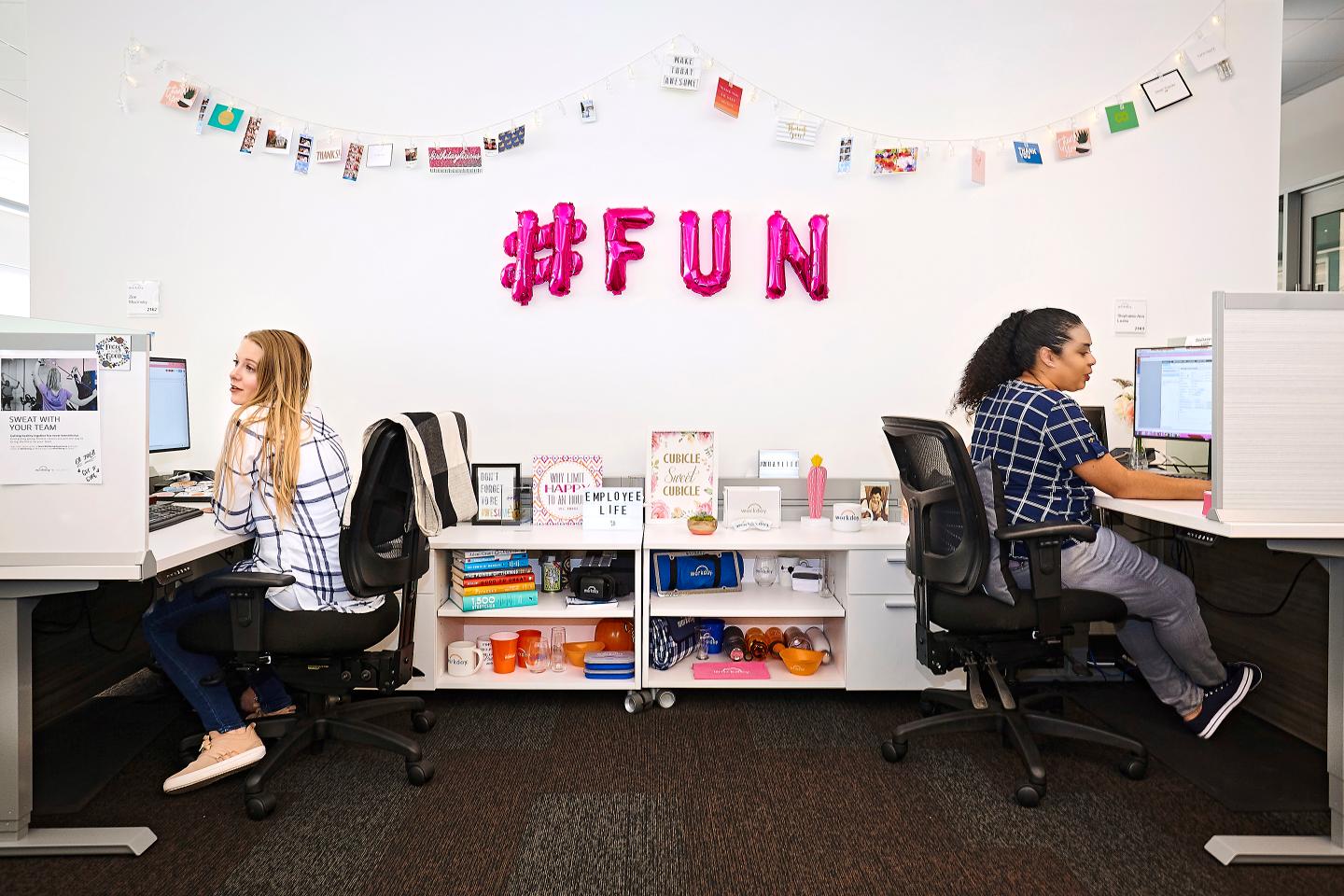
Workday, the enterprise cloud software giant that provides applications for human resources, finance, payroll, and planning, knows that fear well. In 2018, though, it was the company to beat. That year it topped the Fortune Future 50, and Fortune’s Adam Lashinsky visited its Pleasanton, Calif., headquarters, where employees were turning their cubicles “into festive and elaborate Halloween displays.”
CEO and cofounder Aneel Bhusri, Lashinsky wrote, “is a straitlaced guy, but he’s been known to step into a costume himself.” He and cofounder David Duffield once ran an all-hands meeting in cow and monkey onesies.
The fun was backed by numbers. Workday’s software ran “critical operations for half of the Fortune 50 and more than 35% of the Fortune 500,” and it was “growing like a startup.” Bhusri gave Lashinsky a simple rule: “Happy employees make for happy customers.”
Eight years later, that rule is being tested. In a new feature, Fortune’s Andrew Nusca reports on Bhusri’s return to the company he cofounded. He handed the CEO job to Carl Eschenbach in 2024, then “boomeranged back into the hot seat for one last job” this February, Nusca writes.
But this time, Workday is no longer the hot young thing in Silicon Valley. Revenue growth has slowed to 13%, the company has gone through several rounds of layoffs, and activist investor Elliott Management is “lurking in the wings.” The former upstart, Nusca writes, is now “a Fortune 500 incumbent in its own right, facing a new technological revolution it didn’t start: AI.”