In business, economic uncertainty has a way of putting pressure on leaders to provide answers before they actually have them. Employees want to know where the company is headed, clients want to know what comes next, and investors want to understand what you are seeing. The more complicated the environment, the greater that pressure becomes, and often the real challenge is that you simply do not have an answer yet.
That is why I have always believed there is an important difference between giving people certainty and giving them clarity, and we are watching Federal Reserve Chair Kevin Warsh wrestle with that distinction in real time.
Warsh has made it clear that he wants a Fed that communicates differently. He has pulled back from the kind of forward guidance markets have become accustomed to and has been more guarded about predicting what the Fed might do next. The basic idea makes sense: why lock yourself into tomorrow’s decision when tomorrow’s facts may be different?
You do not have to predict the future to lead through it
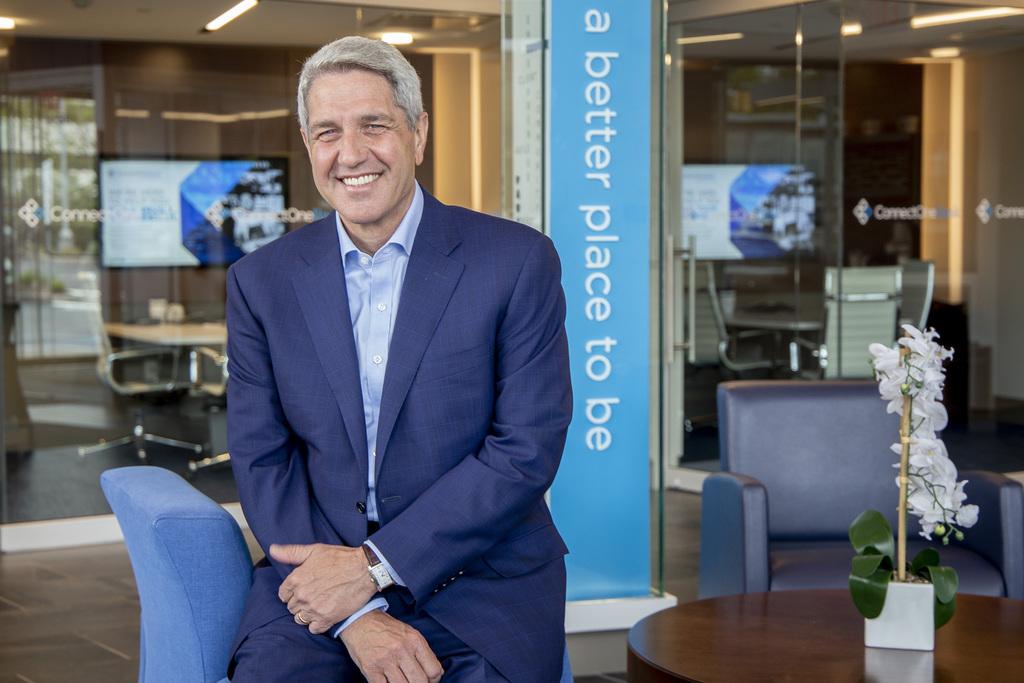
I started ConnectOne in 2005, and since then we have grown from a de novo community bank into an institution with nearly $15 billion in assets. In that time, we have been through the financial crisis in 2008, a pandemic 12 years later, extraordinarily low rates, inflation, rapidly rising rates, technological disruption, bank failures, and constant political and economic uncertainty. There was no playbook that told us what was coming next, and there still isn’t.
I spend a lot of my time talking with business owners, and they are constantly making decisions without perfect information: whether to buy a building, hire five more people, acquire a competitor, or borrow today instead of waiting six months. Nobody can tell them with certainty where rates, inflation, or the economy will be six months from now, including me. What I can do is talk through what is happening in their business today, their cash flow, their market, their risk, and what happens if rates move one way or the other. Then they must make the decision themselves.
Leadership works the same way. We are often navigating in uncertainty with incomplete information. What matters is what comes next: what you are watching, what would change your mind, and what you intend to do while you wait for more information. That is clarity.
Communicate Frameworks, not Forecasts
We saw this play out after the Fed’s September rate increase. Markets built their own expectations about what would come next, and when other officials signaled there was no rush to move again, those expectations shifted once more. Warsh did not try to predict the outcome. He laid out the Fed’s framework, the facts as he saw them, and the underlying strength of the economy, then let the markets work out the rest on their own.
We see the same principle in banking. A client does not need me to tell them where rates will be next June. They need to know whether their investment still works if rates move higher, what could go wrong, and whether they have room to adjust.
Good advice is not always a forecast. Sometimes it is helping someone prepare for a range of outcomes, and CEOs should think about their own organizations the same way. Employees do not need every data point on your desk or every scenario your management team has debated. Giving people everything you know can make the message less clear, not more.
Keep moving, even when the picture isn’t perfect
One thing I tell business owners often: the world does not stop moving while you wait for certainty. A good leader creates enough clarity that people feel comfortable moving even when every answer is not available yet, and that may be the real lesson in how Warsh is reshaping the Fed’s communications. The question was never whether leaders should talk more or less. It is whether the people counting on you, your employees, your clients, your shareholders, understand where you stand and how you will respond when conditions change.
I have led ConnectOne Bank through a financial crisis, a pandemic, and some of the most volatile rate swings in a generation, and I keep coming back to the same distinction I opened with: certainty and clarity are not the same thing. Certainty is rarely available when you need it most. Clarity always is. You do not have to promise the future, but you have to explain how you intend to face it and lead your team to do the same. That has been true in every cycle I have led through, and I expect it will be true in the next one too.
The opinions expressed in Fortune.com commentary pieces are solely the views of their authors and do not necessarily reflect the opinions and beliefs of Fortune.