
The moonshot idea of putting AI data centers into outer space just moved one step closer to reality, despite doubts about its feasibility.
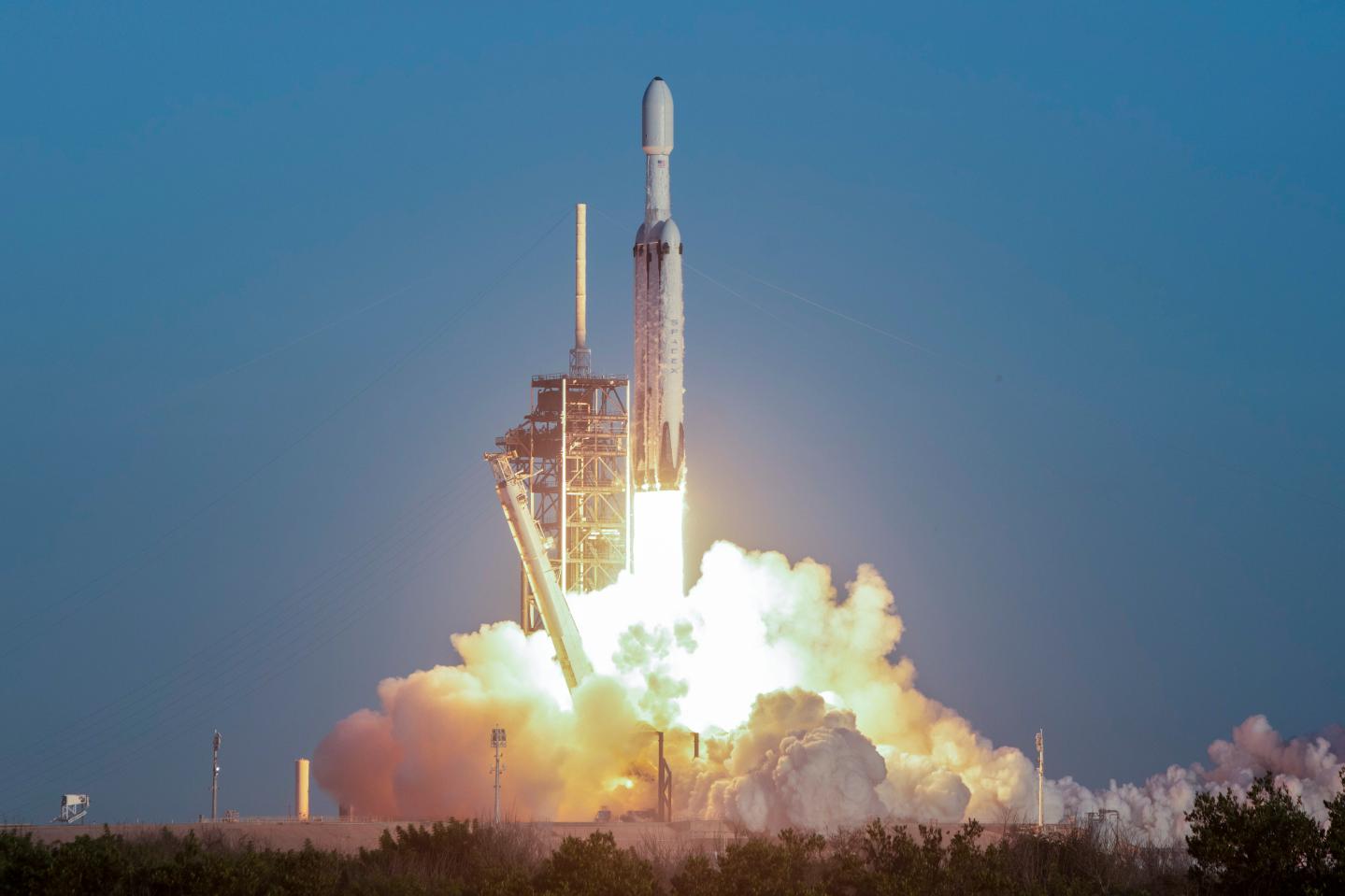
Last week, Google’s Project Suncatcher launched a refrigerator-sized satellite carrying four AI chips into orbit on a SpaceX rocket, in an early test of whether the technology behind today’s power-hungry data centers could someday operate in space.
The satellite, developed in partnership with Planet Labs, took off on Oct. 1 and is operating as expected, according to a Google blog post. The point of the mission is to see how Google’s custom TPU chips handle the intense vibrations of launch as well as the “radiation and thermal extremes of space,” the company said. The satellite will conduct experiments in low Earth orbit for about a year, the New York Times reported.
Google’s satellite is powered by solar panels that harness energy from the sun. Because space makes it difficult to dissipate heat using water or fans, Google’s researchers designed a system of heat pipes and radiators to keep the chips from overheating. Still, the satellite’s cooling capabilities mean Google will run their chips for 15 minutes at a time before shutting them down to cool off, NPR reported.
However early the experiment might be, the launch is a milestone for an emerging technology that has the potential to help meet AI’s growing demand for compute while avoiding the constraints on resources like power, water, and land on Earth. As companies pour billions of dollars into building out terrestrial data centers, and have faced backlash from community members and politicians in the process, building AI infrastructure in space seems increasingly attractive.
The idea of orbital data centers gained mainstream attention in early 2026 when SpaceX, led by perennial tech optimist Elon Musk, filed plans with the Federal Communications Commission to launch a network of up to 1 million data-center satellites in space.
“The lowest-cost place to put AI will be space, and that will be true within two years, maybe three, three at the latest,” Musk said at the World Economic Forum in January.
Jeff Bezos’s space company Blue Origin in March also filed a proposal to deploy 51,600 satellites in a satellite network dubbed Project Sunrise.
Yet, before the concept went mainstream, Google was already working to make it a reality. In November 2025, it launched Project Suncatcher, to explore “how an interconnected network of solar-powered satellites, equipped with our Tensor Processing Unit (TPU) AI chips, could harness the full power of the Sun.”
With its recent launch, it has taken a significant step toward proving out the orbital data center concept even as experts have warned of major obstacles ahead.
For one, operating data centers in space would require massive solar arrays to capture the sun’s rays and turn it into energy. These large and heavy arrays, along with other equipment, would be expensive to transport to space, Jeff Thornburg, the CEO of Portal Space Systems, previously told Fortune. The expensive price tag remains an obstacle, despite SpaceX, which transports the majority of payloads into space, having cut its estimated launch costs by 95% since 2008 to about $1,000 per kilogram, according to research from Cathie Wood’s ARK Invest.
Another factor is the effect of radiation on the chips powering the data centers which can cause errors. This is something Google is studying with its Project Suncatcher satellite. Although Google said it tested its chips on Earth and found they “can survive a radiation total ionizing dose greater than what they would receive during a five-year space mission,” the company acknowledged that solar events and cosmic rays pose a risk.
There’s also the question of repairing equipment, which is much more difficult in space.
Still, Google isn’t the only company already testing AI chips in orbit. Last November, startup Starcloud launched a satellite carrying one of Nvidia’s high-powered H100 chips into space and showed it could use the chip to run Google’s lightweight AI model, Gemma.
Another startup, Cowboy Space Corp., founded by Robinhood cofounder Baiju Bhatt, also launched a satellite aboard the same SpaceX rocket as Google last week.
The satellite, called Reason-1, plans to test sending solar energy down to Earth using a powerful laser. The company has established contact with the satellite and is preparing to demonstrate its technology for the first time in the coming weeks, Bhatt said in an interview with Bloomberg published Thursday. Bhatt also said Cowboy Space’s ultimate ambition is to build a vehicle to put data center payloads into space.
The Oct. 1 launch is just the beginning of Google’s ambitions with orbital data centers.
The company is planning to send two more satellites into space in 2027 to test how they can communicate via lasers, which it said in a blog post requires precision “similar to hitting a coin-size target from miles away while both points are in motion.”
Still, the ultimate dream of putting data centers into space may not come to fruition even in the next few years, James Manyika, Google’s senior vice president for research, told the New York Times.
“Remember how Google was researching for like 15 years, before anything showed up? I think this is going to look like that,” he said.