
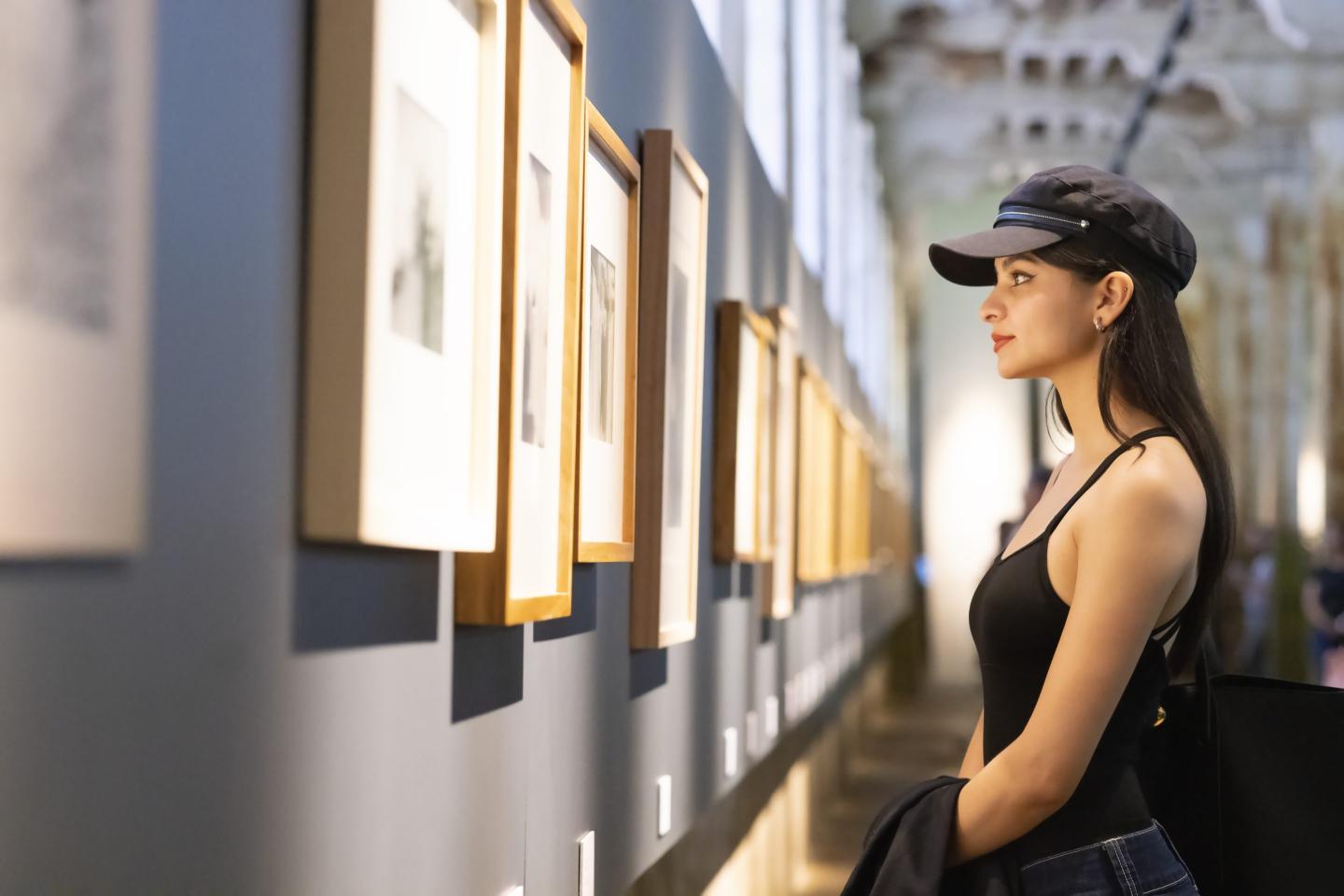
Wealthy Gen Z art collectors are spending more than twice as much as their baby boomer and millennial counterparts. Just don’t expect their purchases to show up on Instagram.
The youngest collectors surveyed in the Art Basel and UBS Survey of Global Collecting 2026 reported average fine-art spending of $328,880 in the first half of the year. That compares with $155,530 for baby boomers, $122,410 for millennials, and $72,430 for Gen X. Gen Z was also the most private generation about who gets to see its collections, both in person and online. Some 39% limited in-person viewing to their household or close family and friends, almost twice the share of any other generation.
Gen Z is richer at the same age than millennials, Gen X, or baby boomers ever were, according to BCG economists—even if it doesn’t feel that way. At the top of that distribution, the money is going into paintings, jewelry, handbags, and whisky. It’s also being kept off the public feed. The report itself, citing research from NielsenIQ and World Data Lab, describes Gen Z as already expected to be “the largest, wealthiest, and highest-spending generation to date.”
“Perhaps surprisingly, the youngest collectors were the most private, both in person and online,” Clare McAndrew, founder of Arts Economics and author of the report, said in a statement accompanying the findings. “Gen Z collectors were the least likely to share details of their collections publicly online, preferring invitation-only spaces, with privacy central to their personal and cultural identity.”
Arts Economics conducted the research in collaboration with UBS, surveying 3,100 high-net-worth individuals across 10 markets, including the U.S., U.K., Mainland China, and Brazil. Gen Z, defined as ages 20 to 29, made up 9% of the sample. The figures are averages, and a small number of very big spenders pushes them up. Across the full sample, 77% spent less than $50,000 on fine art in the first half of 2026. The survey describes a wealthy, highly engaged slice of the generation, not Gen Z consumers generally.
Big money, at the top
Gen Z’s lead isn’t new. In 2025, its respondents averaged $347,460 in fine-art purchases, up 19% from the year before. The average across all generations was $124,265. In the first half of 2026, 13% of Gen Z collectors spent more than $1 million in total on fine art, compared with 3% of collectors overall. At the very top of the market, only 1% of collectors bought a single work priced above $1 million in 2025 and the first half of 2026, and Gen Z accounted for nearly half of them.
Auction houses have noticed. Christie’s CEO Bonnie Brennan told Fortune in June that about half of its auction bidders were millennials or younger and that a Kurt Cobain guitar drew a “very deep bidding audience of younger people.”
Far beyond art
Fine art accounts for only 28% of what wealthy Gen Z collectors spend across art and collectibles, the lowest share of any generation. Half of their spending goes to collectibles, and jewelry and gems take the biggest piece.
Gen Z respondents averaged $151,310 on jewelry and gems in the first half of 2026. That’s more than five times the next-highest generation, Gen X, at $29,500. The average is taken across all Gen Z respondents, including the two-thirds who bought no jewelry at all. Gen Z also led every other collectible category the survey tracked:
- Luxury handbags: $66,030, vs. $23,120 for boomers
- Wine, whisky and spirits: $51,210, vs. $12,210 for millennials
- Sports memorabilia: $22,530, vs. $4,730 for millennials
They buy broadly, too. Some 42% purchased in at least two collectible categories beyond fine and decorative art, close to baby boomers at 39%. The gap opens up further out: 24% of Gen Z bought in four or more categories, compared with 14% of baby boomers. The report describes “a small, wealthy, and highly engaged group of young collectors” buying “particularly in categories adjacent to fashion and culture such as jewelry, watches, sneakers, and handbags.”
Smaller audiences
The spending is loud. The sharing is not.
Among collectors who shared collection content online beyond their household, Gen Z had the highest rate of sharing within restricted or invitation-only groups, at 42%, versus 30% of Gen X. Only 25% posted their own collection content publicly, compared with 36% of millennials and roughly one-third of older collectors.
The same preference shows up at museums. Among Gen Z collectors who had lent works, 59% preferred to remain anonymous, and just 6% wanted full public acknowledgment, the lowest share of any generation. Those who lend still put the art on public walls. They just leave their names off the label.
The pattern is sharpest among young women. Some 37% of Gen Z women kept their collections on view only within their own households, compared with 16% of Gen Z men. It’s the widest gender gap of any generation, and it runs opposite to the rest of the sample, where men are more private.
The privacy extends to the luxury categories where Gen Z spends most heavily. For watches, jewelry, handbags, and sneakers, 20% or fewer Gen Z collectors wanted recognition even within specialist collector communities. Across all collectibles outside fine art, Gen Z had the lowest share seeking that recognition of any generation.
Quiet luxury, by invitation
Fortune previously reported affluent Gen Z and millennials were prioritizing experiences, wellness, and identity over traditional luxury possessions. Separate Fortune reporting found young shoppers flaunting luxury watches on TikTok and Instagram. The collecting survey points to a third pattern: heavy spending on possessions, shown to very few people.
The report suggests Gen Z collectors may be limiting access to trusted audiences to minimize “peer or professional attention or judgment.” That’s a version of what researchers call “quiet luxury,” where status is signaled to a select few rather than the masses.
Within close networks, McAndrew said, status comes less from price than from “rarity, provenance, originality, and discovery.” Restricting access, she said, “does not remove a collection’s signaling power; exclusivity can be part of the signal.”
Uniqueness and rarity were an ownership priority for 48% of Gen Z collectors, compared with 38% of baby boomers.
Some of the reasons are more mundane. Gen Z collections average 36 works, compared with 70 for baby boomers, so they have less to show. Their top art-market concern was the security of their personal, financial, and collection data online.
A family habit
For many of these young buyers, collecting started at home. Some 40% of Gen Z respondents cited family as their route into collecting, compared with 28% overall. Almost 90% of those who had inherited artworks kept them. The survey doesn’t say how new purchases were paid for.
Their early tastes were traditional. Paintings and sculptures were their most common starting points, though Gen Z was the generation most likely to begin with digital art: 7% named it as their first purchase. Yet online channels were the route into collecting for 10%, compared with 16% of Gen X. They’re still adventurous buyers: 56% bought work by artists unfamiliar to them, versus 36% of boomers.
They also aren’t finished. Among Gen Z collectors planning to buy art in the next 12 months, 64% intend to buy a painting. Whether anyone outside the family gets to see it is another matter.