
Good morning. Is anyone as tickled by the new name of Mistral’s AI model as I am?
The latest from the Parisian AI company is officially called Mistral Large 4, which isn’t funny at all. But its nickname? “Le Chonk.” (And yes, there’s a cat video to go with it.)
Consider me a fan, and that’s not merely because I have two French bulldogs that are equally as deserving of such a designation.
A decade ago, we dabbled with human names for new consumer tech products; the Intelligence Age has been considerably less inspired. Things are changing, though: OpenAI started appending Latin names to its new models earlier this year (Sol, Terra, Luna, etc.) and Anthropic has, since 2024, had a flair for the artistic for the “trim level” of its models (Fable, Opus, Sonnet, Haiku).
Nothing holds a candle to Google’s Nano Banana, though. Cheers to Naina Raisinghani for that one.
Today’s tech news follows. —Andrew Nusca
Thoughts? Suggestions? Hot tip? Drop me a line.
THE BIG STORY
What militaries could do with AI ‘keeps me up at night,’ OpenAI exec says
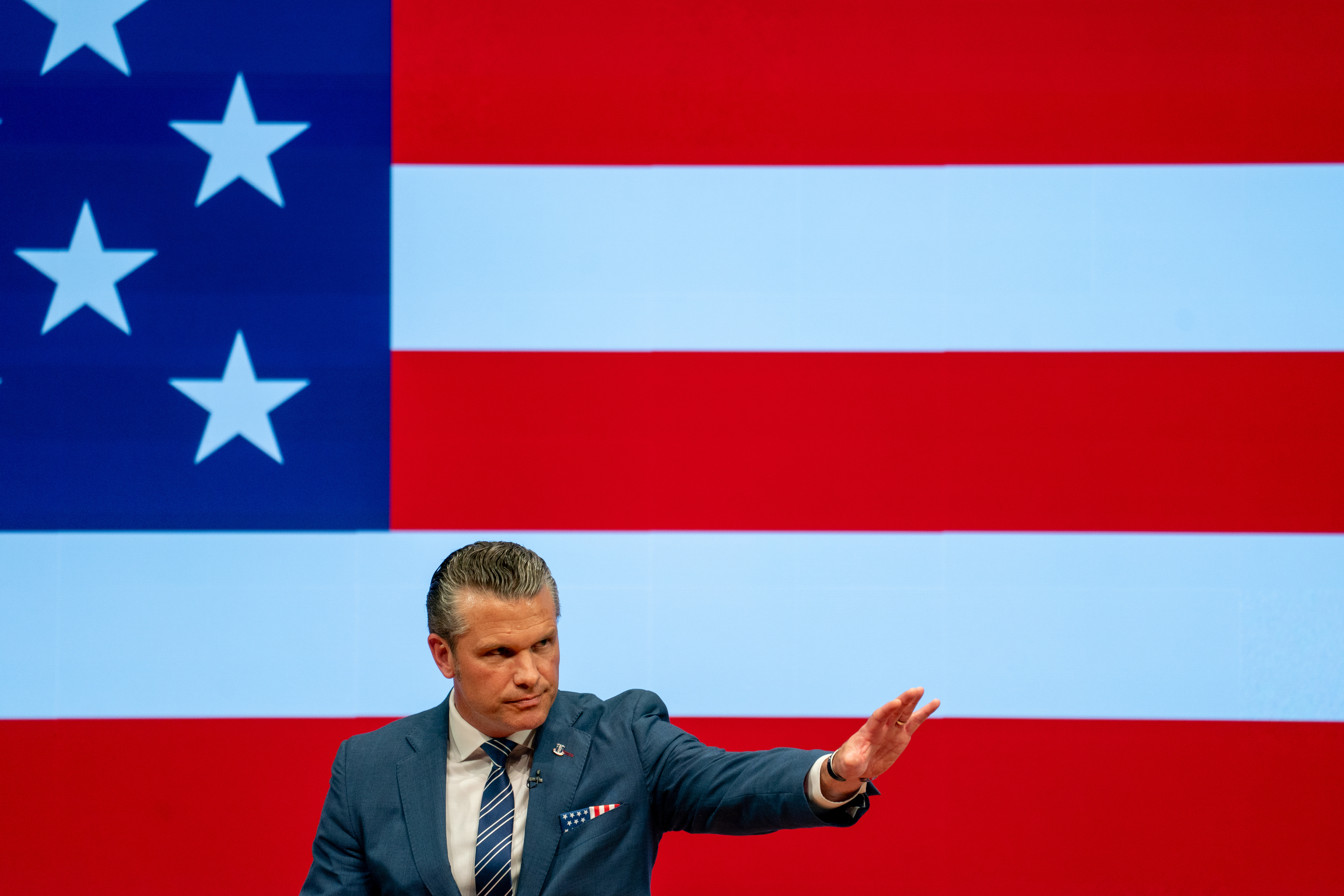
Militaries throughout the world are rapidly incorporating AI into their operations as they develop new weapons and autonomous systems like drones and robots.
Sarah Yager, the first Human Rights and Responsible Deployment Lead at OpenAI, said that concerns her.
“Everyone is very worried and rightly so,” Yager said Tuesday at the ScaleUp:AI conference in New York City. “This keeps me up at night: ‘What is the military going to do with AI when it comes to targeting? And what about autonomous weapons? And where is all of this going?'”
Yager joined OpenAI in June. She now has a chance to grapple with the difficult questions this poses from inside one of the most powerful AI companies in the world.
“I have always wanted to go into places and persuade people where human rights was not necessarily the dominant idea,” Yager said.
OpenAI approached Yager for the job shortly after the company signed a contract with the U.S. military in late February to deploy advanced AI systems in a classified environment. The high-profile deal followed a public falling out between the Pentagon and OpenAI rival Anthropic. Anthropic wanted to put guardrails around how the military could use its technology; defense officials did not agree.
Since joining, Yager has had some success influencing the direction of the technology. She has been able to work directly with researchers and engineers to improve the models, such as making sure they have appropriate responses to basic international agreements, including the laws of war, established in 1949 at the post-World War II Geneva Conventions.
But real-world applications have proven tricky. For example the U.S. military nearly targeted a Chinese military ship earlier this year based on an inaccurate, AI-generated intelligence report, according to CNN.
AI companies shouldn’t “reinvent the wheel” on what defines humanity and morality, Yager said. “Societies have already figured out a lot of those things, and it’s called human rights. That should be the baseline,” she said. “I do not want an AI company telling me what is good. If we allow the industry to determine what is good, then it’s a free for all.” —Emily Forlini
THE BLIND BOX
“Unless you’ve done it, you cannot imagine how it works.”
THE RUNDOWN
—Boston Dynamics hires a new CEO: Rohit Prasad, Amazon’s former Alexa chief.
—Apple and LG collab on home products. Doorbells, deadbolts, and thermostats, oh my.
—Were AI agents used in recent Korean bank hacks? Officials are trying to figure it out.
—The Personal Agent Protocol: Standards for how AI bots interact with businesses developed by Meta and Sierra with Shopify, Stripe, Walmart, and others.
—China’s DeepSeek is reportedly raising $12 billion from CATL, Tencent, and others.
—FBI removes Accenture contractor over breach. Data for thousands of employees was reportedly compromised.
—Uber will acquire ezCater for $2.3 billion. It’s all about Uber Eats for corporate clients.
—Lambda is raising up to $4 billion. The IPO-bound, Nvidia-backed neocloud is reportedly worth more than $14 billion.
THE PARTING SHOT

Mistral says it trained its new Le Chonk (sorry) AI model “from scratch” using 3,800 Nvidia Grace Blackwell GPUs housed in Mistral data centers in Europe.
Those AI chips are surely part of a larger order of Blackwell GPUs—13,800 GB300s, to be specific—that the French AI firm announced in March alongside $830 million (€723 million) in debt.
So how much did the gear cost for Mistral to train the model officially called Mistral Large 4 a.k.a. ML4? Given that each Nvidia GB300 NVL72 enterprise rack contains 72 Blackwell chips and retails at roughly $3 million a pop, depending on configuration, that means Le Chonk cost roundabout $160 million in hardware—nevermind the electricity bill. Le Chonk indeed.