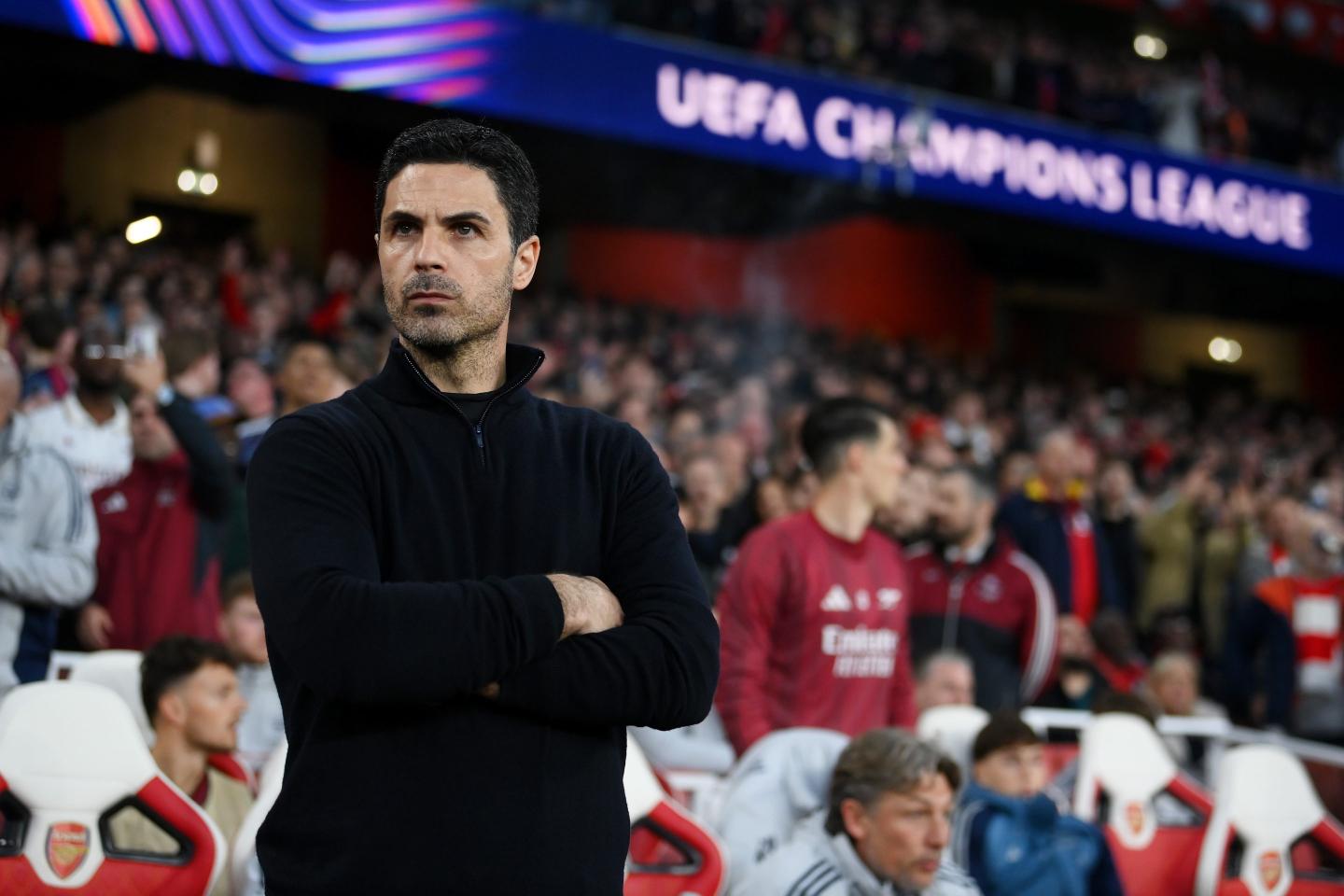
Mikel Arteta tells me he is not a fan of the word pressure, an external force that may make leaders freeze. He prefers to talk about expectation, desire, and fulfilling tasks. “It’s about putting a lot of focus on leading yourself,” he says. “And making very clear who you want to be, what you want to accomplish in life, what is your purpose, what drives you, what is your passion, and then making sure that you create your ecosystem around you to achieve.”
Arsenal, the English Premier League champions he manages, used to be the “bridesmaid club”, missing out again and again in the battle for the most lucrative title in world soccer. They were “chokers” who did not have what it takes to be truly elite.
Last year, that changed, as Arsenal won the title for the first time in 22 years. “We showed very important values not only in sport, but in life,” Arteta said at the time. “Perseverance, to be resilient, to be composed in moments when people are doubting. And to be vulnerable.” Fans were in tears as they celebrated on the streets of North London, Arsenal’s home.
Leading a squad of 24 soccer players through the roller-coaster of sport is not the same as running a global business. Traits, though, are similar. Arteta is known for strict discipline and for a management approach that follows the “aggregation of marginal gains” rule. Every incremental improvement may appear insignificant, but together they are the difference between winning and the alternative, which in Arteta’s world is not much of an alternative. As Bill Shankly, one of the all-time great managers in English football, once said: “If you are first, you are first. If you are second, you are nothing.”
For Arteta, health is a “foundational” part of elite level leadership. Which is why he agreed to have his whole genome (the DNA make up of his body) sequenced, to better understand how his body works and the possible future health risks.
“You have to lead—whether it is your family or your club,” he told me. “You had better look after yourself and you had better lead yourself first.
“In order to do that, the foundation is your health. I think without that, there is nothing underneath. Your energy, your well-being, your capacity to basically connect with people emotionally, and to be able to handle all the situations, challenges, and the amount of work and stress that we go through daily at work.”
Arteta partnered with the global healthcare company Bupa, which offers genome sequencing to, the firm says, “better understand how genetics and lifestyle may shape health.”

“Mikel now has those insights to share with a doctor if he needs them in the future,” said Melvin Samsom, group chief medical officer at Bupa.
“His results have prompted him to look more closely at his nutrition and choices that support his long-term health. A genetic test is the starting point. We combine genomic insights with clinical guidance and preventive care so people can understand what their results mean and take informed steps to look after their health, whether that means acting on a risk today or having useful information to draw on later.”
Arteta, who had a serious heart condition when he was young, said having the test gave him peace of mind and helped with conversations with his family about the future and living healthily. I asked him about “going public” with such personal information (the test revealed an increased likelihood of coeliac disease and a level of lactose intolerance).
“[Arteta’s] results have prompted him to look more closely at his nutrition and choices that support his long-term health. A genetic test is the starting point”
Melvin Samsom, group chief medical officer at Bupa
“I think we talk publicly about a lot of things that are not as relevant as health, and we focus so much on success and success related to your professional life,” he said.
“I think we need to have a space to talk about your personal life, about your family, about your health, about how you feel about yourself, the kind of changes that you go through in your life. I don’t feel the same way as five years ago, 10 years ago, 15 years ago—and I noticed that. I want to be able to recognize what is happening in my body, and I need support in order to do that because I don’t know.
“I want to have the best people around me, to guide me. And suddenly, when I get up in the mornings and I feel like I need more sleep or my big toe, because of my arthritis and all my years playing football, is hurting, [this is] one of the things that can help me to go through the day better, because the last thing that I want is to find limitations at my age, at 45.
“Whether it’s to play with my children or to go out on the pitch and run with the boys and be passionate about what I do and be active and be demanding [about] the way they have to look after themselves, but then don’t do it myself.
“So, we decided to open that door. I’m far from perfect. There are things happening in my body that I know now that I didn’t know before—it is my responsibility to get things done and try to improve them.”
Arteta reveals that his children regularly admonish him—“Daddy! Too much cheese!”—and that, since the genome results and some changes in eating and sleeping routines, he is already feeling healthier. And that affects how he leads.
“We are in front of a lot of people every single day,” he said. “They have an expectation for you to produce, to inspire, to guide them, and we had better be in the best possible way.
“I put health as the foundation. Why? Because I think it’s very difficult to feel emotionally good with yourself if physically you’re not at your best, or you are not doing the things that can help you to be your best. If you are fatigued because you are not eating the right way, or if you are in pain. Pain inhibits your muscles, inhibits your brain because you don’t feel good, and then that has other consequences.”
“Face those challenges that life brings us, that an opponent can bring or a situation or contest—just be prepared and face it”
Mikel arteta, manager of English Premier League team, arsenal
Many C-suite leaders talk about the stress of handling volatility, and about keeping calm despite the challenges around them whether that is geopolitics or the race towards the AI-enabled future. Try compressing all of those pressures into 90 minutes and a game where all the outcomes are uncertain, and plausibly existential for the person in charge (soccer managers are regularly sacked).
“We live in an environment that is extremely unpredictable, and actually enjoying that unpredictability, it’s a joy, you know?” Arteta said when I asked him about handling rapid-change environments. “Every day is new. Every day we’re going to have something that we haven’t experienced the day before, and we need to feel lucky. So face those challenges that life brings us, that an opponent can bring to us, that a situation or a contest can bring to us, and just face it, and try to be prepared.
“If [an unexpected challenge] happens, just have the approach of, okay, that’s great. We didn’t expect that in front of us. How good are we going to feel if between us we are able to resolve it, overcome it, and actually get it done? And we find a lot of joy and pleasure by doing that. And that’s the culture that we have created [at Arsenal]. And if we can learn from it, because that’s going to make us better, and that’s going to prepare us for the next time. But never, never use [unpredictability] as an excuse to justify that we haven’t been able to do it, because then we’re not going to be satisfied.”
The BBC reported last month that Arteta deliberately disrupts his players’ routines—turning the changing room heat up too high, or disrupting pre-season travel plans—so that they become used to handling uncontrolled and sometimes negative events.
“Every detail matters, and you have to be ready for it, and you have to have the mindset to think, okay, I’m going to be a bit pessimistic in the way that my teammate is going to behave here, so I’m very proactive to already have the solution for him,” he said. “Not to think that it’s going to be exactly as we predicted and it’s going to be as good as we want it to be.
“We live in an environment that is extremely unpredictable, and actually enjoying that unpredictability, it’s a joy”
Mikel arteta
“So, I don’t have to react because if you do have to react, which happens in football a lot, you’re going to be a second late and a second late in the Premier League, in the Champions League, it costs you big time. So [you need to] constantly have the capacity to read clues. When a magician is showing you a card, probably that’s the only place that you should not be looking. The opponent can be very similar to that. So have the capacity to detect, to find clues around you, and understand where the possible threats are coming from.”
Could a football manager like Arteta lead a Fortune 500 company?
“I don’t know,” he laughs. “I’ve never thought about it. I would be fascinated. Anything that’s new, that requires connecting with people, creating a plan, having a vision, and being able to translate that idea for people to buy into it, to feel part of something and actually deliver it. In any kind of role, it’s something extremely rewarding at every level. I would love to at least understand it.”
Before we finish, I ask Arteta (because why wouldn’t you?) for any advice he may have for my son and daughter, aged 22 and 26, in this turbulent world. He talks again about drive and passion and having your tribe around you. “It cannot be social media,” he continues, “I’m sorry, that’s not your ecosystem. Your ecosystem is your parents, your brother, your coach, your best mate, it is people that are contributing daily to achieve and to feel in the way that you want, and the rest is just—I would put a rain jacket on it.”
“Rounder wheels,” elite performance coach Sir David Brailsford, joked when asked why the British cycling team had been so successful in the 2012 London Olympics. Arteta is a “rounder wheels” leader, every change and tweak aimed at achieving more for himself, his family, and his club. Whether that is about his health or any other part of his life.
Quick note: As the CFO mandate keeps expanding, Fortune is convening C-Suite Conversations: In Conversation with Finance Leaders on 28 October. CFOs from Loewe, Standard Chartered Bank, and MUFG Americas join Fortune's Sam Birchall to discuss building the next generation of finance leadership. Register here.