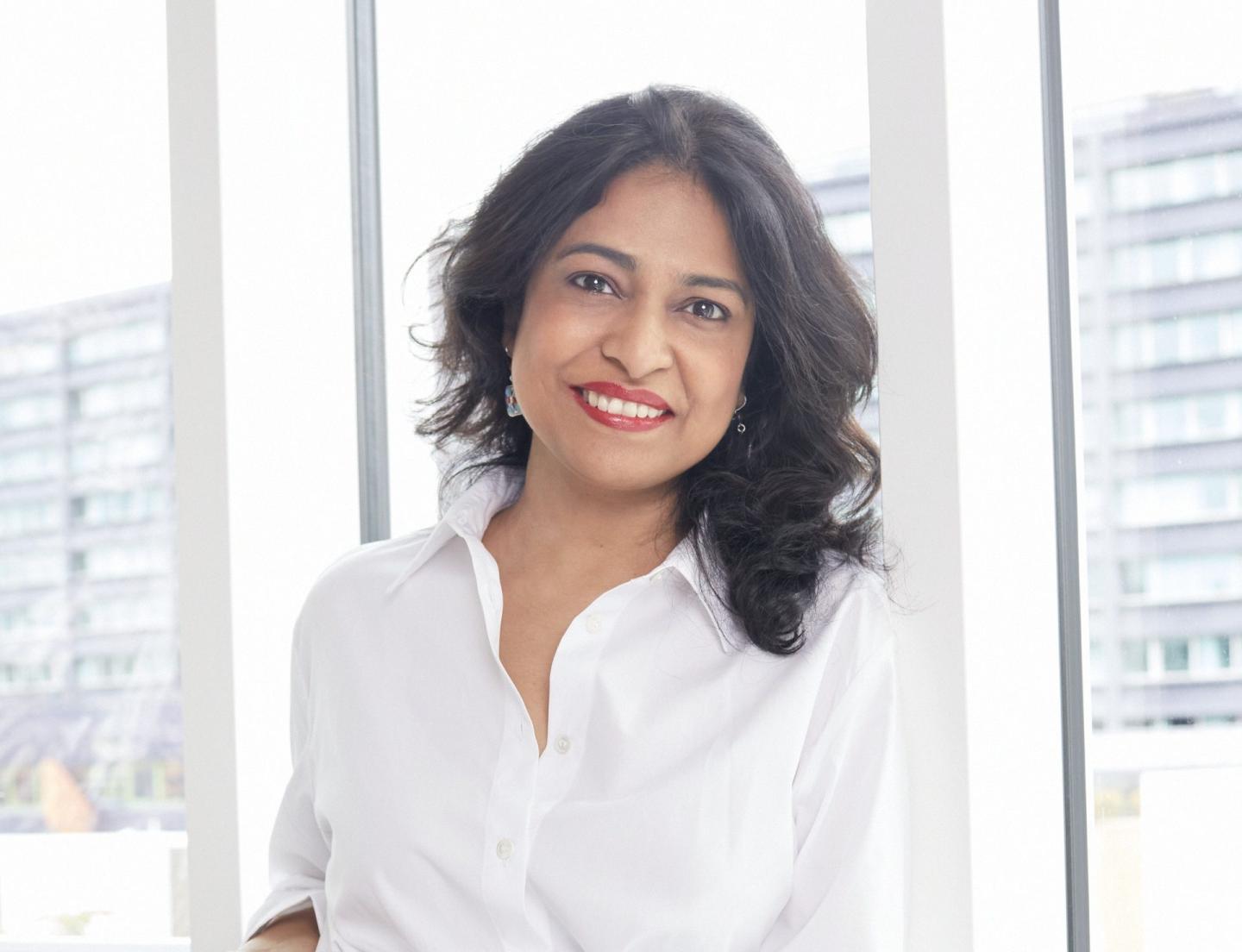
When Asmita Dubey started her career in advertising in 1997, the job was still largely about creating campaigns. Based in India, she worked on Suzuki ads and a James Bond campaign for Ericsson, learning the fundamentals of brand building. Then, computers started to arrive on everyone’s desks.
Dubey, who had studied maths and statistics at university, was fascinated by the potential of these machines. She moved into planning and media so she could learn computer-based skills including Excel, and how to work with large datasets. Later came e-commerce, then search, TikTok, and social listening. Each new technology added another layer to the marketer’s toolkit—and another set of skills Dubey felt she needed to learn.
Now, as L’Oréal Group’s chief digital and marketing officer, she is confronting a technology that is different in scale. Artificial intelligence is reaching into almost every part of the marketing process: How companies generate insights, develop and create content, target audiences, measure returns, and increasingly how consumers decide what to buy. The question is therefore bigger than whether AI can make an ad faster or cheaper. As AI starts to mediate the relationship between consumers and brands, marketers need to understand the systems connecting the two.
At L’Oréal, that means marketers are increasingly involved in questions that would once have belonged elsewhere in the organization. “We now sit the data and IT and marketing teams together and say, ‘What are our processes? What is the architecture? What is our marketing engine? Is it ready for today? Is it ready for tomorrow?” says Dubey.
The group’s AI strategy has three broad pillars: helping employees to work with AI; embedding AI to drive efficiency across business functions including marketing, research and operations; and understanding how AI is changing the consumer journey.
Marketing is about the consumer. The reason we are talking about AI is because more than a billion consumers are on it
Asmita dubey, L’Oréal Group’s chief digital and marketing officer
The latter has huge implications for marketing. “People thought the consumer journey would collapse with AI, because everything can be done [in one place, so quickly],” says Dubey. “And actually it’s expanding. That same search that people used to spend a few minutes on, they now spend 11 minutes on because they’re chatting with [the AI]. So what does that mean in terms of content? How do we make sure it’s credible?”
That changes the marketing question. In traditional search, a brand competes to appear near the top of a list of results. In an AI-mediated journey, it needs to be relevant and credible enough to become part of the answer. L’Oréal has been testing advertising in Google’s AI Overviews and working with platforms including OpenAI, Amazon, and Alibaba as it explores how its beauty products can be found through AI search.
“In the end, marketing is about the consumer. The reason we are talking about AI is because more than a billion consumers are on it, and they are asking questions about their life, birthdays, parties, travel, beauty—and that is why we are there,” says Dubey. “So we are looking at all these platforms to see how the consumer journey is evolving.”
The pipes and plumbing
That is where the infrastructure underneath marketing starts to matter.
Dubey describes a marketing ecosystem that is being reshaped on multiple fronts, from publishers and platforms to creative, media, data, and technology agencies. The SaaS layer that marketers have spent the past decade building around CRM, websites, and other platforms is changing, too.
At L’Oréal, technology is becoming an increasingly important element of the marketer’s job. The company has brought its beauty research into an internal intelligence platform, allowing employees to interrogate a huge body of existing research conversationally. Product development and formulation are becoming more data-driven, while image, text, and video creation are changing as the use of generative AI tools grows.
Dubey says almost 20% of L’Oréal’s marketing investments are now AI-led, while ROI measurement already relies heavily on machine learning and AI. The result is what she describes as a “dual muscle of creativity and technology.” When those two sides meet, she says, there is an “aha” moment.
But getting there involves learning about a less glamorous side of AI. “You have to learn the architecture,” she says. “If you don’t, it is going to go wrong, because we’ve got hundreds of agencies, and we’re all working with their tools. We need our marketers to be empowered. Where are the pipes? And is the plumbing right?”
For L’Oréal, that plumbing includes the standardization of advertising accounts and product data across platforms such as Google and Meta. It also means understanding the details of product information—something marketers first encountered with e-commerce and product detail pages—as consumer discovery moves from traditional search towards generative AI.
The next layer is GEO, or generative-engine optimization. This involves thinking about authority, scientific content, brand content, and product information, and how these can be structured so that AI systems can understand them.
Yet the more technology enters marketing, the more important it becomes to get the fundamentals right, Dubey argues. She gives a simple example: A universal commerce protocol might make 100,000 SKUs available to an AI system, but that does not tell the system what a brand should be famous for. A sunscreen can be described as SPF 50, but it can also be described through the context in which someone might actually use it.
“Essentially, marketing remains about fulfilling a consumer need and creating that deep consumer engagement which is authentic, which is consumer-centric. That core doesn’t change.”
That is also why she believes marketers need to experiment, rather than simply read about AI. L’Oréal recently put its own senior executives through that process. “We had our 20 senior-most executives of L’Oréal create an ad with AI—through the whole process from start to end. I said, ‘unless you’ve done it, you cannot imagine how it works’. You have to be ready to learn, be inquisitive, and be hands on. Don’t look at it on paper, just try it.”
Quick note: Join Fortune for a breakfast bringing senior finance and marketing leaders together to explore how CMOs and CFOs can work together to drive competitive advantage. Register your interest here.