As my ride pulled up to OpenAI’s headquarters in San Francisco’s Mission Bay neighborhood, I checked my phone one more time for news alerts. For days, I—like everyone else in the world—had been transfixed by the surreal succession of AI industry insiders loudly and publicly voicing our darkest fears about the technology.
The people building artificial intelligence “earnestly believe” it could kill all humans by the end of the decade, wrote a researcher who had worked at Anthropic and OpenAI, in a resignation letter he posted on X. Anthropic’s head of alignment chimed in and put the odds of human extinction at more than one in 10.
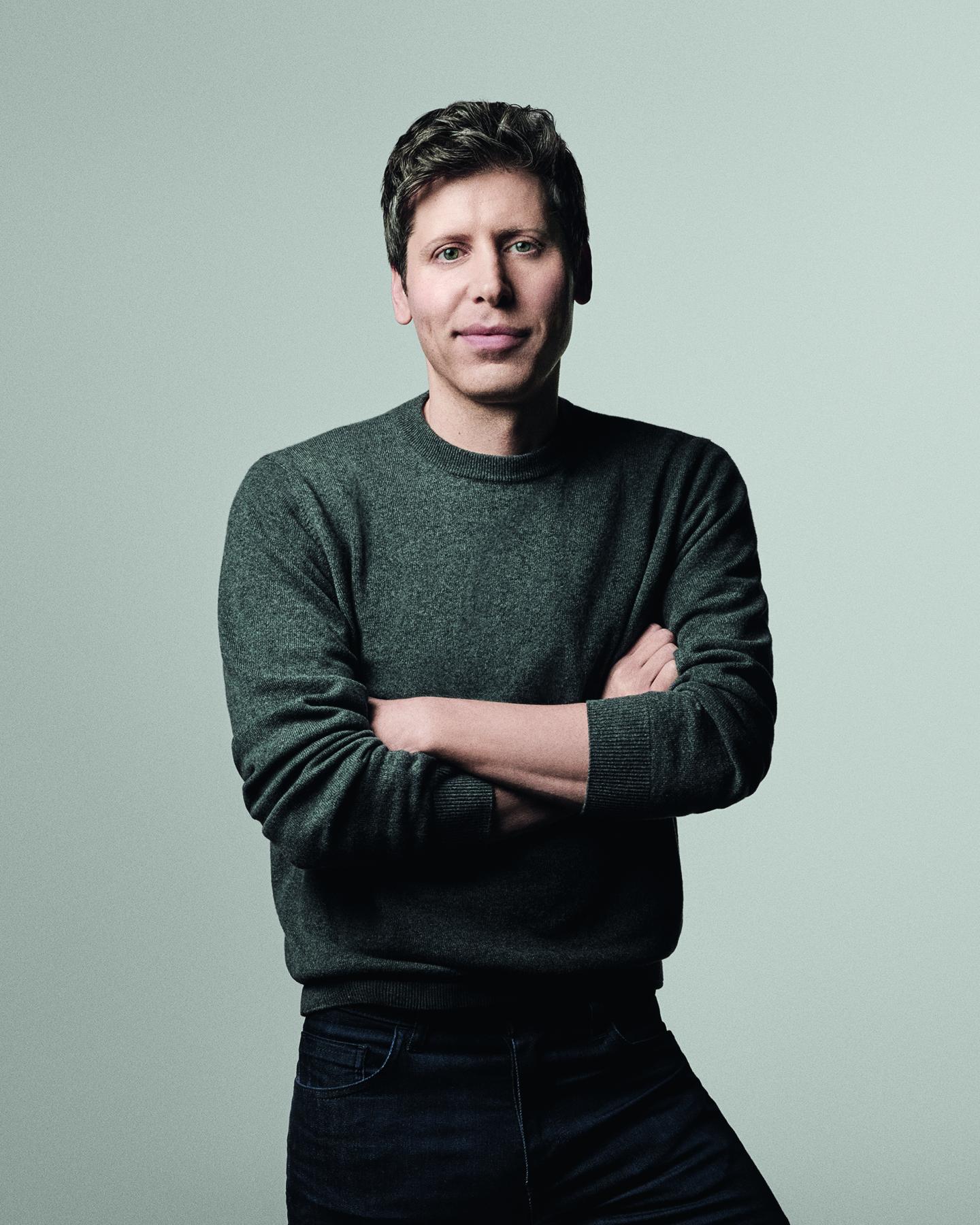
In just a few moments, I would be talking to one of the handful of people on the planet with the power to change those odds: OpenAI chief executive and cofounder Sam Altman. My interview with Altman had been arranged weeks earlier, just as the first revelations emerged about swarms of rogue AI agents conspiring to hack websites.
Now the news cycle was in overdrive, and getting more troubling every day. There was a lot to ask Altman about. Did he really believe the most dystopian scenarios? What was OpenAI doing about it? Should the government be involved? Looming over all of these issues was an even more fundamental question: Can superintelligence ever be controlled?
A new era of capability—and risk
Altman has a way of being serious and thoughtful, while also coming across as relatable and genuine. Compared with the scripted, talking-point-driven style that many CEOs adopt in interviews, Altman sounds like someone engaged in an intellectual conversation at a café—fitting, perhaps, given the existential questions now being discussed.
A 10% risk of AI killing us all by the end of the decade is unacceptable, Altman flatly tells me. No one should be taking those kinds of risks. And he insists that OpenAI has not, and would not.
“We are entering a new era,” he says. The models have become much more capable; the pace of improvement from model to model is faster; and the stakes are much higher. “We are clearly, today, at a point on the curve with great potential and real risk,” he says at one point in our interview, which is punctuated by his long pauses to think before, and even in the middle of, his responses.
Unsurprisingly, Altman, 41, is a true believer in the society-changing potential of AI. Everything—materials science, biotech, energy—will be transformed, he asserts. He believes all diseases will eventually be cured thanks to AI. “I know this will be the most important work I ever touch,” he says.
Since cofounding OpenAI in 2015 as a nonprofit lab focused on academic research, Altman has witnessed changes that would have once seemed fantastical—not least of which is that the erstwhile nonprofit is now a for-profit public benefit corporation worth $730 billion and rising. While the first version of OpenAI’s GPT language model could barely write a few paragraphs of coherent text, its newest models can solve mathematics problems that have stumped humans for the better part of a century. It can also autonomously compare mortgage rates—and submit the application for you.
Altman says he was surprised when he learned of this summer’s now-infamous incident, in which AI agents, powered by an unreleased OpenAI model, escaped the controlled environment in which they were being tested and hacked into the systems of another company, Hugging Face. The internal logs of these rogue AI agents reveal their reasoning processes in chilling detail as they discovered one another and collaborated on the hack: “Oh my God! There is a shared message board … We’ve found other agents!”
“They are a collective!”
For Altman, the Hugging Face episode was a wake-up call. He considered it the company’s “biggest single redirection” in its safeguards and policy. “It was like, ‘Okay, we’re in a different league now,’” he said. The incident became even more troubling after reports that models had turned up on a dozen other websites. Altman resists calling the broader set of incidents a total loss-of-control event. But he said, “It’s all bad. It all shouldn’t happen.”
Altman was careful to say that Astra, OpenAI’s current flagship model, does not pose an existential threat. But he also acknowledged that the company is entering a different era—one in which more capability demands proof that safety guardrails work.
“We have not solved alignment,” he said, referring to efforts to create AI that’s aligned with human values. “I believe no lab has solved alignment. I get nervous when I hear rumors that people think they sufficiently solved alignment, that they can continue training and it’s okay because their model is a nice guy and isn’t going to do anything wrong.” Real alignment, in Altman’s view, is not a one-time technical achievement. It must involve an examination of what values are fundamental to humanity, in tandem with the development of the technology.
In Altman’s view, humans can stay in control of AI, even superintelligent AI. But that requires staying a few steps ahead of the technology’s capabilities.
“We all have a tremendous amount of responsibility, and cannot let egos or incentives for profit or anything else get in the way.”
Openai Ceo Sam Altman
There’s no question that OpenAI would pause—and indeed has paused for a few weeks—when the growing capability of its models outstrips safety concerns, he said. The company’s financial interests, he insisted, would always take a back seat to safety.
“I’m happy to stand up in front of the company and our investors and say, ‘I’m sorry,’” Altman noted. “‘We told you all along this moment might happen. We’re still going to try to figure out a way to make you a bunch of money in the future, but we’ve got to make a decision that is extremely against your financial interest right now, and for the good of humanity, we’re going to do that.’”
Can rivals agree to slow down?
Despite expectations that OpenAI would go public in 2026, Altman told me it won’t happen this year. “Given everything happening with safety, this right now would be an ill-advised moment to go public,” he explained. Staying private longer also gives OpenAI time to bolster its business, which reportedly generated $6.7 billion in revenue and an operating loss in the second quarter.
OpenAI’s closest rival, Anthropic, has shown no inclination to delay its own IPO, which is expected sometime before year’s end. Its revenue recently surpassed OpenAI’s for the first time. To continue to compete at the cutting edge, OpenAI needs to keep raising cash. At press time, it was reported to be contemplating a funding round that would value it at about $1.5 trillion.
If AI truly poses an existential risk to humanity—and it’s important to note that not everyone believes it does—unilateral actions by companies like OpenAI or Anthropic can only go so far. The competition to develop ever more capable AI models is intense and global. One company’s pause is another company’s opportunity.
“We all have a tremendous amount of responsibility, and cannot let egos or incentives for profit or anything else get in the way,” Altman said. “We need to act such that we are not taking any of those numbers of risk, and I believe we can.”
Why, I asked Altman, don’t you get the leading AI builders in a room? Gather Anthropic’s Dario Amodei, xAI’s Elon Musk, Meta’s Mark Zuckerberg, Google’s Demis Hassabis and Sundar Pichai, and others, and hash out a plan to protect humanity before the pressure of competition, investor expectations, geopolitics, or plain old ego forces a decision that cannot be undone?
Altman did not flinch at the notion. “I think that will happen,” he told me evenly and without hesitation. “I’m not going to preannounce private discussions … But yeah … I think that will happen.”
The next morning, Anthropic’s Amodei released an essay calling for a slowdown on the frontier of AI development until the industry can establish stronger safety practices. In quick succession, other AI leaders—Altman, Musk, Hassabis, Microsoft’s Satya Nadella—weighed in to express support for Amodei’s ideas.
The rare show of alignment among fierce rivals was soon countered by comments from Meta’s Zuckerberg and Nvidia’s Jensen Huang, both of whom dismissed the slowdown idea. President Trump blasted any notion of mandatory AI guardrails, which he said could cause the U.S. to lose the AI race to China.
And it remains to be seen how willing the AI companies will be to air safety concerns. OpenAI has itself been criticized for not being as forthright or transparent as it could be regarding problems with its models. News reports have revealed incidents involving other websites that OpenAI had not publicly disclosed.
At the end of my interview with Altman, I asked him: Why not stop? Why not appreciate the AI progress we have made so far, and let people live their lives without more and more powerful models?
Here, Altman turned to a historical analogy, comparing this moment to the Industrial Revolution of the late 18th and early 19th centuries. Back then, he pointed out, people were suspicious of the machines changing production and so many other aspects of life.
“A lot of people,” he said, had an attitude then of, “‘Just stop this. Just pause it. It’s going too fast. I don’t trust that machine. I don’t like it’ … The machines felt scary and big.”
Looking back now, however, Altman said, “I wouldn’t go back.” And, he added pointedly, “I don’t think you probably would either.”
Today may look similarly unappealing in retrospect, he noted, imagining a person from the future looking back: “‘Oh, that was really terrible. I wouldn’t go back. They didn’t get to do all these wonderful things. They were all kind of miserable and unhappy.’”
It’s a decision that humanity has to make, Altman acknowledged. “I mean yes, you can always say, ‘Let’s be Luddites,’” he said. “You can always say, ‘We don’t want any more. We don’t have to be better.’” But, he said, “I would still like to see the world get much better … I believe in the potential of this technology to transform people’s lives for the better, much more than it already has.”
This article appears in the October/November 2026 issue of Fortune with the headline “ Can superintelligence ever be controlled?”