
Edward Tian built GPTZero over winter break of his senior year at Princeton, in the disorienting weeks after ChatGPT went mainstream, and put it up on a free Streamlit hosting page. The site crashed within a week as 30,000 people flocked to a program that could tell you how much of a piece of online writing was produced by AI.
Less than four years later, GPTZero has more than 20 million registered users, $30 million in annual recurring revenue, and a new parent company. Superhuman, the productivity company formerly known as Grammarly, agreed in June to acquire GPTZero for undisclosed terms. PitchBook data valued GPTZero at more than $88 million, but a source familiar with the matter said the deal represented at least a 10x return on the $13.5 million the company had raised in total.
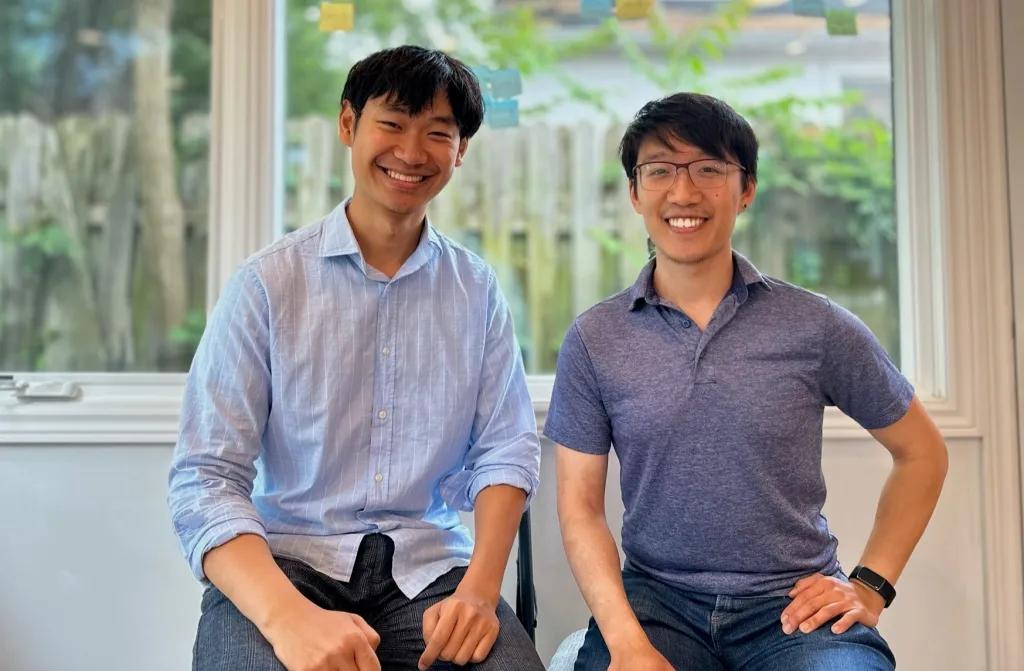
Tian, 26, and his cofounder, Alex Cui, who have been friends since high school in Toronto, now lead a combined “authenticity” team inside Superhuman, tasked with building their detection technology into a tool used by tens of millions of writers.
This wasn’t the plan, Tian told Fortune. “I never wanted to be a founder.” He’d wanted to be a journalist.
The computer science major in journalism class
Tian was well on his way to becoming one. Before he graduated, he worked with investigators at Bellingcat, the open-source investigative outlet whose work has broken major stories on war crimes, espionage, and the poisoning of Russian dissident Alexei Navalny. He also spent time on the BBC Eye Investigations team reporting on disinformation, and he had just accepted a fellowship with the New York Times’ visual investigations team when GPTZero started taking off.
“I think I perfectly would have been happy working at the Times, or even in data investigations,” Tian said. He had learned firsthand, after all, from one of the masters of magazine journalism: John McPhee, the longtime New Yorker staff writer, Princeton’s Ferris Professor of Journalism, and winner of the 1999 Pulitzer Prize for Annals of the Former World, his geological history of North America.
“It was the last year he taught his creative writing class,” Tian said, describing the funny relationship that developed as the journalism legend, then nearly 90, leaned on his only computer science student for help navigating Zoom and online learning during the pandemic. “When COVID hit, he would ask me to come over and ask me, like, ‘How do you Zoom after COVID?’”
Tian says he still visits McPhee at his Princeton home at least twice a year, and their conversations often turn to AI and writing. “We would talk a lot about AI tools,” Tian said. Once, he showed McPhee an AI-generated version of a McPhee article. According to Tian, the verdict was a resounding rejection: “This is terrible. It’s not in my style at all.”
McPhee “very much emphasized the process,” Tian said. Write one draft, then a second, then a third. Writing, McPhee taught, was “as much about editing as producing the final content.” Tian called those lessons “early inspiration” for his thinking about AI detection, which he describes as an “initial response” and a sort of “Band-Aid” for the larger questions about writing that McPhee devoted his life to.
‘The Splash Brothers of anti–AI slop’
Cui had worked on trust and integrity online long before the GPT era. In late 2017, as a Caltech undergraduate, he partnered with two Yale graduate students and a former teammate from the Canadian Chemistry Olympiad to build Open Mind, a browser extension aimed at “fake news,” the flood of online propaganda that had played a prominent role in the 2016 presidential election. Open Mind was designed to show readers views that challenged the material polluting their feeds.
Cui, now GPTZero’s chief technology officer and a director of engineering at Superhuman, had a viral moment, landing on <em>[hotlink]Fox[/hotlink] & Friends and NPR. He presented Open Mind’s findings to Facebook’s misinformation team, where he was interning at the time, and to Senate staff on Capitol Hill. But he said the team failed to capitalize on its 15 minutes of fame with a bigger product. “We waited way too long to put out something,” he said, “and then once we did, it kind of fell over.”
When Tian’s solo project began gaining traction, Cui was pursuing a master’s in computer science and machine learning at the University of Toronto and working on autonomous-vehicle research. “We need to act right now,” he remembered thinking. “Drop everything, launch something.”
Cui said he and Tian bonded years earlier over Model UN and science fairs, and he credits his old friend with creating a “sports-team mentality” at the company. He joked that he likes to think of the two of them as “the Splash Brothers of anti–AI slop,” a nod to the former Golden State Warriors backcourt of Stephen Curry and Klay Thompson.
GPTZero’s role in the slop wars
GPTZero has had a big year in the brewing AI slop wars. In January, its investigators reported finding more than 100 hallucinated citations in papers accepted at NeurIPS, one of the world’s top AI research conferences, as Fortune first reported. Several prominent AI researchers publicly apologized on social media and revised their papers.
GPTZero also scanned 300 of the roughly 20,000 submissions to the International Conference on Learning Representations (ICLR) and found more than 50 hallucinated citations. ICLR has since become a GPTZero client, using its tools to screen submissions.
The company has also made its mark on Big Four accounting. GPTZero’s blog series “Chasing the Hallucinations” has documented errors published by Deloitte (Australia), KPMG (International), EY (Canada), and PwC (Middle East) with GPTZero’s own analysis supplying the receipts in three of those cases. (The Deloitte story was first flagged by University of Sydney academic Christopher Rudge.) The latest: About one in five words spoken at the UN General Assembly’s 81st session came from speeches that GPTZero classed as AI-generated.
The Big Four firms, NeurIPS, and ICLR did not respond to Fortune’s requests for comment.
“We don’t want to be a policeman of the internet,” Tian said, appealing to values straight out of McPhee’s classroom. “A lot of the detection out there is not just folks calling out AI content, but more of folks calling mediocre writing,” Cui said. GPTZero’s work has been welcomed by professionals, including at the major consulting firms. “They’re grateful that you’re exposing these things,” he said. “Because they don’t want this to happen, either.”
Nikhil Basu Trivedi, cofounder of the venture firm Footwork and GPTZero’s sole outside board member before the Superhuman deal, first met Tian through the Princeton network. As a Princeton senior in 2011, Basu Trivedi started TigerTrek, a student trip to the Bay Area that connects future founders with future funders, and he met Tian on the January 2022 trip.
Basu Trivedi reconnected with Tian after GPTZero’s launch, and Footwork went on to lead GPTZero’s $10 million Series A in June 2024. He argues that GPTZero’s real product isn’t AI detection so much as “AI curiosity,” a broad and still-growing appetite among ordinary people, not just professionals or teachers, to know whether what’s in their feed was written by a human or a machine. He compared GPTZero’s trajectory to that of Canva, another of his investments, a founder-led company that was rock-solid very early on.
Noting that GPTZero was “basically profitable since the day we invested,” he marveled at how Tian and Cui “built their own foundation model, a real business, and basically did it without needing any capital, and then got it acquired, and produced a generational outcome for themselves as well.”
That outcome hasn’t changed their habits. At a small celebration dinner in San Francisco after the deal closed, Basu Trivedi was stunned by their choice of lodging. “They were staying at, like, a $100-a-night, hostel-type hotel,” he said. “I’m like, ‘Guys … you can afford to stay at a better place.’”
Their principles have always shown through, he said. “They did not set out to build a product to help people cheat on their homework,” he noted, adding that the founders had many discussions about how to build something “used for good.” The mission has evolved from “preserving what’s human on the internet” to “preserving critical thinking in humans.”
Inside Superhuman, GPTZero’s roughly 30 employees are being folded into a broader authenticity effort that spans Superhuman Go, an AI assistant the company says works in more than 1 million apps and websites. GPTZero’s authenticity suite, including AI and hallucination detection, plagiarism checking, and writing replay, has been added to Superhuman’s platform.
Years later, Tian still sounds like McPhee’s student. He wants to move beyond the AI detection debate. “I really hope [the conversation] goes beyond: ‘Is this AI or not AI?’” he said. “I really hope it goes into the authorship of how something’s written, the quality of content, the source of information.”