
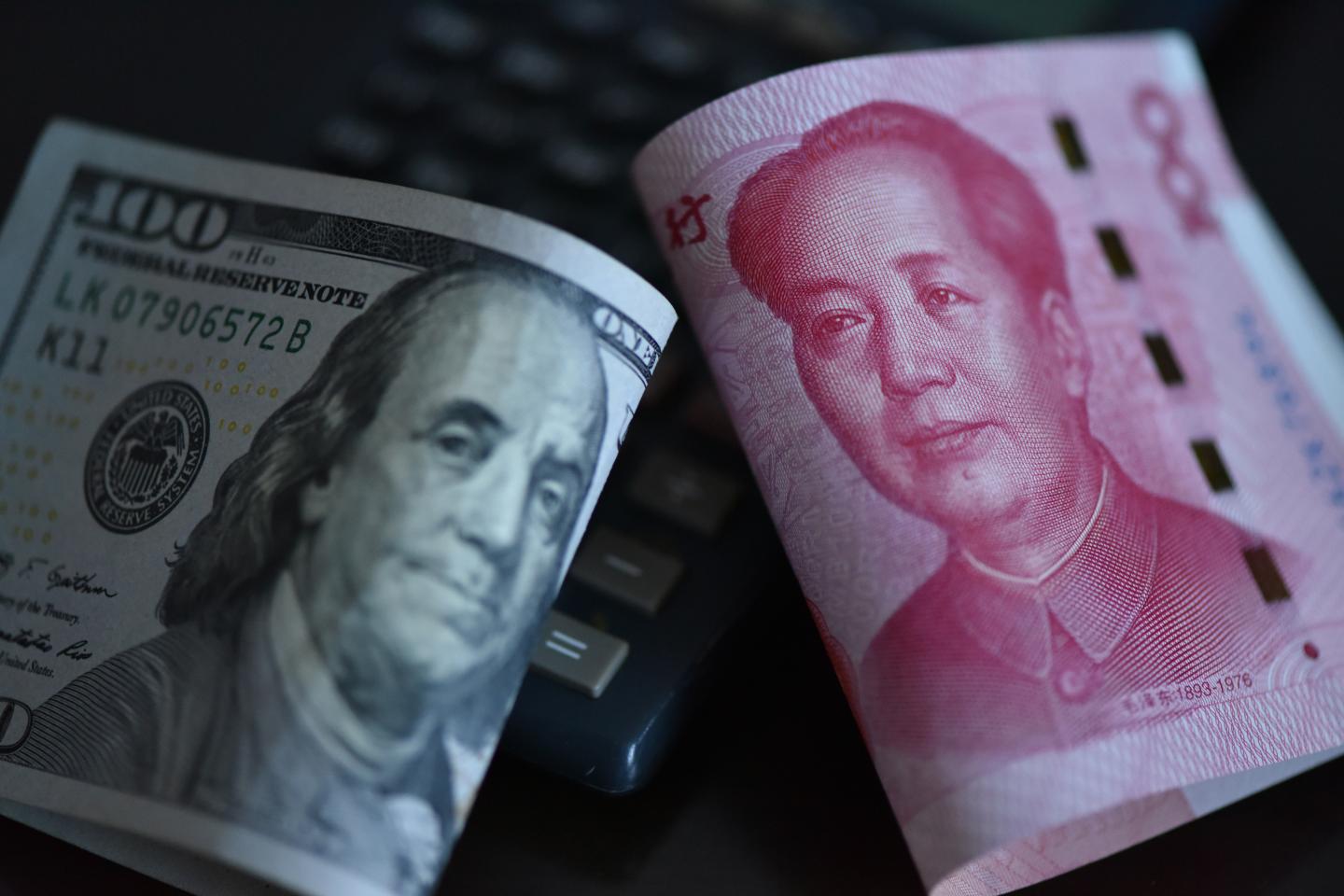
Despite its gains in global trade, the yuan isn’t going to replace the U.S. dollar in global reserve holdings any time soon, Standard Chartered China CEO Jean Lu argued on Wednesday, even as Beijing tries to encourage greater use of the Chinese currency.
“There is no way—at least in my career—for the RMB to challenge the USD,” she said during a media roundtable in Singapore.
But if the yuan isn’t quite ready to take the top spot, Lu suggested that other second-tier currencies might see competition from the yuan. “Compared to the yen or pound, the RMB may have a chance,” she said.
Beijing is working to make the yuan more relevant in global finance. The most recent five-year plan, released in March, outlines the Chinese government’s desire to expand the currency’s role in international markets via mechanisms like so-called Panda and Dim Sum bonds—RMB-denominated debt issued in mainland China and offshore markets, respectively.
Investors are rethinking the importance of the U.S. dollar as the country’s government debt grows; governments, too, are worried about Washington’s use of the dollar to impose sanctions on countries and companies. That’s prompted a shift to alternative currencies like the Swiss franc or the euro, or to other assets like gold.
Still, the U.S. dollar made up 57% of global foreign exchange reserves in the first quarter of 2026, according to the International Monetary Fund (IMF). (This was an increase of one percentage point from the previous quarter, mostly driven by the U.S. dollar’s mild appreciation against other currencies.) In contrast, the yuan made up just 2% of reserves, up from 1.95% in the previous quarter.
Lu cited “limited liquidity in offshore markets” as a constraint on the internationalization of the renminbi. Chinese capital controls make it difficult for the yuan to flow freely into global markets. “We’re talking about less than 2 trillion yuan, with almost half of it being in Hong Kong,” she said.
The People’s Bank of China, the country’s central bank, is leading China’s push for renminbi internationalization: This year, it tapped major institutions like Deutsche Bank as an offshore clearing bank to streamline European access to the RMB, and launched new repo facilities to allow foreign central banks to secure yuan liquidity.
Use of the yuan is growing rapidly in Southeast Asia, one of China’s major trading partners. In 2025, settlement volumes between China and Southeast Asia surged to 8.9 trillion yuan ($1.3 trillion), a 50.7% increase, according to a March report from Standard Chartered.
ASEAN firms are also increasingly regarding RMB capital markets as reliable tools for hedging and fundraising. For instance, in June, Singapore Airlines made its debut in the offshore yuan market by issuing a 1.5 billion yuan Dim Sum bond.
Geopolitical conflict is also giving the yuan’s standing a boost. U.S. sanctions on Russia imposed after the invasion of Ukraine pushed Moscow’s trading partners, like China and India, to adopt the yuan as an alternate trading currency. After the U.S.’s strikes on Iran earlier this year, Tehran also asked shippers trying to cross the Strait of Hormuz to pay tolls in yuan.
Trade between Southeast Asia and China is hitting historic highs, driven by new infrastructure projects like the Pinglu Canal, which connects southwestern China to the Beibu Gulf, cutting logistics costs by as much as 30%.
“Southeast Asia is not too far from China, and has similar languages, culture and shared heritage,” Patrick Lee, Standard Chartered’s ASEAN and Singapore CEO, said at the Sept. 29 media roundtable. “With the supply chain shifts and geopolitical changes we’re seeing, Chinese companies see ASEAN as an attractive place to [invest and] build supply chain ecosystems in.”
Yet Southeast Asian manufacturers are now struggling with Chinese overcapacity. Thailand saw over 2,000 factory closures in 2024 due to an influx of cheap Chinese steel and other goods, while Indonesian textile manufacturers struggled to stay competitive, according to the Asia Society Policy Institute’s Shay Wester.
Lee and Lu, however, think that China is committed to not just selling, but also manufacturing, goods in Southeast Asia.
“China’s larger [state-owned enterprises] and [privately-owned enterprises] are definitely coming to Southeast Asia to lay down their roots and invest for the long term,” Lee said. “It’s also a bet on the ASEAN economies to upskill and upgrade their companies and their systems.”
Lu, too, dismissed claims that China is simply exporting its industrial overcapacity. “With the threat of a possible tariff and trade war, everyone is urging China to come to their markets to manufacture there, and help them build up their own industries and train their workers… it’s a golden opportunity for both China and ASEAN.”