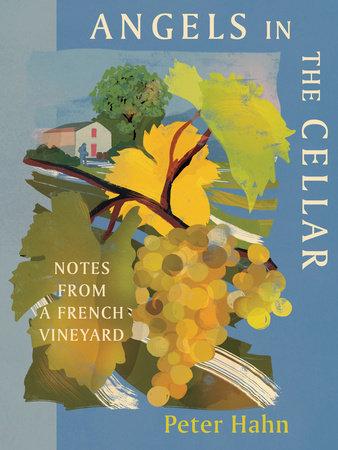
The following is an excerpt from Peter Hahn’s new book Angels in the Cellar: Notes from a French Vineyard (Chelsea Green Publishing September 2026) and is printed with permission from the publisher. It can be ordered here.
It was sometime near the turn of this century when my world collapsed around me. I was in my late 30s, sitting in a black cab on my way to Heathrow Airport, laptop open on my knees, BlackBerry in one hand and mobile phone in the other. It was Thursday afternoon. The sky was an evanescent blue. I had just worked 72 hours without sleep, and was heading home to recover before my next meeting the following morning. The cab drove into a tunnel and the window was transformed into a mirror — I stared at the man reflected but didn’t recognise him. It was only for a second or two, but it was enough to make me feel vaguely sick. My fists were in tight balls, my body rigid. The cabbie was asking me something, the words barely comprehensible: “You aright, mate?” I couldn’t speak. I was far from alright, and would remain that way for some time.
Gradually, the notion of trading PowerPoint slides and Excel spreadsheets for something more elemental became intoxicating. I knew things had to change — and that for me, this change would be quite drastic. It could have meant becoming a baker, carpenter, or candlestick-maker. But my choice was to become a farmer. Or, more precisely, a winegrower.
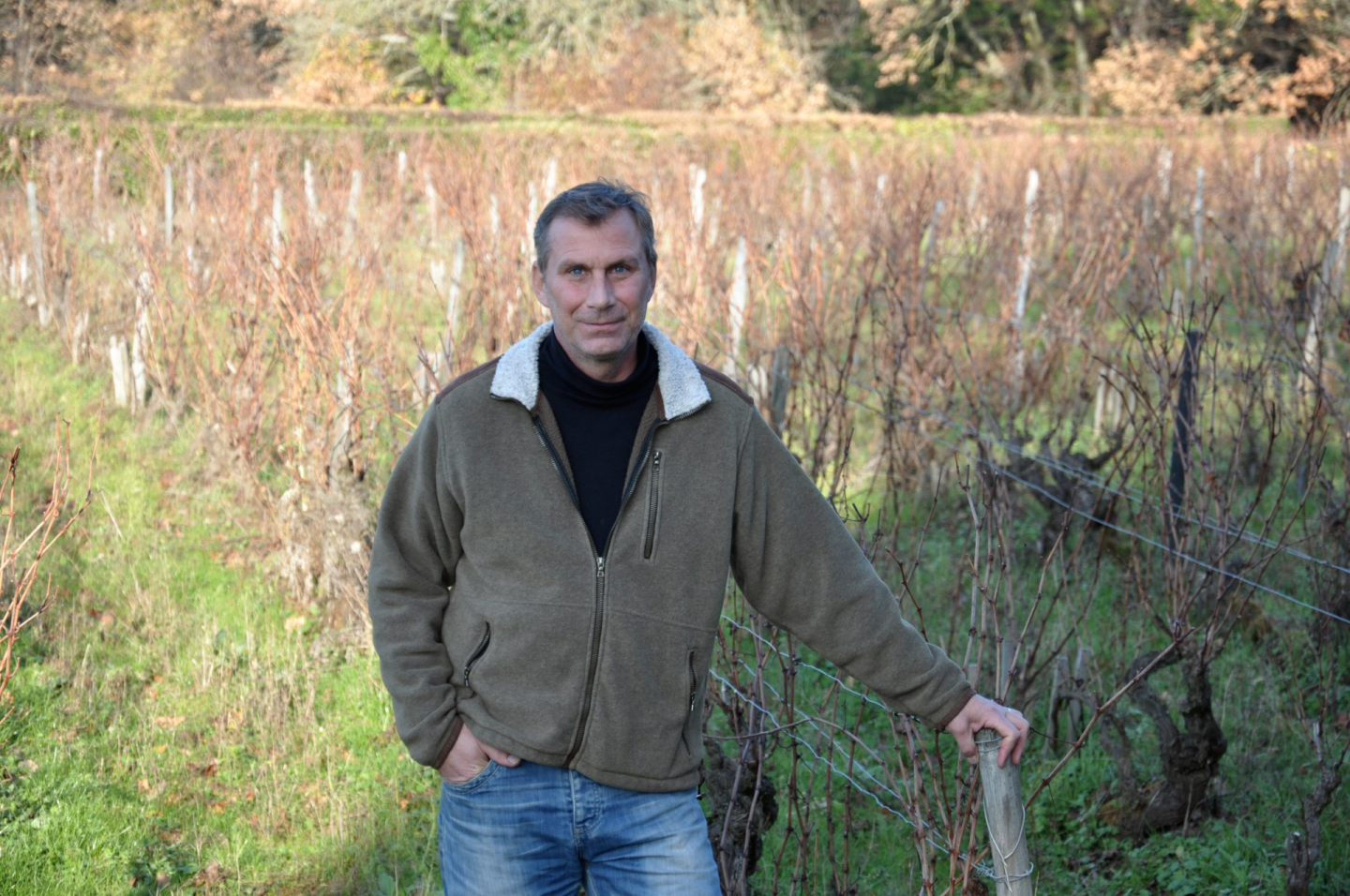
I found Le Clos de la Meslerie — a 400-year-old farmhouse in the Loire Valley, crumbling and untouched for decades, encircled by 10 acres of woodland and Appellation Contrôlée Vouvray vineyard — and when I arrived, it felt like the place had been waiting for me. You and I can work together. I have rarely left since.
That was over 20 years ago. I had previously run around the floor of the Sydney stock exchange, shouting at the top of my lungs, feverishly buying and selling shares. If someone had told me then that I would come to spend my winters pruning vines in the cold Loire air and my evenings in the kitchen, I would have cringed. But those two lives have given me a perspective on something that the business world talks about constantly and almost always gets wrong: the relationship between efficiency and quality.
Today, the vast majority of wine is made with increasingly less regard for the ecology of growing. The objective is to produce wine in the most economically efficient way — wines that taste the same each year, catering to predetermined consumer preferences. The wine industry has largely convinced itself that faster, cheaper, and easier is the path to a better product.
Take oak barrels. Our wine ages for a full year in French oak, where the wood’s precise porosity allows just the right exchange with oxygen — softening the wine, concentrating its aromas and flavours, building complexity no machine can replicate. It is expensive. It takes time. And it is increasingly rare. Most wine today never sees the inside of a barrel. Any oakiness is put there with chips dumped into steel vats and left to soak. The slow exchange with oxygen is imitated with micro-oxygenation technology — essentially, blowing bubbles through the wine. Is it the same? Of course not. Would the average consumer notice the difference? Mostly, no. So does it matter?
For me it does — deeply. Not out of nostalgia or romance, but because of a lesson I learned the hard way: there is no shortcut to making something genuinely worth making. I have great difficulty equating faster, easier, and cheaper with better.
My daughter Célestine asked me one morning whether there were angels in our wine cellar. She had heard me talking about la part des anges — the angels’ share — which refers to the wine that slowly evaporates through the porous wood of the barrels. This vaporous wine, the saying goes, belongs to the angels. Yes, I told her. There are angels in our cellar. They are there to take care of the wine, to measure the passing of time — the deepest secret in the magic of this place.
In my previous life, I was never without a watch. I must have had five or six of them. I’ve kept them, but I never wear them anymore. They sit in a bowl on a chest of drawers in our bedroom. Occasionally, I pick one up and look at it — running a thumb across the smooth face, its hands forever stilled, the flywheel frozen, stuck in some long-gone moment.
The vines are my measure of time now. And in 20 years of making wine this way — slowly, by hand, without shortcuts — I’ve come to understand something that no spreadsheet ever showed me: the things most worth doing are almost never the most efficient. They just look that way, from a distance, when you’re not paying attention.