
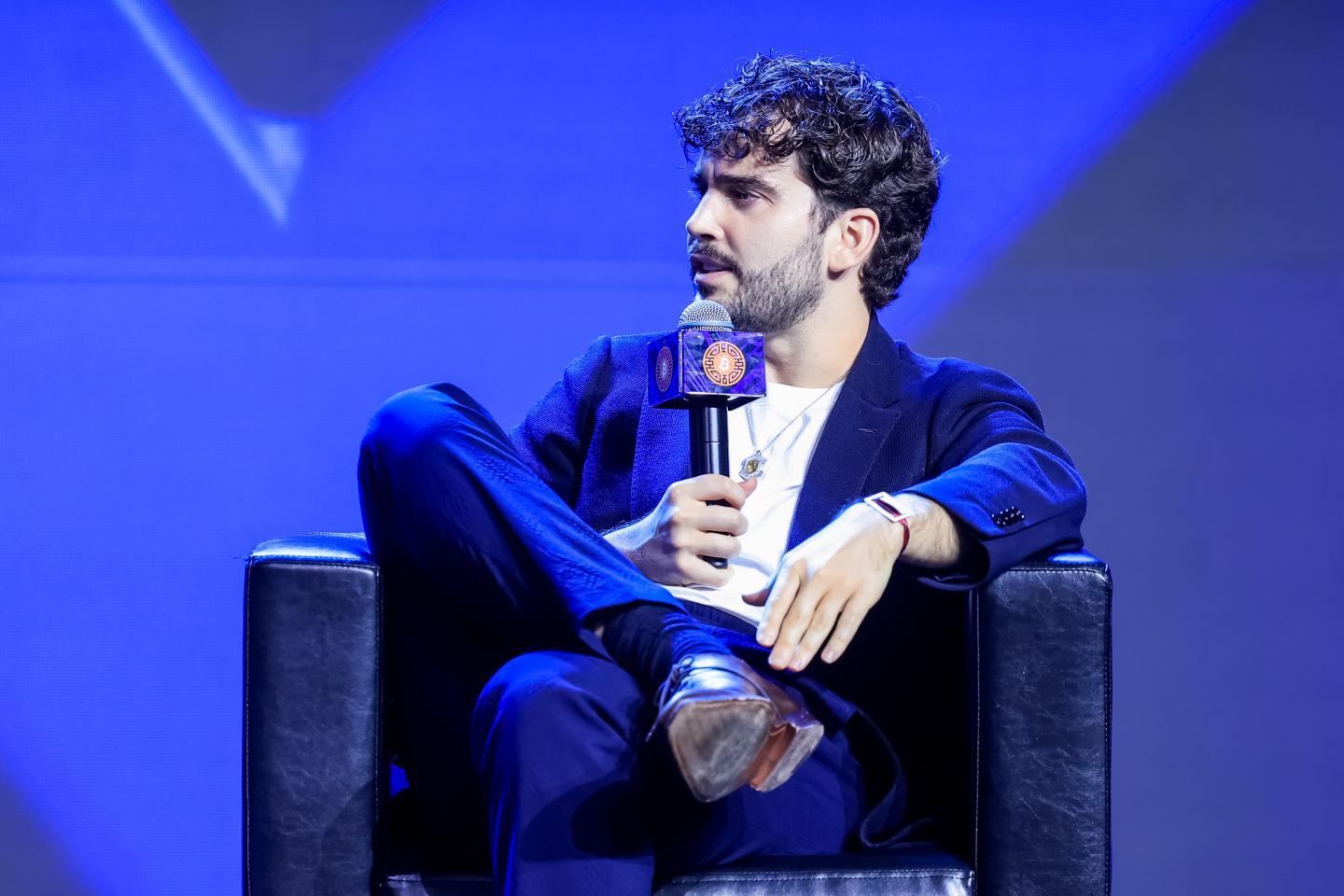
Hi, it’s Amanda Gerut, filling in for Allie. AJ Scaramucci’s collectibles company paid $2 million for a first-appearance Iron Man comic. It also bought a record-setting Pokémon card.
Ask him about them, and the conversation circles back to a problem everyone reading this knows well. It can take a very long time for a startup to go public.
In Scaramucci’s case, he wants to give ordinary investors a shot at a market they’ve been locked out of, which is art, dinosaur bones, trading cards, and other expensive collectibles. He connected that exposure to a problem he sees with early value-creation: It often remains locked away inside venture and growth-equity portfolios rather than public markets, as my colleague, business editor Nick Lichtenberg, learned when he interviewed Scaramucci for his exclusive story yesterday.
Scaramucci’s venture firm, Solari Capital, emerged from stealth on Thursday with $350 million deployed since its founding across early-stage deals, late-stage growth, and companies it incubates in-house. His backers include SV Angel founder Ron Conway, Breyer Capital’s Jim Breyer, Bain Capital co-chairman Stephen Pagliuca, former Alphabet chief executive Eric Schmidt, and entrepreneur and author Peter Diamandis. Scaramucci is the son of SkyBridge Capital founder Anthony Scaramucci.
As Nick reported, Solari Capital’s big idea is what Scaramucci calls “programmable reality.” The argument is that compounding computing power will make biology, intelligence, physical matter, and money engineerable the way software is. His portfolio is a show-and-tell of how programmable reality works: xAI (now inside SpaceX), Suno, Tessera Therapeutics, Varda Space, and Northwood Space.
But the part of Scaramucci’s pitch I kept coming back to in reading through Nick’s notes was the narrower one. Companies used to reach an IPO in about four years, he told Nick, and now it takes 12 to 15.
Data backs him up. University of Florida professor Jay Ritter, known as Mr. IPO, says that the median VC-backed tech company was six to nine years old when it went public for most of the ’90s. (The median dropped to four in 1999 during the dot-com bubble.) In 2024, the median age was 13.5 and last year it was 12.
Fewer companies are going public, to boot. Ritter shows 34 tech listings in 2025 compared to 205 in 1995. The listings are also a lot bigger. Last year’s median VC-backed tech IPO had about $132 million in trailing revenue, compared to about $40 million in 1995, both figures adjusted for inflation. Lots of growth is happening before public investors ever get a shot at buying in.
If you look at Solari’s portfolio with all that in mind, a desire to shorten the wait and unlock the doors gets clearer. Fission Labs tokenizes shares of private companies so they can trade on a secondary market. Architect Financial is a derivatives exchange built for the AI economy. Solari’s flagship incubation, Radial Health, appears on the Nasdaq Private Market as a pre-IPO name.
Anyone in venture right now knows that investors are waiting years longer to get liquidity and their money back. Tokenized private shares and holy grail collectibles are both ways to give more people access to assets the wealthy already own. Although it’s not clear to me how easy it will be to sell and price the assets—or the going rate for dinosaur-bone shares—I’m interested to see what happens with Solari.
See you next time,
Amanda
amanda.gerut@fortune.com
Submit a deal for the Term Sheet newsletter here. Subscribe here.
VENTURE CAPITAL
- Island, a Dallas, Texas-based enterprise security platform for human and AI workflows, raised $400 million in Series F funding. Evolution Equity Partners led the round and was joined by others.
- Precision Neuroscience, a New York City-based brain-computer interface developer, raised $250 million in Series D funding from Pershing Square, the Ackman Oxman Institute, and others.
- IPID, a Singapore-based payment verification company, raised $16 million in Series A funding. Foundation Capital led the round and was joined by Citi and HSBC.
- Solcoa Industries, an Alameda, Calif.-based rare-earth metals producer, raised $45 million in equity funding. Bain Capital Ventures led the round and was joined by Felicis, Gigascale Capital, Long Journey, and Dylan Field.
- HIFI, a New York City-based stablecoin payments and tokenized-assets infrastructure company, raised $37 million in Series A funding. Left Lane Capital led the round.
- PicoJool, a Palo Alto, Calif.-based optical connectivity company for AI infrastructure, raised $27.5 million in Series A funding. Socratic Partners led the round and was joined by Hudson River Trading.
- Ando, a San Francisco-based AI-enabled workplace messaging platform, raised $20 million in funding from Accel, Index Ventures, and Emergence Capital.
- Basalt Health, a Nashville, Tenn.-based AI platform for post-acute care admissions, raised $20 million in Series A funding. NEA led the round and was joined by existing investors Frist Crissey Ventures and 25m Health.
- Trebellar, a San Francisco-based startup AI software company for corporate real estate teams, raised $18 million in Series A funding. Blossom Capital led the round and was joined by AltCapital, Haystack, 1Flourish, and Kfund.
- Axya, a Montréal, Canada-based AI procurement platform for manufacturers, raised $17 million CAD ($12 million USD) in Series A funding. McRock Capital led the round and was joined by Yamaga Motor Ventures and others.
- Mesa Quantum, a Boulder, Colo.-based quantum sensing company, raised $11.8 million in funding. Playground Global led the round.
- Dextr AI, a San Francisco-based AI platform for hotel operations, raised $6.7 million in seed funding. Elevation Capital led the round and was joined by Foundation Capital.
- Scholar Education, a Tampa, Fla.-based AI platform for special education, raised $2 million in seed funding from OneSixOne Ventures and others.
PRIVATE EQUITY
- CloudFirst, a portfolio company of Renovus Capital Partners, acquired the IT and cyber managed practice of Forvis Mazars, a Paris, France and Springfield, Mo.-based public accounting firm. Financial terms were not disclosed.
- Omada, backed by GRO, acquired EmpowerID, a Dublin, Ohio-based identity governance software company. Financial terms were not disclosed.
PEOPLE
- Rev1 Ventures, a Columbus, Ohio-based venture studio, hired Jennifer Hankins CEO and President. Previously, she was with Tulsa Innovation Labs.