
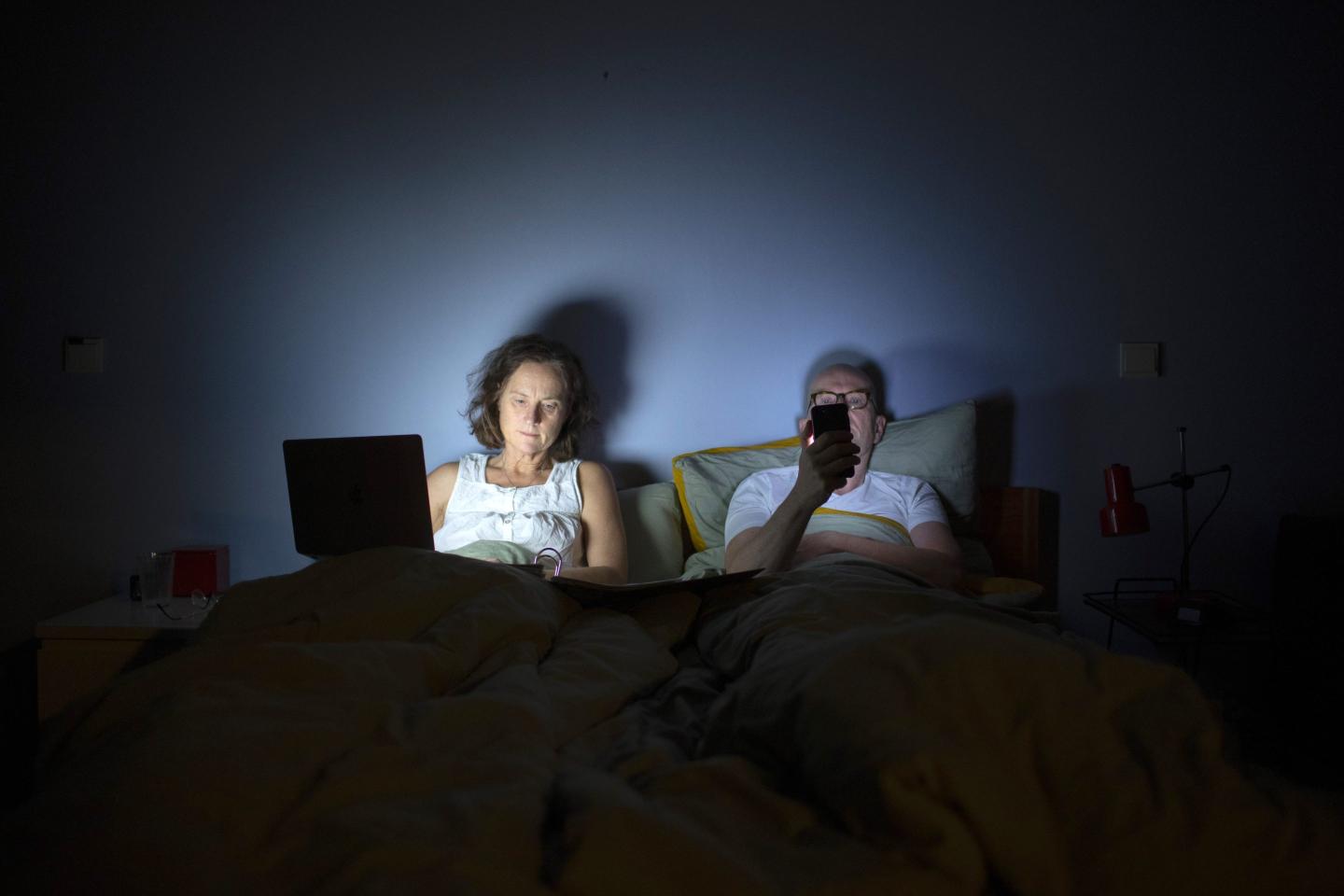
You’ve been there. You’re on the couch, and the kitchen might as well be a mile away. Cooking is out of the question, let alone walking to pick up takeout. So, you order delivery instead because it’s three taps away on your phone.
Welcome to the new modern economy: whatever you want, delivered instantly to your fingertips, all with the least amount of friction.
But getting things when we want it is leading to a dopamine recession. Stanford psychiatrist Anna Lembke, author of Dopamine Nation, found the brain processes pleasure and pain in the same physical location, using what she calls an “opponent-process mechanism”: Every hit of pleasure is automatically followed by an equal, below-baseline crash of discomfort or craving once the high wears off.
Repeat that enough (say by ordering food delivered nightly) and that pleasure-pain balance tips permanently toward the pain side. Researchers call this a “dopamine deficit,” in which a person no longer uses the reward to feel good, but simply to feel normal again. The easier and more instant the reward—delivery apps, infinite scroll, one-tap purchases—the faster and harder that crash comes, and the more of it you need just to break even. An ouroboros, if you will, a cycle that manufactures its own demand.
The behavior is now large enough to show up in the country’s spending data. New Visa Business and Economic Insights research found the share of U.S. domestic spending online and in-app rose from 48% to 58% between 2019 and 2026, with similar jumps in the U.K., the U.A.E., Poland, Brazil, and Australia. Streaming subscriptions now sit on more cards than cinema and concert spending in every market studied. Food delivery adoption in the U.A.E. went from 2% of cards to nearly 30% in less than a decade, driven mostly by everyday spenders rather than high earners.
Visa calls this the “couch economy,” and treats it as an opportunity: Convenience is now the baseline expectation, and businesses that don’t deliver it lose customers to ones that do.
We don’t want to talk to anyone anymore
So what’s driving this phenomenon of wanting to stay secluded at home? It’s gotten so bad Americans are speaking roughly 28% fewer words a day than they did in 2007, a trend the researchers tied directly to the convenience economy.
“Using the self checkout is more efficient because you don’t have to wait in line as much,” Valeria Pfeifer, one of the researchers behind the study, told Fortune. “You don’t have to waste time talking with the cashier. Instead, you just scan your stuff and leave.”
This connects to the broader loneliness epidemic, which estimates show costs the U.S. economy $406 billion a year in lost productivity and health care spending, a condition researchers say carries a mortality risk on par with smoking 15 cigarettes a day. That withdrawal shows up in the physical world too, as America’s third places are running sparse just as regular contact with neighbors among young adults has fallen from 51% to about one in four in just over a decade.
Meanwhile, Americans now spend roughly 93% of their lives indoors, according to physician John La Puma, author of Indoor Epidemic. Part of that is driving brain fog, poor sleep, and chronic disease.
“You’re living like a zoo animal, no horizon, stale air, in a box,” he told the Santa Barbara Independent. “That’s not burnout. It’s captivity biology.”
Maybe it’s your phone, maybe it’s life after COVID
A recent seven-month Aalto University study tracked people’s phone use and found total screen time barely predicted how overloaded or stressed people felt. What did was “session sparseness,” short, repeated check-ins throughout the day rather than one longer stretch.
“Screen time does matter, but the heaviest users aren’t the most overloaded,” said Henrik Lassila, the study’s lead author. “Those who feel most overwhelmed are the ones who return to their phone again and again for brief moments and then put it down shortly after.”
A separate study then looked at Oxford’s 2024 word of the year: “brain rot.” They found it directly predicts burnout, which cascades into stress, anxiety, and eventually depression.
Other research may point to the direct effects of having COVID. Not only have we spoken less to each other and spent more time inside since the pandemic, but those who have contracted COVID and are experiencing long COVID symptoms like brain fog may be suffering from a dopamine hit as well. Researchers recently found measurable, physical loss of dopamine-releasing nerve terminals, up to 20% in some brain regions, in long COVID patients with brain fog and motivation loss.
Whatever’s driving the bedrotting economy, it’s also driving a loss in the very social interactions we’re having. And that’s pretty alarming, especially to people who crave community and someone to talk to.
“We likely have fewer conversations because we have fewer opportunities to have social interactions,” Pfeiffer previously told Fortune. “Or some of those social interactions may not be as long or as intense as they used to be, and therefore we may not feel as connected with others.”