In June, SpaceX’s record-breaking IPO made Elon Musk the world’s first trillionaire. At the same time, a very different economic reality was unfolding for millions of American households.
We are currently living in a tale of two economies.
In the first economy, the top 20% of U.S. households now drive roughly 60% of all consumer spending, buoyed by the wealth effect of rising asset values. In the second economy, the American middle class is experiencing a severe, structural margin collapse.
In July, the household margin crossed back below zero. Wages grew 3.2% over the year, while consumer prices rose 3.4%, leaving households with a negative 0.20-point wage-price spread. Against the pre-war baseline of 1.34 percentage points, that is a 115% margin collapse. Families are no longer operating with a thinner cushion; they are operating with a deficit.
Consumers are increasingly bridging this negative margin with leverage. One of the clearest indicators of this shift is at the grocery store, where Buy Now, Pay Later (BNPL) usage has doubled over the past two years. Consumers are paying for daily necessities in four installments. When households have to finance their groceries, it’s no longer a consumer trend. It’s a structural deficit.
U.S. corporations and policymakers are responding to this divergence in ways that risk reinforcing it: protecting margins at the top while leaving the purchasing power of the middle class increasingly constrained. To see what structural resilience can look like in 2026, American executives should look beyond the conventional playbook. They should look at a Swedish furniture retailer.
The False Playbook: Extracting from a zero-margin base
Faced with a squeezed consumer base, a growing number of U.S. companies are responding by moving away from the middle class and tailoring their offerings to the affluent, passing inflationary pressures on to the end user.
They are doing this while simultaneously utilizing artificial intelligence to protect their own margins. Employers are freezing or cutting hiring, with the steepest declines concentrated in middle- and entry-level roles, effectively constraining household earnings exactly when energy and living costs are surging.
Washington has tried to address this structural crisis with tax relief, but the relief is uneven. The highly anticipated “One Big Beautiful Bill Act” (OBBBA) promised broad-based tax relieffor the middle class. In reality, households in the 95th to 99th income percentiles will receive roughly 1.9 times the tax relief of middle-income households.
Extracting the last dollar from a negative-margin consumer, or relying on tax relief that disproportionately benefits higher-income households, isn’t a long-term economic strategy. By engineering out the middle class, U.S. companies and policymakers are weakening their own demand redundancy. If the stock market corrects and the top 20% pulls back on discretionary spending, a diminished middle class leaves the economy with a weaker floor to fall back on.
The IKEA masterclass: Engineering affordability
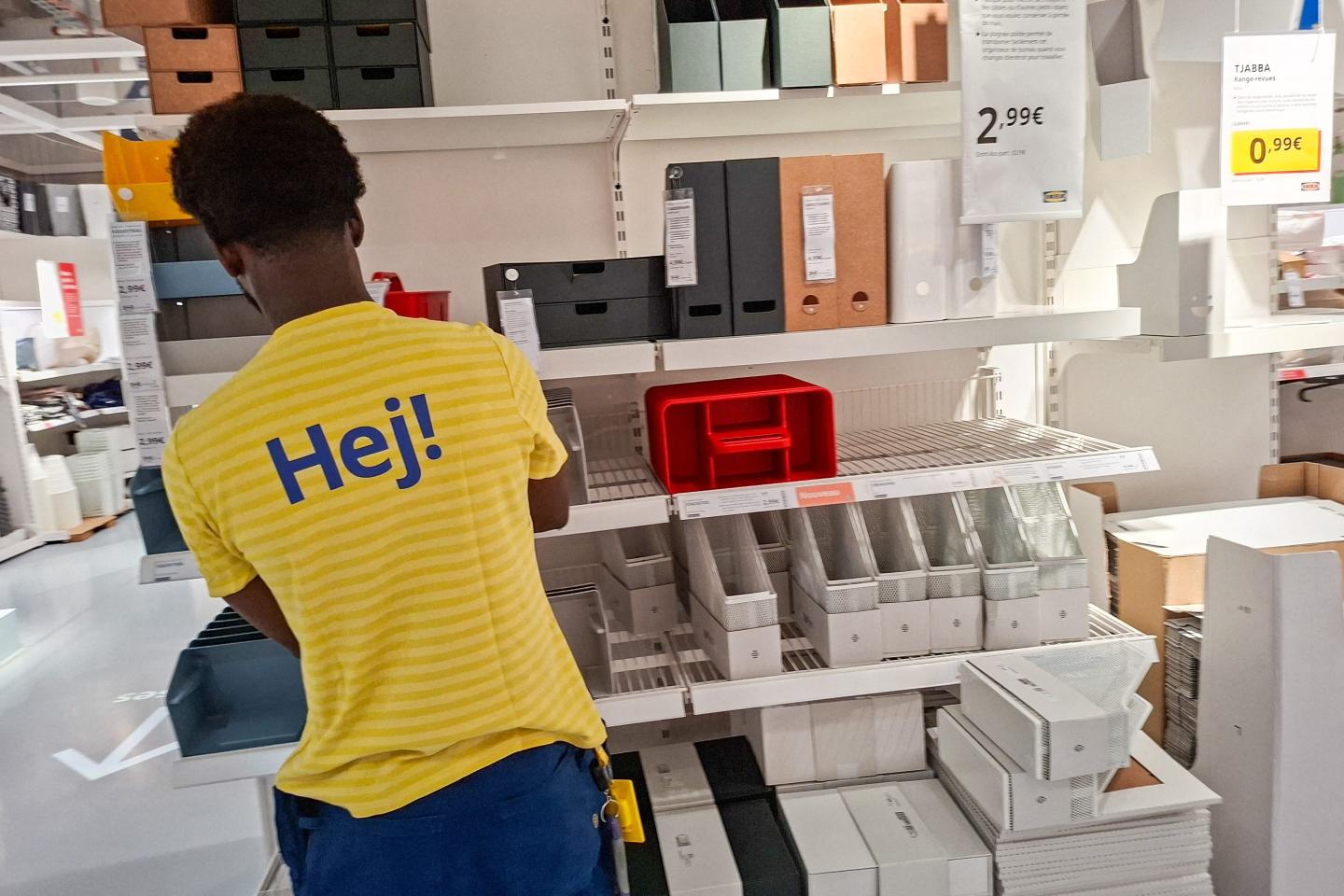
If the U.S. playbook relies on extracting from the few, IKEA offers a masterclass in optimizing for the many.
When asked whether IKEA was pivoting to target the growing cohort of affluent Americans, Juvencio Maeztu, CEO of Ingka Group, pointed to a different measure of success: “I like to say that for us, the big KPI is not top line in revenue… The big KPI is in how many homes we are present.” He added: “We have a say normally that we sell umbrellas in IKEA, and we normally reduce the price of the umbrella when it’s actually raining.”
IKEA is not doing this for charity. They are ruthless, brilliant corporate strategists building an durable moat for the 2026 economy. They achieve this through four structural pillars:
● Deflationary Pricing: While many U.S. companies raised prices, IKEA executed deliberate price cuts to capture volume from tapped-out consumers. As Maeztu explained, they start with the price the masses can afford, and engineer their cost structure backward. In fiscal year 2025, Ingka Group absorbed a 0.9% revenue drop (€41.5 billion), but the strategy worked: store visits grew to 736 million, and operating income actually jumped 16.8% to €1.46 billion.
● Supply Chain Sovereignty: You cannot control prices if you are a passive victim of global logistics. When geopolitical conflict paralyzed shipping through the Strait of Hormuz in early 2026, IKEA was already executing a Re-Americanization strategy. IKEA supplier SBA Home invested $70 million in a highly automated plant in Mocksville, North Carolina, supported in part by Inter IKEA, localizing production of high-volume IKEA items and reducing exposure to maritime chokepoints and tariffs.
● Energy as a Fixed Asset: To insulate their operations from the volatility of fossil fuel markets, Ingka Investments committed €7.5 billion by 2030 to utility-scale renewable energy. They already own 49 wind farms and 26 solar parks. They are reducing their exposure to volatile energy costs and shielding their supply chain from global price shocks.
● Human Capital Reinvestment: As Fortune’s Claire Zillman reported, IKEA used its AI bot Billie to automate routine customer service while retraining 8,500 employees for more complex customer service and interior-design sales roles rather than laying them off. Billie now assists 74% of customers who use the tool. The result: Remote sales centers became IKEA’s fastest-growing channel, generating €1.25 billion ($1.37 billion) in revenue last fiscal year as customer satisfaction rose from 60% to 89%.
Rebuilding the economic moat
IKEA treats its business the way we need to treat the United States economy. Maeztu noted that IKEA’s founder instructed them to “think 200 years out.” Washington, by contrast, rarely operates on that time horizon.
You cannot fund 75-year national liabilities, like Social Security, or a projected $2.1 trillion annual federal deficit, on a barbell economy. A nation cannot pay its debts with a consumer base increasingly reliant on subprime credit. National solvency requires volume.
If we want to build a resilient economic moat, we must build our economic systems around the second economy. And to do that, we have to be honest about who comprises it. The individuals bearing the brunt of this -0.2% margin collapse are disproportionately women and people of color.
When Native American women earn 53 cents for every dollar paid to white, non-Hispanic men, and 510,000 Black women disappear from the labor force in five months, the economy’s floor is weakening (based on my proprietary analysis of Bureau of Labor Statistics data). These are not only demographic statistics; they represent a structural misallocation of human capital.
Achieving an equitable labor market isn’t a social initiative; it is an economic stabilization tool. Closing these gaps would add an estimated $3.1 trillion to the U.S. economy.
Let’s look at the math. Closing the pay gap alone expands the payroll tax base enough to cover one-third of the Social Security funding shortfall. Scaling that to close the broader equity gap generates enough economic growth to cover the annual interest on our national debt.
True economic success in 2026 isn’t about extracting the last dollar from a negative-margin middle class. It is about strategic affordability and structural investment. IKEA proves that optimizing for the many is one of the strongest hedges against instability. You don’t survive the future by pricing out the middle class. You survive it by designing systems that keep the umbrellas affordable when it rains.
The opinions expressed in Fortune.com commentary pieces are solely the views of their authors and do not necessarily reflect the opinions and beliefs of Fortune.