
A question has gripped economists studying inequality since at least 2011, when Occupy Wall Street split the country into the 1% and the 99%: who is actually wealthy in the U.S, and how did they get that way?
In 2014, Eric Zwick, Owen Zidar and Danny Yagan set out to find an answer. They weren’t the tenure-track economics faculty they are today (at the University of Chicago, Princeton University and UC-Berkeley, respectively) and all they had was a hunch and a key to the Treasury Department. Planet Money reported that they called themselves the “tax ninjas,” but they were essentially glorified interns: Zwick was living in his sister’s attic in Washington D.C. and going to work in the Treasury Department’s basement, where the ninjas attacked a trove of individual tax records that most academics never get to see.
The problem for economists had always been that the Internal Revenue Service kept individual tax returns and business filings in separate systems that had never been linked—there was no way to connect a company’s profits to the specific person who owned it and collected them. Zwick and Zidar spent months essentially making the two databases talk to each other. When they finished, Zwick told Fortune, he was stunned.
When they made a table of total profits from pass-through firms for people in the top 1%, doctors were near the top, and so were auto dealers. “I’m like, this is not Jeff Bezos. This is not Stephen Schwarzman.” The American Dream still exists, in other words, but it isn’t the Wall Street billionaires or tech overlords who are mostly realizing it. It’s the everywhere millionaires all around you that you don’t even think about.
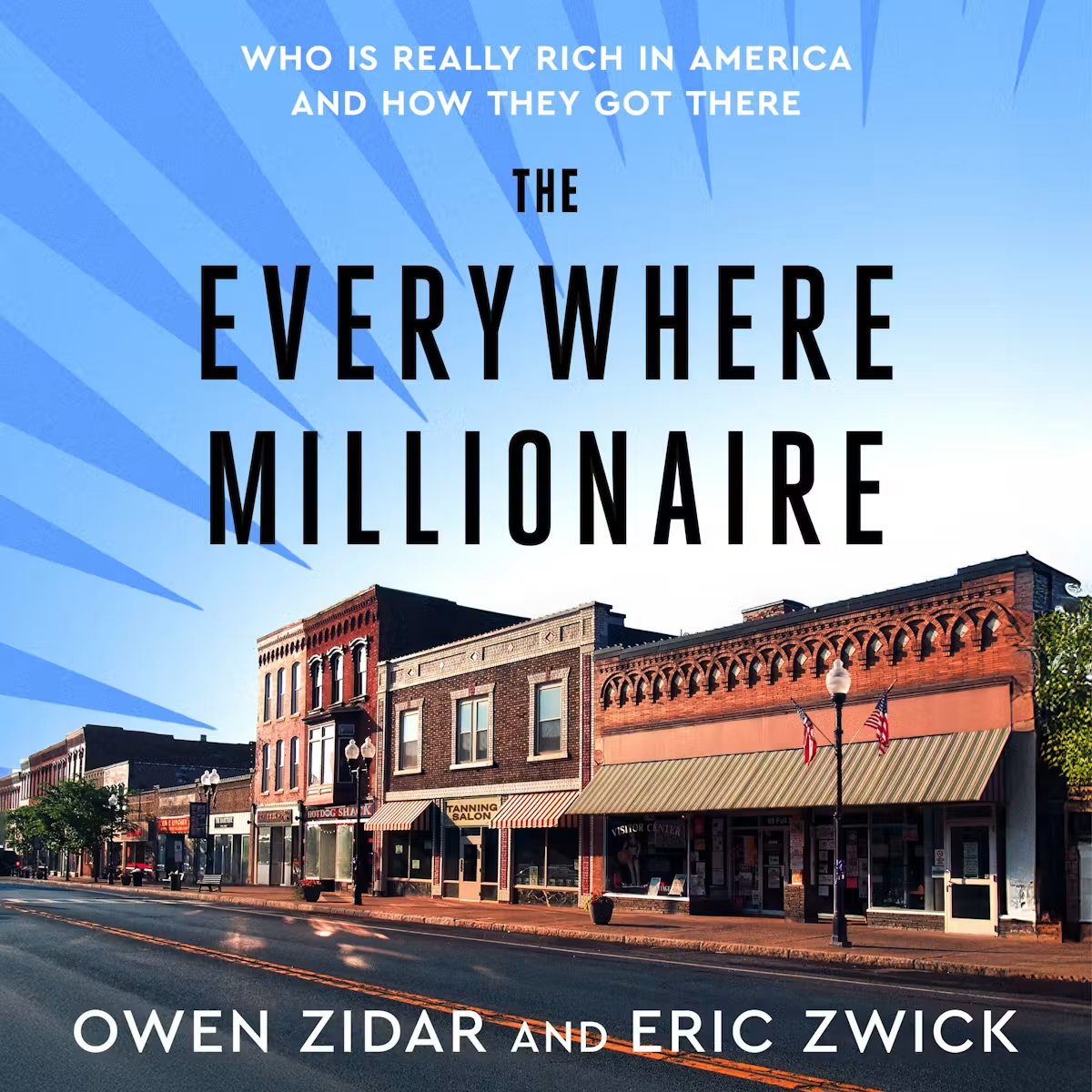
Hence the title of Zwick and Zidar’s new book, The Everywhere Millionaire: Who is Really Rich in America and How They Got There. When I asked Zwick if he ever saw the classic high-school sports show Friday Night Lights, his eyes lit up as he named the local auto dealer who bankrolled the local Texas football team: “It’s the Buddy Garrity millionaire! It’s like, meet the real Buddy Garrity.” The book defines this class of millionaire as someone with at least $5 million in net worth who owns a single closely held operating business that generates most of their income. Their research found roughly 3 million of these in the U.S., concentrated not in Manhattan or Palo Alto but in mid-sized metros that rarely generate pitchforks in the press. They collectively hold 13 times the wealth of the entire Forbes 400, Zwick estimates. Put another way: for every member of the Forbes list, there are more than 4,000 private business owners who each have a net worth of at least $10 million.
The book’s favorite example is Dick Portillo, the Chicago food kingpin who opened a hot dog stand in 1963 having never cooked one before—and built the Midwest’s largest privately owned restaurant company by 2014—plus a 130-foot yacht he named Top Dog. Then there’s Karen Bentlage, who dropped out of Central Connecticut State University and built the nation’s second-largest tanning-bed distributor before reinvesting the proceeds into a regional waxing-salon franchise. The everywhere millionaires include a lot of dentists and beverage distributors, too, collecting profits through partnership structures that don’t appear in any billionaire index and rarely get a mention in political campaigns or cable television.
One of the book’s more unsettling arguments is that the everywhere millionaire essentially runs American politics: pass-through business owners make up roughly a quarter of federal elected officials and about 40% of state legislators, compared with 2% to 3% of the general population, Zwick estimates. The implication is that the American system of inequality works the way it does because the everywhere millionaires who dominate Congress are keeping the system that made them wealthy exactly the way it is.
It’s a bipartisan issue, Zwick adds, noting “a bit more evidence [that] maybe the Republican elected officials are a bit more likely to come from this class than the Democrats. [But] there are a lot of Democrats, too.” He pointed to a provision from the most recent tax bill, which let clean-energy vehicle credits lapse while making a 2017 pass-through deduction permanent: “That benefits the auto dealers, many of whom are on the tax-writing committee of Congress.” He argued that Americans and the media are usually having the wrong conversation about wealth. “Where the power comes to make policy happen—it’s much more diffuse, and I think we’re not quite focused on it in the right way as a society.”
Zwick said he sees similarities between his and Zidar’s research and historian Patrick Wyman’s theory of the “American Gentry,” the “salt-of-the-earth millionaires” that far outnumber the coastal elites typically thought of as America’s true aristocracy. Zwick said Wyman is more polemical in connecting these elites to the rise of Donald Trump, but the idea is certainly “very resonant” and he and Zidar essentially have the receipts.
When asked what made this cultural change possible, Zwick and Zidar point to a very clear turning point, decades in the past, long before the rise of Donald Trump.
Unintended consequences
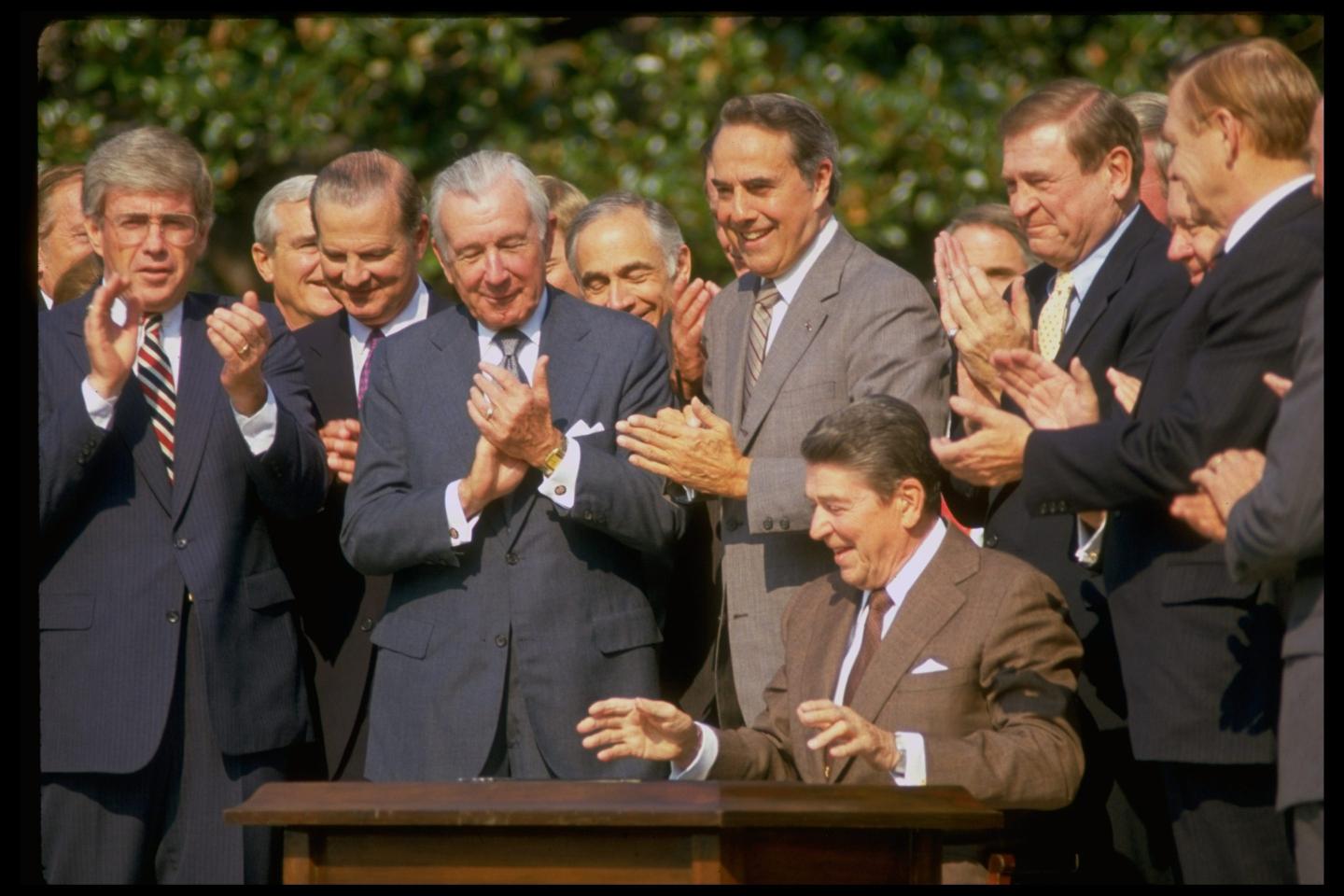
During Ronald Reagan’s acting career, he limited how many films he’d make in a given year—earn too much, and the top individual tax bracket meant that he’d keep as little as 9 cents of every additional dollar. That experience shaped the tax-cutting instinct he carried into the White House in 1981, when the top individual rate stood at 70% and the corporate rate at 46%.
Reagan found an unlikely ally in Bill Bradley, the former New York Knicks star turned Democratic senator from New Jersey, who was partnering with House Rep. Dick Gephardt to simplify the code by stripping out the loopholes and write-offs that mostly benefited the wealthy. Reagan and supply-side Republicans like former Buffalo Bills star Jack Kemp wanted lower rates across the board. The compromise was the Tax Reform Act of 1986, the biggest overhaul of the federal tax code in over three decades and, at the time, a rare bipartisan triumph. But it didn’t just cut the top individual rate down to 28% and the corporate rate to 34%—it also sweetened the tax treatment of partnerships, S-corporations and sole proprietorships, whose profits would pass directly to an owner’s individual return instead of being taxed twice, once at the corporate level and again as dividends. A new American Dream was being born.
Before 1986, C-corporations produced almost all business income in the U.S., but today, Zwick and Zidar found 95% of American businesses are pass-throughs. They employ half the country’s workers and generate the majority of business income. Almost by accident, the 1986 reform moved America’s business wealth onto the individual tax returns of the people who owned it. “Tax reform created the idea linking business owners to their businesses,” Zwick and Zidar write in the book, “bringing the stealthy wealthy into view for the first time.” It just took another 26 years, and two grad students in a Treasury department, for anyone to find it.
When asked about Gen Z’s turn toward crypto, prediction markets and retail trading—what’s sometimes called “financial nihilism”—Zwick agreed that one takeaway from his book is certainly that the traditional path to success in America is obsolete. “Get a salary, a job and just work your way up within a company—[that] is not the path,” he said. But the operators in his data didn’t get rich by rolling the dice, he points out. There’s a “move slow and make things” strategy visible in stories like Portillo’s, who ran a hot dog stand himself for decades, long before it became an empire. The real key is owning the business and working so much that work-life balance essentially doesn’t exist. “He, like, never stopped making hot dogs.”
Paul Osterman, professor emeritus at MIT Sloan, has a book out that is something like the flipside of the everywhere millionaire thesis. Disposable Workers: The Transformation of Employment, the latest in Osterman’s long-running career examining the labor market, draws on a survey of more than 6,000 American adults and nearly 100 interviews with workers, employers and staffing agency professionals. A stunning 35% of the U.S. workforce, he found, falls into the category of what he calls “disposable” work—freelancers, contractors, gig workers and a category he calls “marginal workers”: W-2 employees hired with the implicit understanding that they won’t be around for long.
Osterman traces this back to the Reagan era, but not specifically to the 1986 tax reform. Reagan’s famous 1981 firing of striking air traffic controllers was a sign of “open season on post-World War II employment systems,” he told Fortune. For whatever reason, he said, employers “do not invest in the great bulk of their workforce” in the way that they used to.
When presented with Osterman’s findings, Zwick called them “very interesting” and agreed that the post-1986 tax code leaves employers with a much higher burden for salaried/wage-rate workers than other types of employees, which has “caused activity to leak out of the salaried worker bucket.” It discourages W-2 employment, he said, since contractors can structure their work for lowered tax rates and avoid the payroll tax by building their own pass-through entities.
Katlin Smith and Bakari Akil both found themselves on the outside looking in, at earlier points in their careers, when they decided to become everywhere millionaires.
Owning as the new American Dream
Neither Akil nor Smith fits Zwick’s definition to a T—he owns a small portfolio, she has already sold hers. But both got rich the way his data says most do now: by owning something outright, not by being paid to run someone else’s thing.
Smith didn’t set out to get rich, but rather, to fix a problem she had herself. In 2012, while working as a management consultant at Deloitte and essentially living out of her suitcase, she went looking for a snack that wasn’t unhealthy. A friend suggested that she clean up her diet, and she flashed back to her biology and business double major. She said she has a “scientist’s brain,” so she thought, “‘”Oh cool, an experiment, let’s give it a try.”
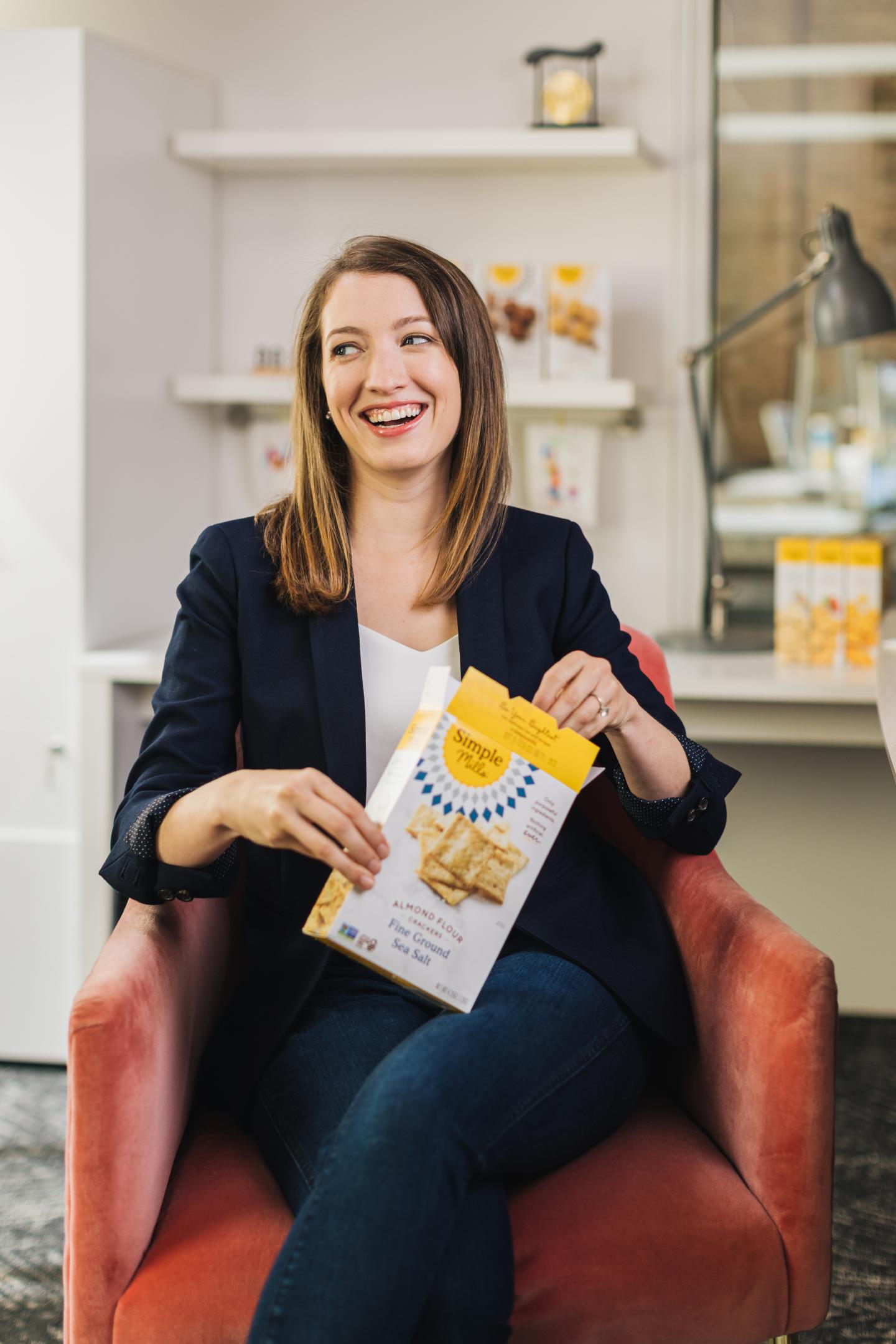
Her experiment became Simple Mills, the snack brand that she built from nothing, bringing almond-flour crackers to a market near you. Like Portillo, who ended up selling to a private equity firm, Smith brought in a sponsor, Vestar Capital Partners, to scale the business and later exited to Flowers Foods for $795 million in January 2025.
Smith told Fortune that she’s still involved with Simple Mills in a founder-and-advisory role, and her status has enabled her to push for personal passions, like a “non-UPF” verification for Simple Mills’ products, developed with the Non-GMO Project to flag how heavily processed a food actually is, not just what’s in it. Bringing more non-ultra-processed foods to market is “near and dear to my heart,” she said, even though she doesn’t want to make herself the face of any kind of movement. “I honestly really don’t love being a public example,” she said, adding that she would like to dedicate more time to philanthropy.
Akil left Morehouse College in 2011 without finishing his degree and spent roughly two years afterward homeless, as he previously told the Wall Street Journal. He still remembers sleeping some nights in La Guardia Airport, where they’d let him stay on a bench if he was discreet and appeared to be waiting for a flight. At 25, he got a job at the startup Justworks and realized he wanted to be on the other side of the glass. “How did this happen to me?” he told Fortune about his state of mind at the time. “How do you get rich?”
He said he always assumed that being smart and hardworking was supposed to be enough on its own, and when it wasn’t, he spent close to a year reading everything he could about wealth-building. “The entire society was set up to help business owners be successful and employees to live a good life,” he said, adding that people who don’t own anything are “going to stay middle class and [that life] will be very precarious.”
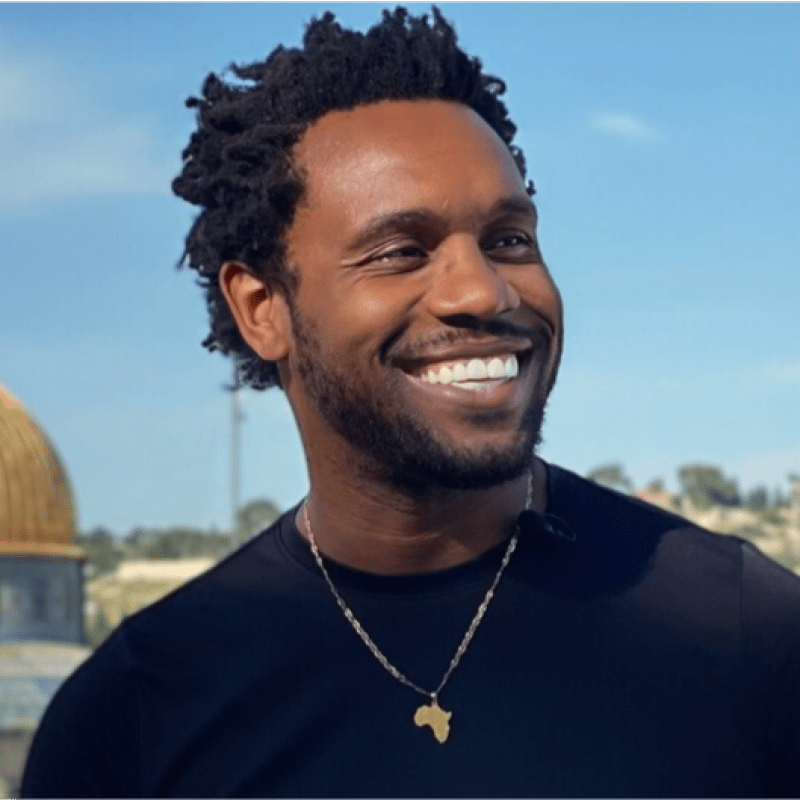
Akil said he kept seeing the letters “LBO” (for leveraged buyout) and kept digging, eventually finding a Harvard Business School paper on “early-career” acquisitions. When he learned Columbia was about to teach it, he dropped everything to get into that class. “That’s how I learned to buy a company,” he said. He sensed a major wave developing as baby boomer everywhere millionaires started retiring. “It’s almost like an American imperative for people to look at these businesses,” he said. If the next generation chases startups instead of buying what boomers have left behind, “that’s an existential threat to the middle class.”
Other entrepreneurs are building a business off the act of businesses’ being sold. Chat Joglekar, a former Zillow employee, co-founded Baton, a marketplace for listing and buying small businesses. McKinsey estimates that 6 million small businesses, worth roughly $5 trillion, will need to change hands over the next decade as Baby Boomer owners age out, and fewer than one in three has a documented exit plan. “The whole adage in this market is that supply doesn’t realize their supply,” Joglekar told Fortune in a recent interview. Baton has published free valuations for 2 million U.S. companies and found that fewer than one in 10 owners can name their own company’s value within 10% of its market value. “It’s almost like you’re arming the rebels,” he said of his realization that knowledge is power.
For his part, Zwick insists the book is not a polemic, and he resists the fatalism embedded in many accounts of American wealth and inequality. “I feel like saying the American Dream is not dead,” he said, “even if it’s less healthy than maybe it once was.”