
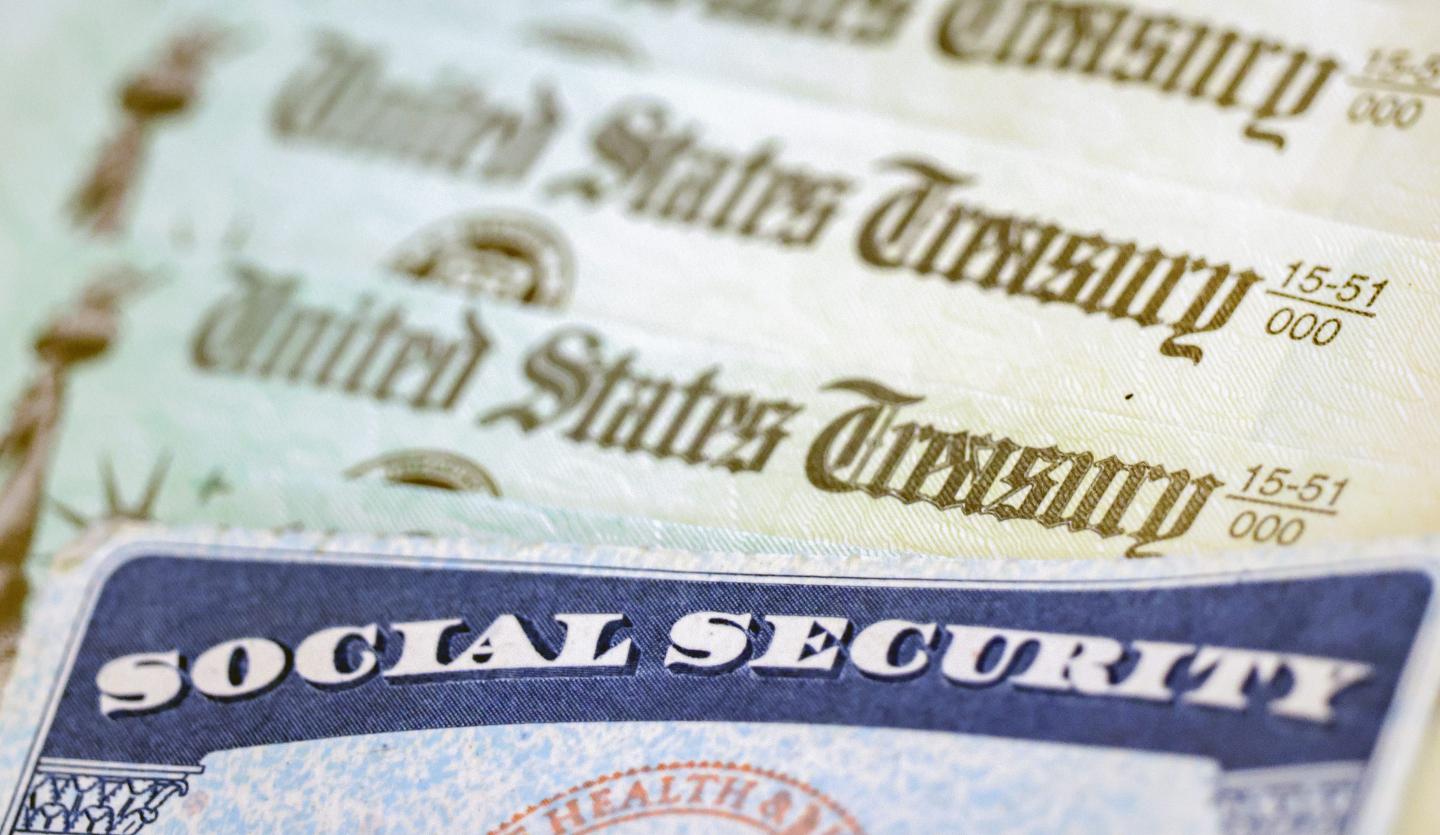
Congress has put off making tough choices on Social Security for years, but the bill is coming due soon, and it’s looking like taxpayers will pick up the tab.
That’s because a small but growing group of lawmakers has signaled openness to shoring up Social Security’s finances by raising more revenue via taxes. The group includes some Republicans, who have traditionally viewed tax hikes as anathema.
For decades, Social Security was viewed as the “third rail” in American politics, with any suggestion of tax hikes or benefit cuts producing swift blowback.
But as retirees face the prospect of much smaller checks, the political calculation may be changing. Projections earlier this year showed that the Social Security trust fund will run out of money sooner than previously thought, meaning benefits would face a 22% cut by 2032 unless adjustments are enacted.
Revenue from payroll taxes has been insufficient to fund current benefits, and the trust fund covers the gap. But once it runs out, Social Security will only be able to distribute what comes in.
For now, workers and employers each pay a 6.2% tax on wages of up to $184,500 a year. Any additional wages beyond that cap aren’t subject to the tax, meaning the wealthy pay a relatively small share of their income to support Social Security compared to lower-income workers.
“We’ve got too many people who say, ‘Well, we have to stay within the current income level or stay at the current tax rate,’” Rep. Tom Cole, R-Okla., told the Washington Post earlier this month. “I’m willing to look at the tax rate. I am willing to raise the amount of income through tax.”
The influential chairman of the House Appropriations Committee suggested the mathematics of Social Security are overshadowing the politics.
“And believe me, you’ll have a lot bigger problem if it goes bankrupt than you’ll have keeping it whole, because people will feel cheated,” he added.
Rep. Lloyd K. Smucker, R-Penn., indicated this month that raising the income cap could be part of the solution to the trust fund’s insolvency.
Like Cole’s, his voice also carries extra weight as he is a top candidate to be the leading Republican on the House Budget Committee in the next Congress.
“You’ll probably have to do something on the payroll half of the money being paid into the system,” Smucker told reporters, according to Roll Call.
He added that lawmakers can’t allow benefit cuts to happen in six years, “and the only way you address that is to start being serious and realistic about the math problem and the demographics.”
Another Republican, Sen. Bernie Moreno of Ohio, touted a plan to raise more revenue via payroll taxes in a New York Times op-ed he wrote with Massachusetts Democrat Sen. Elizabeth Warren in June.
The senators pointed out that the vast majority of Americans make less than the $184,500 cap, meaning Social Security taxes apply to 100% of their income while top earners only pay on a fraction of theirs.
“Why should a middle-class nurse pay a larger share of her paycheck than a wealthy corporate lawyer?” they wrote. “This is doubly unfair in an economy in which top earners’ wages, over time, have pulled far ahead of those of the average worker.”
Moreno and Warren proposed removing the tax cap, citing a report from the Peter G. Peterson Foundation that estimated such a change would generate about $3 trillion for the program over 10 years.
Josh Turek, a Democratic candidate for Iowa’s U.S. Senate seat, has also called for the elimination of the tax cap, saying the wealthy “pay Social Security tax for the first few minutes of the year, but we have teachers… that are paying year-round.”
Removing the cap would raise enough revenue to cover more than half of Social Security’s funding gap, but not all of it, according to the Committee for a Responsible Federal Budget.
So either more revenue is needed or benefits needs to take some form of a haircut—and no one on Capitol Hill is talking about cuts.
Sen. Sheldon Whitehouse, D-R.I., and Rep. Brendan Boyle, D-Pa., have offered a plan to raise more revenue as well. Rather than eliminate the cap, however, it would lift the payroll tax income threshold to $400,000 and also subject investment earnings to the levy.
Another proposal by Sens. Bill Cassidy, R-La., and Tim Kaine, D-Va., would maintain current benefits and continue avoiding any pain for recipients or taxpayers by instead relying on the stock market—along with a mountain of fresh debt.
Their idea is for the federal government to borrow $1.5 trillion for an investment fund that would be loaded with stocks and other risk assets, which would accumulate gains for 75 years and offer better returns than Treasury bonds would.
At the same time, the Cassidy-Kaine plan would require another $25.1 trillion in borrowing to cover the gap between Social Security’s revenue and benefits during those 75 years. Returns from the investment fund would then pay down the $26.6 trillion in new total borrowing.
But Boston College’s Center for Retirement Research ran some simulations recently and found that the senators’ plan is unlikely to work. While the historical average of stock returns could deliver more than enough revenue—assuming they continue that way over the next several decades—the market doesn’t go in a straight line.
“After incorporating the volatility in equity returns, however, the results show that the gamble does not always pay off,” authors Anqi Chen, Alicia Munnell, Jean-Pierre Aubry wrote in a report.