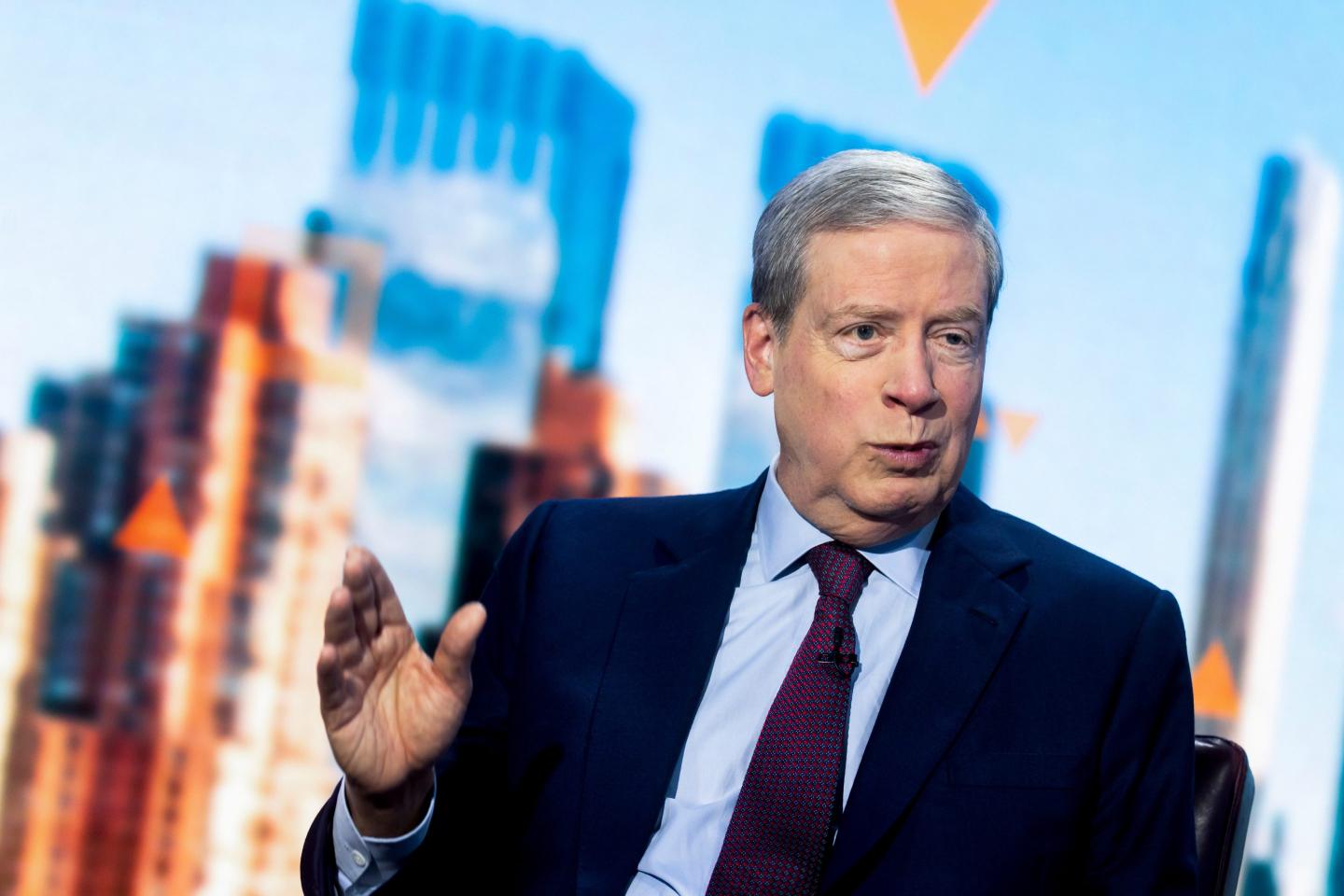
Weeks ago, hedge fund investor Stanley Druckenmiller wrote an op-ed in The Wall Street Journal criticizing Treasury Secretary Scott Bessent’s decision to increase government purchases of long-term Treasury bonds in an effort to bring down yields. The op-ed sparked controversy, not so much for the fact that Druckenmiller was publicly rebuking his former protege, but because it appeared to have been drafted with the help of AI.
Readers who put the piece through the AI-detection tool Pangram had their suspicions confirmed. Backlash ensued, with critics calling the piece “Claudeslop,” questioning if Druckenmiller had written any of it, and debating whether the opinion editors at The Wall Street Journal had a duty to prevent AI-written work from being published on their platform. But while some critics might have been expecting a retraction or an apology, Druckenmiller and The Wall Street Journal defended their use of AI. Druckenmiller responded that he wasn’t embarrassed about having used AI, and the editor of the Journal’s opinion section stood by him, stating that while the writing might not have been his own, the ideas in the op-ed were.
It’s true that public figures have always had speechwriters, editors, researchers, and ghostwriters to help bring their ideas to life. Why should AI be any different? Did you really think that a billionaire financier was writing an op-ed without some sort of help? But acknowledging this reality also requires us to confront the uneven standard that society imposes on AI use: a financier using it to write an op-ed is acceptable, but for most other people, and most other uses, AI use can be an embarrassing scandal.
Over the past several months, a number of writers have faced intense public scrutiny for their use of AI. After a book review by Alex Preston in the New York Times was found to have striking similarities to another review of the same book, Preston admitted that these sections were added by an AI tool, prompting the addition of editor’s note clarifying that this was a violation of the Times’ standards. Steven Rosenbaum, the author of a nonfiction book about AI, was found to have included fabricated quotes from real people, an embarrassing error that were again attributed to the author’s use of AI. The popular Youtuber and science communicator Hank Green faced backlash from his fans after using what appeared to be a stock AI phrase in a video and later admitting to being dependent on ChatGPT to produce scripts for his videos. These are just a few of the many instances where an embarrassing slip or error have revealed what was previously undisclosed AI use.
But allegations of AI use have dented the careers and reputations of even those who haven’t made obvious errors or admitted to using it. Novelists Mia Ballard and Jerry Falade both saw lucrative book deals go up in smoke after being accused of using AI to write their manuscripts. The literary magazine Granta made the decision to stop publishing winners of the Commonwealth Short Story Prize after its most recent winner was roundly criticized for suspected AI use. In nearly all these instances, accusations of undisclosed AI use have been backed up by AI detection tools like Pangram, which scores a piece of text on the extent to which it was machine or human-generated. What’s notable is that such accusations have not sunk every author. Science fiction romance writer H.M. Wolfe self-published a best-selling novel, then had it picked up by Simon & Schuster in a seven-figure deal, only to face accusations of AI use shortly thereafter, with Pangram audits as evidence. Nevertheless, the author’s firm denials, devoted fanbase, and a general skepticism about the reliability of AI-detection tools have saved Wolfe from facing the fate of her peers.
Of course, a hedge fund investor like Druckenmiller has no fans to please, only clients and readers who care more about his financial views than whether he has chosen every word to express those views himself, and the opinion pages of the Journal seem to have concluded the same. The use of AI in writing seems far less taboo in contexts like business and technology. The journalist Taylor Lorenz ran recent posts from some of the top Substack newsletters through Pangram, and found technology to be the category with the highest share of AI-generated writing, reflecting, perhaps, a willingness of those readers to engage with AI-generated writing.
These wildly inconsistent standards for who is allowed to use AI in the public eye and how they disclose its use, reflect the wide range of views about AI among audiences and the public in general. When Anthropic announced in early August that Claude would embed an invisible watermark in generated text, reactions among observers were split: some lauded the feature as a step towards transparency, while others protested, arguing that it would unfairly cast suspicion on the work of those who use Claude for what they deem as legitimate uses like editing and proofreading, rather than using it to generate text outright.
We can’t put the genie back in the bottle, so we must learn to live with this new tool both ethically in a way that’s applied to everyone equally.
As I see it, radical AI transparency is the only way that happens. Instead of playing “AI Detective” every time something is published and selectively punishing those who are caught in the act, we need a new standard of disclosure. Every op-ed, reported feature, novel manuscript, college essay, etc. should come with a bibliography that includes citations to books, studies and articles, and how AI participated in the article’s creation.
Content ought to succeed based on how much people choose to engage with it, with full awareness of whether and the manner in which AI tools were used in its creation. Every publisher should publicly state their position on AI usage and let the free market decide whether or not they want to read their news.
This new kind of bibliography is what I call “proof of sweat.” It lets readers know the degree to which a piece of work is the result of human effort. It answers the questions of where the ideas came from, what exactly AI was used for, and what thinking did the human actually do? Creators are reluctant to disclose the use of AI because they’re worried that their audiences will reject them for it. But rather than fearing backlash and cultivating an atmosphere of suspicion and uncertainty through obfuscation, creators and publishers have a chance to instill trust and goodwill among audiences by being as transparent as possible about if and how AI was used, while taking responsibility for that use.
Some platforms have already taken steps in this direction. Steam, the largest platform for PC video games, requires an AI disclosure from developers that list games on its platform. Their requirements go into specifics, making distinctions between “Pre-Generated” and “Live-Generated” AI content, requiring clarifications on guardrails, and also allowing the players to report illegal content when games have Live-Generated AI. These disclosures are flawed, and allow publishers to hide behind vague statements, but they reflect a real desire among audiences to know, and are a step in the right direction.
For as long as real ethical questions remain about the manner in which AI companies use resources, train models on copyrighted work, or warp the contours of our society and economy, there will always be a section of the public that shuns the use of AI in any form. But here too, transparency, rather than refusal, is a way to demand more accountability from all players in the sector. AI detectors are a tool, but they’re no replacement for proper AI disclosure that applies equally whether you’re a billionaire writing an op-ed or a graduate student writing a research paper. Rather than wasting our time playing AI detective in a never-ending game of “gotcha,” it’s time we take a cue from Stan Druckenmiller and fess up. Hopefully next time he’ll make that disclosure before publication.
The opinions expressed in Fortune.com commentary pieces are solely the views of their authors and do not necessarily reflect the opinions and beliefs of Fortune.