
After the legendary actor Tim Curry passed away last week, people flocked to social media to share one of his most internet-famous performances, from the 2008 video game Red Alert 3:
Curry, dressed in a Soviet premier’s uniform, sits behind a desk. Glaring at the screen, he proclaims, “I’m escaping to the one place that hasn’t been corrupted by capitalism!” Curry’s face then contorts with suppressed laughter as he proclaims: “Space!”
Space had not yet been fully “corrupted by capitalism” then—even though Fortune’s archives are filled with stories of commercial businesses exploring money-making ventures in space, or contracting with governments to launch satellites.
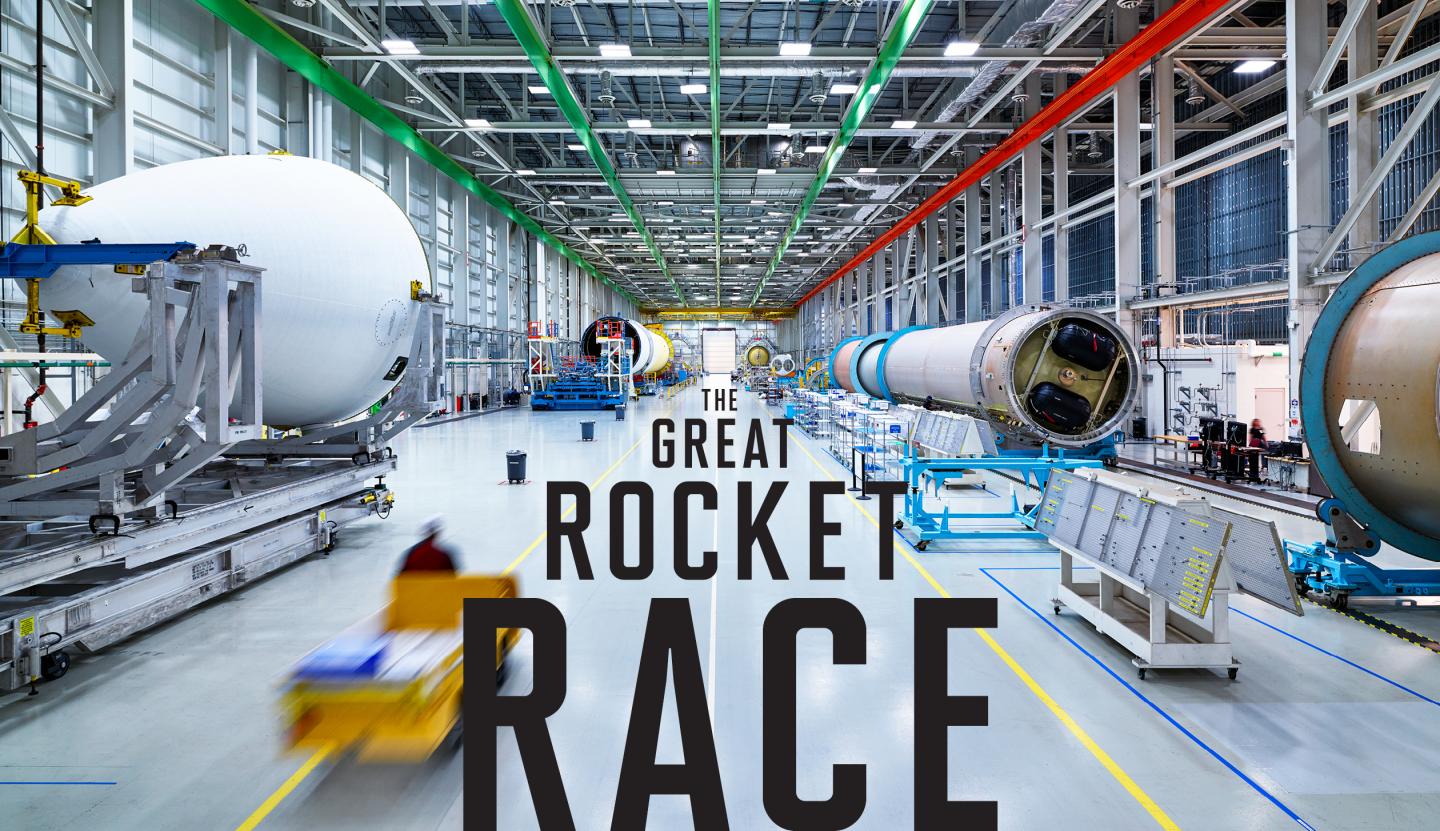
In 2016, Fortune explored the “great rocket race,” diving into the competition between two legacy companies–Boeing and Lockheed Martin–and a scrappy upstart, SpaceX. Fortune’s Clay Dillow profiled United Launch Alliance, a Boeing-Lockheed joint venture and its then-CEO, Tory Bruno, after the company had lost the government monopoly on the satellite-launch business.
“It would be hard to overstate how deeply Boeing, Lockheed, and ULA have been tied to the U.S. space and missile programs,” Dillow wrote, noting that over the decades, more and more responsibility had been handed over to private companies.
Bruno, recently hired as ULA’s CEO, was trying to cut costs and wean the company off of Russian-made engines, while figuring out how to hold off rising competition from Elon Musk’s SpaceX and Jeff Bezos’s Blue Origin. When asked by Fortune to respond to one interpretation of ULA’s story–that it was a government contractor that got lazy—Bruno cited a favorite historical subject of his, the Knights Templar, as a parable about the dangers of getting too comfortable at the top.
“They were the biggest company, if you will, for all that time,” he told Dillow. “Then, within about seven years, they were extinct—the CEO was literally burned at the stake.”
At the time, Boeing and Lockheed Martin seemed like unstoppable giants, as Dillow wrote: “Even now, it’s hard to view mighty Boeing and Lockheed as underdogs in this contest.”
They’ve since had their own Knights Templar moment. In December of last year, Bruno stepped down as ULA’s CEO. He’s since jumped ship to Blue Origin, serving as president of its national security group.
SpaceX has become one of the world’s most valuable companies, worth $1.8 trillion following its IPO earlier this year. Boeing and Lockheed Martin, together, are worth just under $290 billion.
Corrupted by capitalism, indeed.