
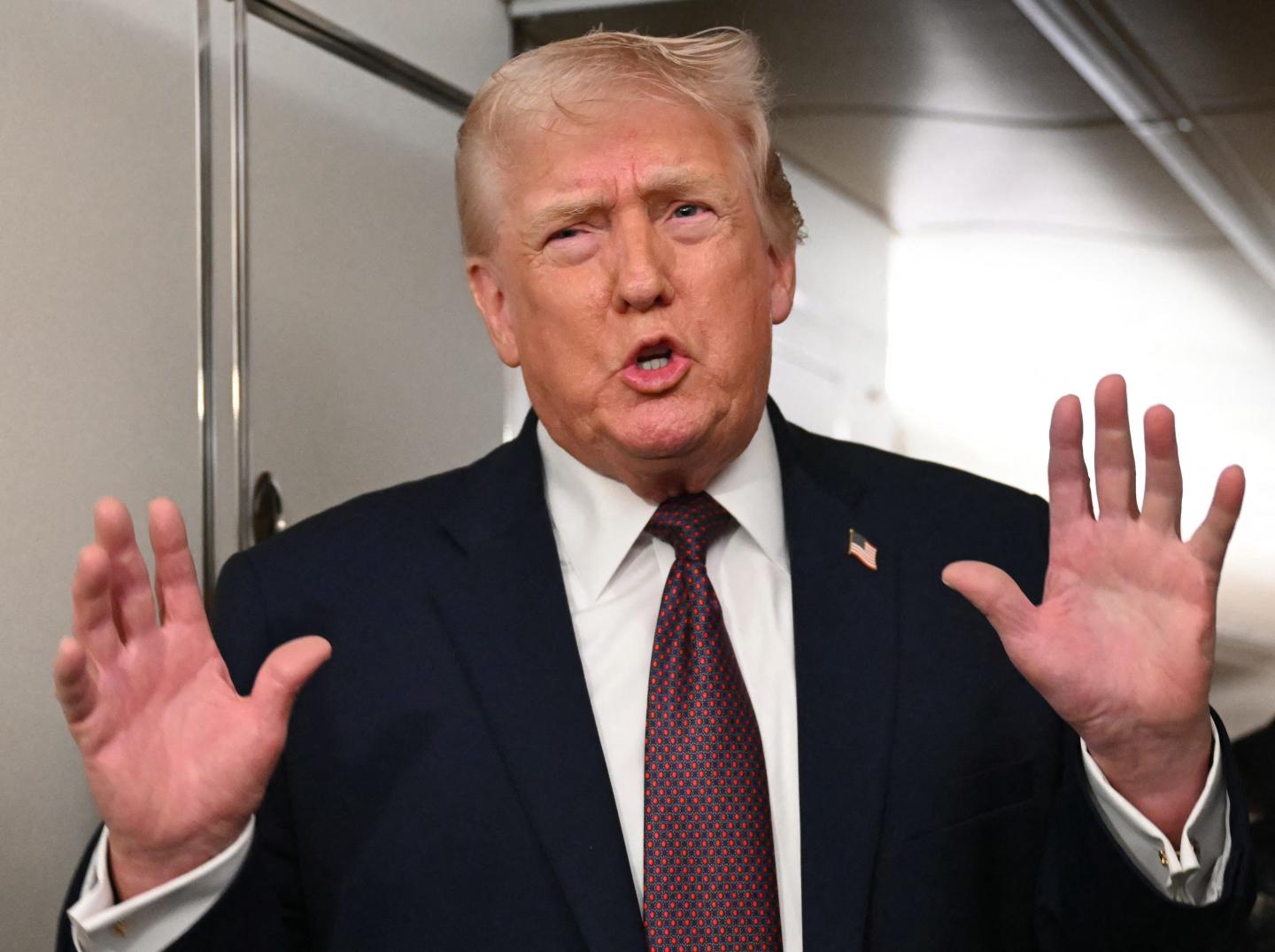
A U.S.-Venezuela oil deal has been announced by President Trump and Interim President Delcy Rodríguez. The public knows virtually nothing about the details of the agreement — nor do I, a Special Adviser to Venezuelan Congressman Antonio Ecarri on Economic, Monetary, and Energy Affairs. This deal was clearly arrived at in secrecy, with no public debate, and signed under duress. Therefore, it is illegitimate and probably illegal.
This deal took not only me, but everyone I am in touch with in Caracas by surprise. That being said, it is vital to understand the importance of establishing clear private property rights in Venezuela’s vast oil reserves. The establishment of such private rights would give Venezuela’s oil reserves a positive present value. It’s important to understand why that’s not the case now.
PDVSA is a state-owned oil company that dominates Venezuela’s economy and accounts for almost 95% of Venezuela’s foreign exchange earnings. Even by state-owned enterprise standards, PDVSA is grossly mismanaged, as evidenced by its production and reserve figures.
Under the direction of Luis Giusti in the 1994-1998 period, PDVSA’s production soared. This trend changed in 1999, when Hugo Chavez became Venezuela’s president and introduced Chavismo as the country’s guiding economic doctrine. Venezuela’s oil output began to stagnate, a situation which worsened further after the coup attempt of April 2002. Chavez responded by purging PDVSA of its professionals en masse, replacing them with “reliable” hands who were loyal to Chavez’s socialist regime.
After the 2002-2003 output plunge, Venezuela’s production temporarily recovered. However, with the death of Chavez and Nicolas Maduro’s assumption of the presidency in March 2013, another output plunge began. This trend has left Venezuela’s output drastically lower than when Chavez took power in 1999.
PDVSA’s physical capital has been consumed at an unsustainably rapid rate, with capital expenditures far below the value of equipment that is being consumed each year by depreciation and amortization. On top of PDVSA’s reduced capital stock and its deteriorating quality, there has also been a drop in the stock and quality of its human capital. For example, in 2017, President Nicolas Maduro named a National Guard general with no industry experience to lead PDVSA. The combination of plunging physical and human capital has left the giant state-owned oil company in very bad shape. Equipment breakdowns and increased accident rates have contributed further to long downtimes and output declines.
It is important to note that PDVSA’s decreased output is not due to dwindling oil reserves, but rather is caused by changes in the rate at which its reserves are being depleted. The depletion rate provides the key to understanding the economics of an oil company and the value of its reserves. Venezuela’s depletion rate has been falling rapidly since 2007. At present, it sits at 0.124% per year, indicating that it would take 558 years for PDVSA’s reserves to be halfway depleted.
This has noteworthy economic implications because of positive time preference and discounting. It is rather obvious that if you have to wait 558 years to produce and sell a barrel of oil, that barrel is virtually worthless in today’s dollars. Therefore, at current depletion rates, most of Venezuela’s oil reserves are worthless.
To put Venezuela’s depletion rate into perspective, consider Exxon, one of the world’s largest oil companies. Exxon’s depletion rate is close to 9% per year. That rate implies that it would take 7.4 years for Exxon’s oil reserves to be halfway depleted.
It is important to mention that I am writing as someone with experience in petroleum economics. Indeed, I was a member of the United Arab Emirate’s Financial Advisory Council from 2008 to 2014. In the UAE, I used a simple model that I had developed, plugged in realistic numbers, and concluded that the UAE should be depleting its vast oil reserves at a much more rapid rate than it was.
My advice to the UAE was to take the money and run.
The UAE agreed. For years, it attempted to obtain a dramatic increase in its OPEC quota. But a dramatic increase was never forthcoming. As a result, in May 2026, the UAE took the exit door and left OPEC.
It’s time for Venezuela to kill inflation by mothballing the bolivar, putting it in a museum, and replacing it with the U.S dollar. After that positive confidence shock, Venezuela must employ all legitimate means to privatize its oil industry and dramatically increase its production.
The opinions expressed in Fortune.com commentary pieces are solely the views of their authors and do not necessarily reflect the opinions and beliefs of Fortune.