It is frequently said that the Federal Reserve steers by looking in the rearview mirror, basing monetary policy decisions on where the economy was in the past, rather than where it is today, or where it is headed. The reason is simple: the Fed relies heavily on measures that summarize the preceding 12 months. Those measures can be slow to reflect a sharp change in the current inflation run rate.
Consider the Consumer Price Index, which purports to measure “inflation” by tracking changes in consumer prices. The July CPI came in at 3.4%, slightly below the June figure of 3.5% — and still far above the Fed’s 2% policy target.
It would seem that inflation must still be a serious problem, and some Fed officials are very concerned. At the latest meeting of the Federal Open Market Committee, the Presidents of three regional Fed branches voted to increase interest rates immediately. “The longer that high inflation persists, the more challenging and costly it can be to bring it back down,” said Beth Hammack (Cleveland). “Pricing pressures are broadening rather than fading, and consumers are expressing despair over persistently higher prices.”
Neel Kashkari (Minneapolis) worried about a risk that “high inflation could become entrenched” and projected multiple rate hikes. Lorie Logan (Dallas) was also pessimistic.
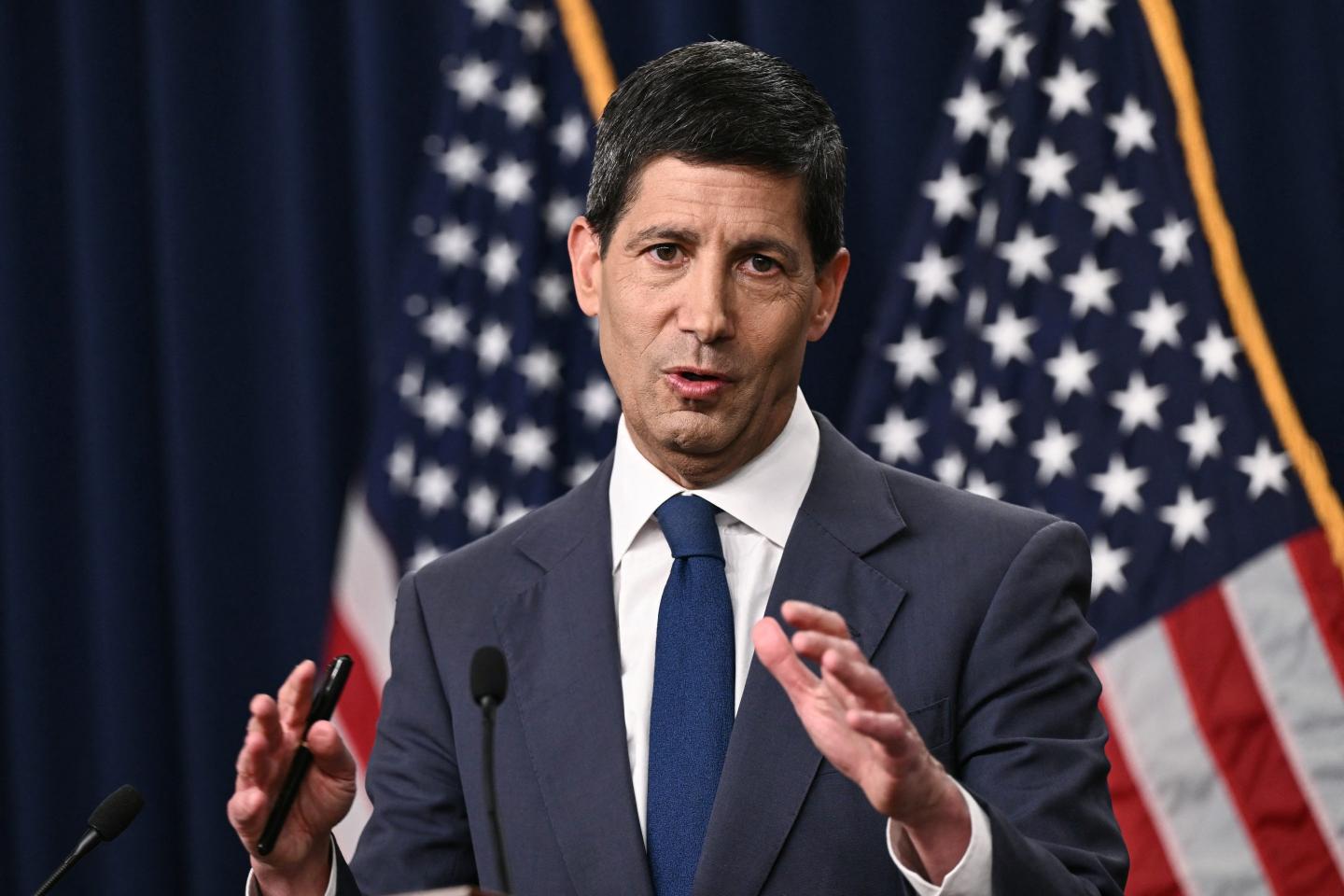
But most Fed-watchers expect significant monetary tightening soon. Chairman Warsh spoke of the need to continue the battle against high inflation and promised the Fed will deliver its 2% inflation target.
There’s a problem here, and it’s in the numbers. The 3.4% CPI reading is a Year-over-Year (YoY) comparison. It shows how much prices have gone up in the last 12 months. But the trend of the last three months offers a different, more current signal. The 3-month average of the CPI since May, annualized, is just 0.49%.
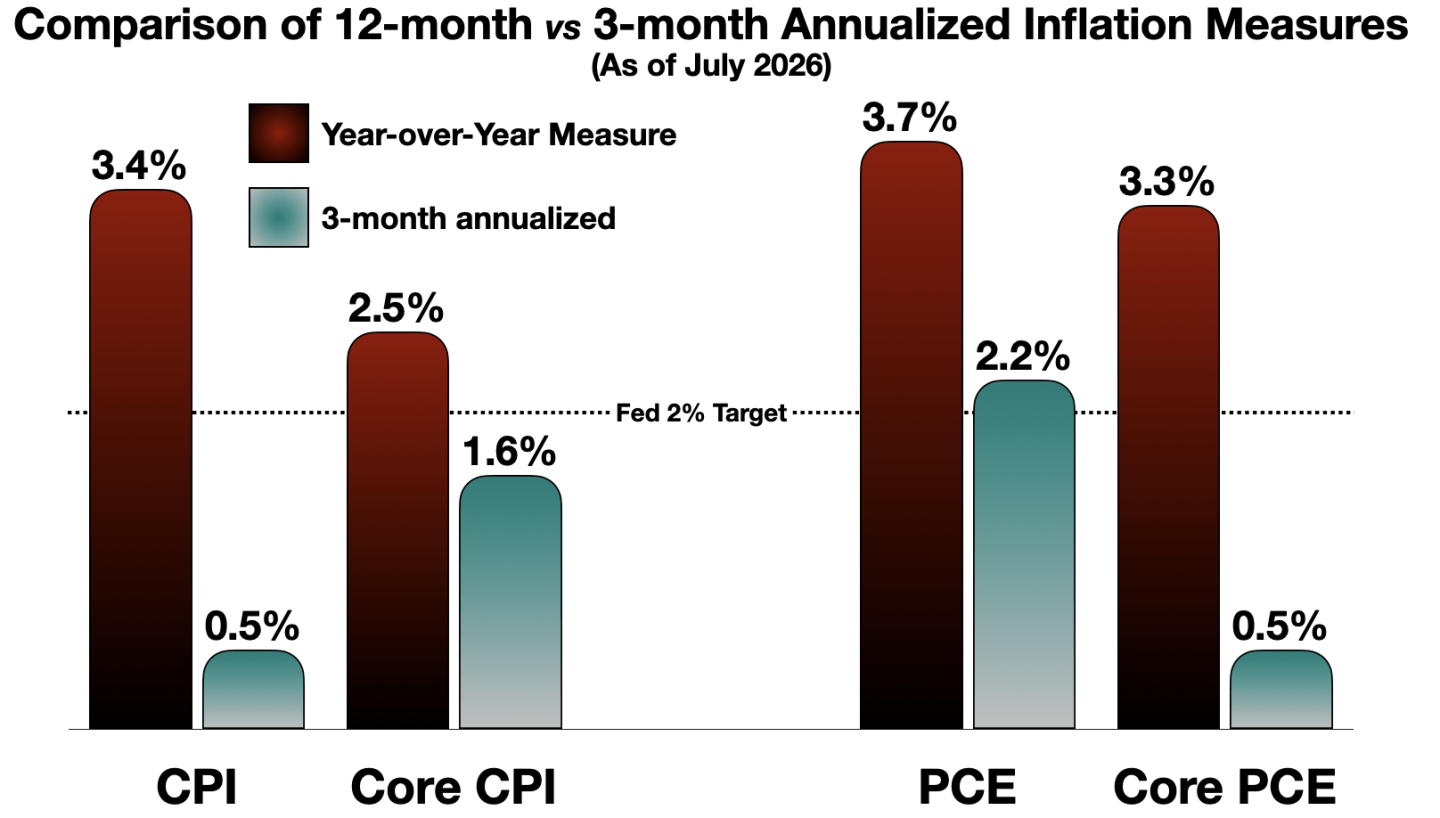
The Producer Price Index (also reported this week) was up 4.7%. Alarming, since producer prices can affect consumer prices, (though the pass-through varies widely by industry). But on a monthly basis, the PPI has been falling rapidly since April, and was negative for June and July. The 3-month annualized rate is 1.6%.
Inflation expectations have also moderated significantly since May, down by both market measures (the 5-year Breakeven Inflation forecast, inferred from the yield gap between a 5-year nominal Treasury and a comparable 5-year TIPS) and according to the Cleveland Fed’s 1-year inflation expectation model. Both measures forecast inflation in the 2.3% range, well below the headline CPI.
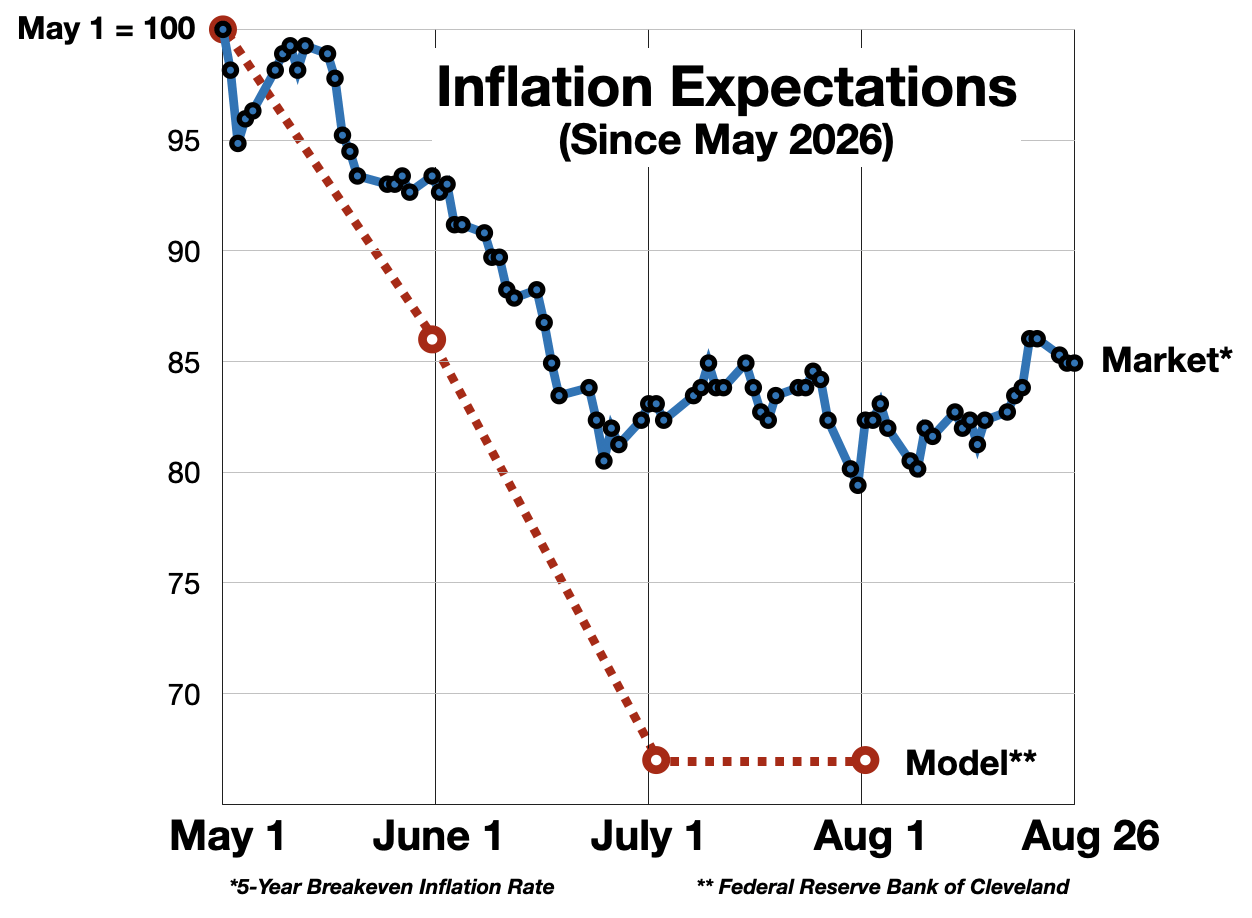
The price trend may be reversing direction more quickly than the YoY version of the CPI can detect it. “Inflation” may have already reached the 2% target, on some short-run measures. Traders seem to think so. The S&P 500 hit a new all time record the day after the CPI release. “Tame inflation data” was cited. The market consensus flipped on the question of a possible rate increase in September, from 80% “Yes” last month to about 67% “No” today. Even The Wall Street Journal hailed the return of “disinflation.”
Is this just a statistical slight-of-hand? Not at all. The idea that an annualized quarterly (AQ) measure of inflation may be superior to a a YoY measure is a mainstream proposition among economists and policy-makers. Nobelist Paul Krugman has endorsed the idea. “In the past, it may have made sense to look at changes over the last year, but in an economy going through as much turmoil as we’ve seen recently, that’s just too long a lag…many economists are now focusing on either three- or six-month changes.”
So, too, Jason Furman, the Chair of Obama’s Council of Economic Advisors, tweeted “headline CPI, the 12-month change in the overall index gets the most public attention…but to understand the inflation trend, it’s better to focus on a shorter window (3-6 months).” Former Fed Chair Jerome Powell and Vice-Chair Lael Brainard often cited inflation figures based on shorter averaging periods. The Cleveland Fed publishes an “inflation nowcast” with an AQ version of the CPI currently at 1.05%. Many “academic-style” economists at respected think tanks or working for the Fed itself have voiced support for shorter averaging windows. As one Fed economist has written: “Inflation is typically measured over the past year, inherently a slow-moving and backward-looking measure.”
The negative impact on monetary policy is twofold. A heavy reliance on backward-looking data obscures the most important moments in the trend — moments when things change. And the backwards focus exacerbates the lag in responding to those changes, with potentially serious macroeconomic consequences.
Consider the inflation spike of 2021-2023. A charitable interpretation would be that while the Fed was slow to respond, the interest rate increases that began in mid-2022 were effective in bringing down inflation.
The underlying data is the same for the annualized 3-month version. But the picture is quite different. The inflation trend changed abruptly and significantly in mid-2022, falling from 10.1% to 1.9% in a single quarter, a structural change. The three-month annualized series shows a sharp change in the short-run pace of inflation. The standard CPI first understated, and then overstated that shorter-run measure of inflation.
Monetary policy appears to have been slow to respond, late — and therefore (perhaps) unsound. By the time the Fed got around to raising rates, the inflationary surge was ending. The fire was over by the time the firemen got the hydrant open.
Of course, one might suggest that the monetary tightening in late 2022 and early 2023 prevented a resurgence of inflation. But that is not how it works. Milton Friedman famously said that monetary policy was subject to a “long and variable lag” between cause and effect, action and outcome — loosely quantified to between 9 and 24 months. This policy lag has been widely endorsed by Fed officials in recent years. In his press conference in November 2022, Chairman Powell referred to “lags” 17x to signal that the policy outcome was, in his mind, still in abeyance. And how much in abeyance? The inflation episode started in 2020/2021. The rate hikes began in March 2022. The policy may have begun to impact the economy only in late 2023 or 2024 — years after the inflationary crisis began, and after inflation had already materially declined.
There is a present danger in the failure to learn this lesson. The Fed today is in a tightening mood. Yet the annualized 3-month CPI suggests that the short-run inflation pace may be lower than the year-over-year headline indicates. Standing back from the CPI itself, is there really a case now for “restraining economic activity” (as President Hammack proposes)? The labor market has weakened. The July jobs number was negative, and June and May were revised downward by almost half. Labor participation is declining. Mortgage rates are rising and home sales are down. Bond yields are at multi-decade highs. Retail spending fell in July for the first time in nine months. Wars are raging. Geopolitical uncertainty is elevated. Tariffs are haywire, creating uncertainty for businesses and consumers. Economic uncertainty indices are at levels last seen in the pandemic. Is this the moment to hit the brakes, in response to an obviously flawed inflation measure?
The latent hawkishness at the Fed may be once again out of step with the real economy. Kevin Warsh has launched a series of Task Forces to among other things reevaluate “how the Federal Reserve understands and responds to the drivers of inflation” and to “improve the quality and timeliness of real economic signals that inform the Federal Reserve’s policy judgments.” This laudable initiative may address the problems raised here, but it will take time. In the interim, the Fed should pay more attention to the short-term trends that reveal an important “inflation regime change” may already be underway.
“Yesterday’s news has a way of getting mistaken for what is happening right now,” Warsh said in his keynote speech at the Jackson Hole Economic Symposium. “The challenge is to know the difference. In other words, we must interrogate reality to make sure we are not setting forward-looking policy based on stale or inaccurate data.”
The opinions expressed in Fortune.com commentary pieces are solely the views of their authors and do not necessarily reflect the opinions and beliefs of Fortune.