
Treasury Secretary Scott Bessent laid out plans for an “economic D-Day” against Iran on Monday, seeking to further isolate the regime from the rest of the world.
The U.S. will expand its use of secondary sanctions against entities and countries that engage with Iran. Bessent also said any country that helps Iran will be removed from the dollar-based financial system.
In addition, he targeted five of Iran’s “most vital lifelines”: digital assets, technology, gold, aviation, and shipping.
But Esfandyar Batmanghelidj, founder and CEO of the Bourse & Bazaar Foundation think tank, said those are actually lifelines for the Iranian people, not the regime.
“Digital assets and gold are how ordinary Iranians protect their savings from inflation,” he explained in a post on X. “Technology keeps Iranians connected with the world. Aviation keeps Iranian families connected with loved ones across borders. Shipping is how essential goods, including food and medicine, reach Iran.”
The sanctions come as the Trump administration has pivoted away from resuming all-out war, hoping that economic warfare will accomplish what bombs and missiles couldn’t.
The Treasury Department didn’t respond to a request for comment.
To be sure, crypto currencies, technology and front companies in shipping are also ways the Iranian regime skirts Western sanctions, allowing it to continue earning valuable revenue.
But the United Arab Emirates also shut down all trade and transactions with Iran earlier this month, cutting off a vital for engagement with the global economy.
Meanwhile, the U.S. war and naval blockade have inflicted a catastrophic toll on Iran’s economy, which was already in shambles before the conflict started.
Inflation has soared above 80%, with prices for certain food staples up 100%. The currency, which triggered nationwide protests late last year after it collapsed, has lost a further 30% of its value this year.
The International Monetary Fund said in April Iran’s economy will shrink 6.1% this year, the worst contraction in decades. And a labor ministry official estimated that more than 1 million jobs had been lost by late May.
The naval blockade has not only prevented Iran from exporting oil via its ports, it has also kept out imports of refined fuels that Iran needs despite being a major oil producer.
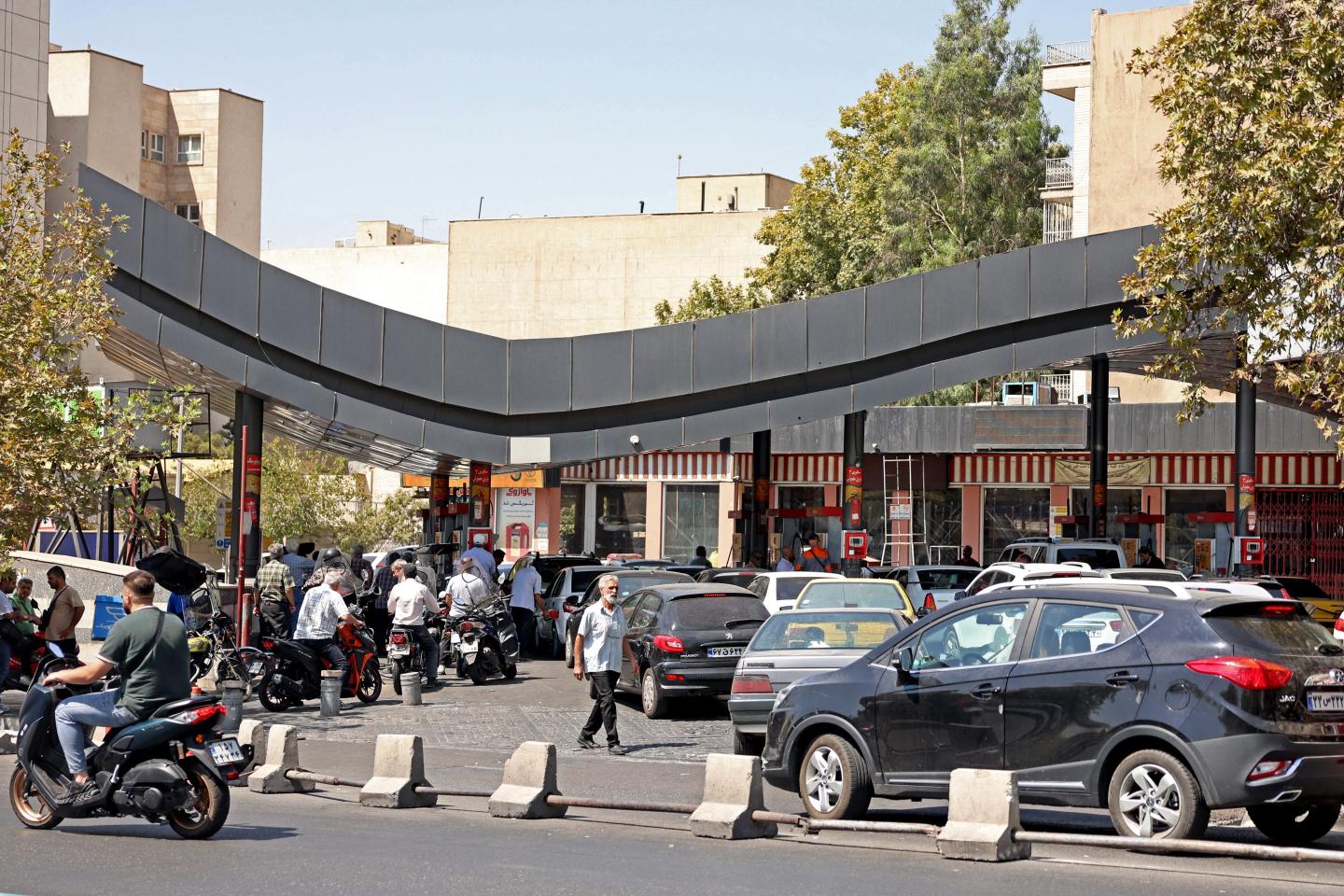
That has created shortages and long lines at gas stations, made worse by deep subsidies that encourage excess consumption. But the government is reluctant to hike prices and slow demand, fearing more public anger over inflation.
Amid the growing stress, some moderate officials have signaled that time is running out to obtain some economic relief as the U.S. and Iran remain in limbo with no sign of diplomatic progress.
“No matter how strong we are militarily, if the people are hungry and we do not have financial circulation, economic growth and domestic production, we will not endure,” parliamentary speaker and Iran’s chief negotiator Mohammad Bagher Ghalibaf said while visiting Iraq earlier this month.
In fact, some protests have started breaking out, though not at the massive scale that was seen in January, when the government slaughtered thousands in a brutal crackdown.
On Monday, oil and gas workers in Asaluyeh staged a protest, saying they shouldn’t have to suffer a cost-of-living crisis while keeping oil production online, state media said, according to the Wall Street Journal.
Earlier, about 100 laid-off workers protested at the Shadegan steel complex in western Iran, petrochemical workers in costal city of Bandar-e Mahshahr protested their layoffs, and teachers union members have publicly complained about not getting paid.
Experts have cautioned that Iran’s repressive regime is unlikely to be swayed by the suffering of ordinary citizens and is prepared to wait out economic hardship longer than Americans can endure high gas prices.
Still, officials continue to acknowledge the strains ordinary Iranians face, while clashing with hardliners who oppose any negotiations with the U.S.
“The country today faces great, complex, and multiple open and hidden challenges,” Ghalibaf said on Wednesday. “Our duty at this moment is to devote all our time and energy to resolving the people’s problems, increasing Iran’s economic power, and preserving the achievements of resistance.”